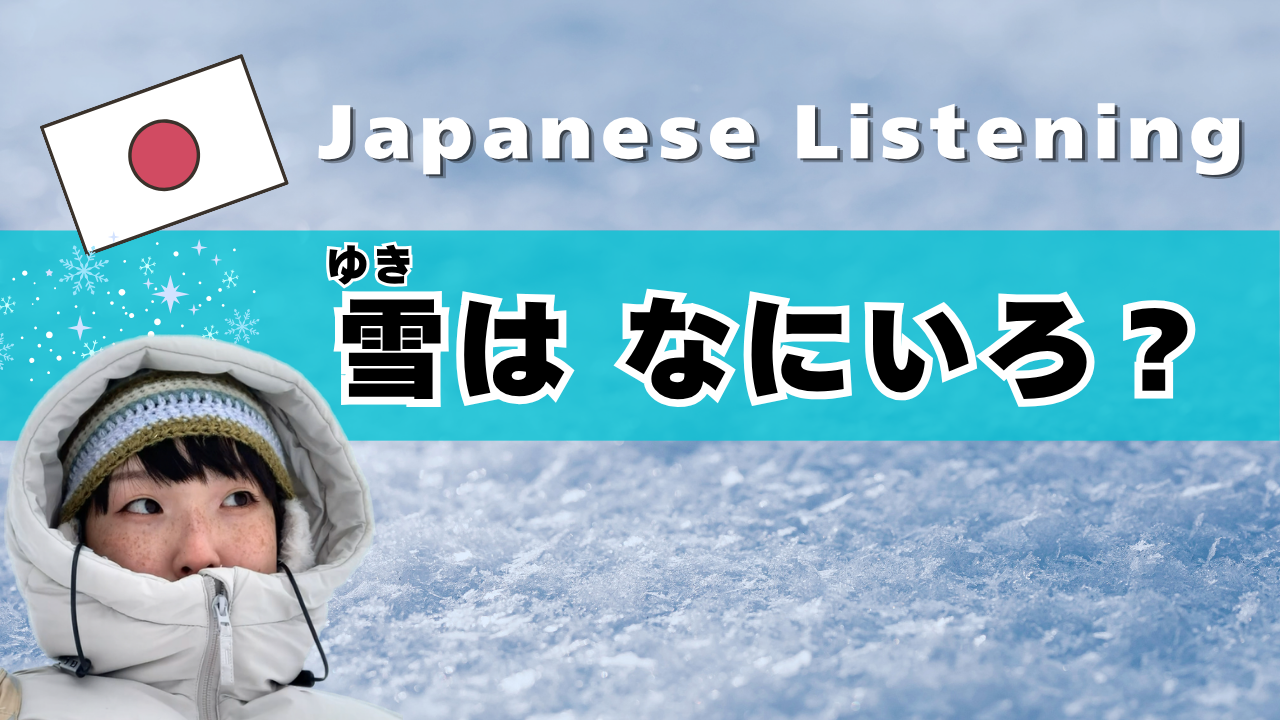
雪って何色? 冬の景色と言葉What Color Is Snow?
What color is snow? Living in a snowy town helped me understand why Japanese calls a snowy landscape hakugin, or silver-white. I read a piece I wrote last winter and explore words for snow, light, quietness, and the comfort of home.

What You’ll Learn
Explore winter scenery through 白銀 and 雪明かり, discover how the song Yuki welcomes snow, and connect しんしん, さらさら, つるつる, and ぬくぬく with quiet snowfall, different textures, slippery roads, and a cozy room.
Transcript
What color is snow?
1. 雪って何色?
What color is snow?
みなさんこんばんは。Late Night Japanese ChatのHaruです。
English: Good evening, everyone. Welcome to Late Night Japanese Chat. I'm Haru.
みなさんお元気でしょうか。
English: How are you all doing?
今日は雪の景色や冬を表す日本語についてお話ししたいと思います。
English: Today I'd like to talk about snowy scenery and Japanese words for winter.
早速ですがみなさんクイズです。
English: Let's start with a little quiz.
雪って何色だと思いますか?
English: What color do you think snow is?
赤?青?黄色?
English: Red? Blue? Yellow?
違いますよね。白。
English: No, right? White.
そうですね。私も白だと思います。
English: Yes. I think it's white, too.
でも雪の結晶をよく見ると白ではなくて透明にも見えるんですよね。
English: But if you look closely at a snow crystal, it can look transparent rather than white.
一つ一つは透明に見えるのに積もると白く見える。
English: Each one looks transparent, yet a blanket of snow looks white.
近くで見てみるととっても面白いです。
English: It's fascinating when you look closely.
この前、雪の景色を撮った短い動画を投稿しました。
English: The other day, I posted a short video of a snowy landscape.
見ていると何だか雲の上にいるみたいで地面なのに空みたいな感覚になるんですよね。
English: Watching it feels a little like being above the clouds. It's the ground, but somehow it feels like the sky.
昔の映画なんですけど、ドラえもんの『雲の王国』という作品を知っていますか?
English: Do you know the old Doraemon film called Nobita and the Kingdom of Clouds?
私はそれを思い出しながら、『雲の王国』が実際にあったらこんな感じなのかな?とワクワクした気持ちになりました。
English: It reminded me of that film. I wondered if a real kingdom of clouds would look like this, and the thought made me excited.
今日はね、まずその景色の色を言葉から考えてみたいなと思います。
English: First, I'd like to think about the colors of that scenery through the words we use.
Looking up white and silver
2. 白と銀を辞書で引く
Looking up white and silver
まずね、最初の質問。雪って何色?っていうお話なんですけど、日本語では雪が積もった景色を「白銀の世界」と表現することがあります。
English: Let's return to our first question: What color is snow? In Japanese, a snowy landscape is sometimes described as hakugin no sekai, a silver-white world.
白と銀と書いて白銀。皆さんは聞いたことがありますか?
English: Hakugin is written with white and silver. Have you heard it before?
私ね、この言葉がずっと気になっていたんですよね。
English: I've been curious about this word for a long time.
雪は白いのにどうして銀なんだろう?
English: Snow is white, so why silver?
それで今回も辞書で調べてみたんですけど、
English: I looked it up in the dictionary this time, too.
まず白、ホワイトですね。
English: First, shiro: white.
これはね、辞書で引いてみたらこう書いてありました。
English: Here's what the dictionary said.
雪のような色。
English: A color like snow.
雪が何色なのか知りたくて調べているのに、雪に戻ってきちゃったんです。
English: I'm trying to find out what color snow is, and we've come right back to snow!
じゃあ銀は?銀はこう書いてありました。
English: What about silver? Here's what it said.
金属の一つで白い光沢があるもの。
English: A metal with a white luster.
光沢というのは表面がツヤツヤしていて、光を反射するような輝きのことですね。
English: Luster means a surface has a smooth sheen, a shine that reflects light.
例えば銀の指輪やアクセサリーを想像すると分かりやすいかもしれません。
English: It may help to picture a silver ring or accessory. That makes it a little easier to imagine.
そして白と銀を合わせた白銀。
English: Then we combine white and silver: hakugin.
白銀には銀や降り積もった雪を表す意味があります。
English: Hakugin can mean silver or fallen snow.
読み方もしろがねという時もあります。
English: These characters can also be read shirogane.
When a word meets a landscape
3. 言葉と景色がつながった
When a word meets a landscape
そしてね、雪が降る地域に住んで、実際の一面の雪景色を見た時に私はこの白銀という言葉がやっとわかったような気がしたんです。
English: After moving to a region where it snows, I saw a whole landscape covered in snow. I felt I finally understood the word hakugin in a way I hadn't before.
まず皆さんが思ったように雪って白いんです。
English: As you imagined, snow is white.
でもただ白いだけじゃないなと思ったんですよね。
English: But I realized it isn't only white.
光があたるとキラキラと輝いて、表面がね、透明に見えるところもあるんです。
English: It sparkles when the light hits it, and some parts of the surface look transparent.
なんでしょう、ツヤのある白で、時には金属みたいに輝いて見える。
English: How can I put it? It's a glossy white, sometimes shining almost like metal.
ああこういう景色を白銀って呼びたくなるんだなと思いました。
English: I thought, "Ah, this is why you'd want to call it hakugin." That's how it felt to me.
私はですね、たまに日本語のサイトで趣味で文章を投稿しているんですけど、まあね、そこは日々の暮らしの中で見たこととか感じたこととかを書いているんですけど、
English: As a hobby, I sometimes post my writing on a Japanese website. I write about things I've seen and felt in everyday life.
去年ね、そんな雪の景色について書いていました。
English: Last year, I wrote about a snowy landscape like that.
昨日ね、読み返してみたらあれこれ結構いい文章じゃないって思ってせっかくなのでちょっと読んでみたいと思います。
English: When I reread it yesterday, I thought, "Actually, this is pretty good!" So I'd like to read a little of it to you.
これはね、去年の12月に投稿した文章ですねですからまだね1ヶ月ぐらい先の話かなぁと思うんですがちょっと読んでみますね。
English: I posted this piece last December. So it's about a time still roughly a month away this year. Let me read it to you.
Reading what I wrote last winter
4. 去年の文章を読んでみます
Reading what I wrote last winter
ずいぶんと寒くなりました。
English: It has grown quite cold.
あんなに茂っていた草も、虫たちも、どこにいるのやら。
English: Where have all the thick grass and insects gone?
軽くて深い雪が全部を覆って、みんな隠れてしまった。
English: Light, deep snow has covered everything, hiding them all.
じっと凝らすと、自分の目でも雪の結晶を確認することができる。
English: If I look closely, I can make out snow crystals with my own eyes.
こんなに綺麗なものが空から降ってくるなんて。
English: Something this beautiful falls from the sky.
なんだかよくわからないけど、「地球最高!」って気持ちになる。
English: I can't quite explain it, but it makes me think, "Earth is amazing!"
こんな雪の世界を「白銀」と表現した人に感謝したい。
English: I want to thank whoever called this snowy world hakugin.
銀は、白と透明の間の色なんだね。
English: Silver is a color between white and transparency, isn't it?
田んぼの境界線がなくなって、とてつもない広さの雪原ができあがる。
English: The boundaries of the rice fields disappear, leaving a snowfield of unimaginable vastness.
白でも青でもない地面。白でもグレーでもない空気。
English: Ground neither white nor blue. Air neither white nor gray.
月白色の低い空が、雪原に混ざり合って、平らな世界になる。
English: The low, pale moon-white sky blends into the snowfield, and the world becomes flat.
たまに太陽が出ると遠くの山の輪郭がはっきりと浮かんで夏と同じ場所にいることを実感する冬は、上も下も、時間さえも曖昧な街になる。
English: Sometimes the sun appears, and distant mountains take clear shape. I realize I'm in the same place as in summer. In winter, up, down, and even time grow indistinct in this town.
雪国に住んでみて、初めて分かったこと。
English: Something I only understood after living in snow country.
「地球最高!」って書いてますね私でも本当にそんな気持ちになるんですよ。
English: I really wrote "Earth is amazing!" didn't I? But that's honestly how it feels.
Snow light and a quiet night
5. 月白・雪明かり・しんしん
Snow light and a quiet night
文章に出てきた月白これはね、ほんの少し青みを含んだ白のことです。
English: The word geppaku appeared in that piece. It means a white with a very slight blue tint.
空の色が何色かわからなくて調べてみたんですよね。
English: I couldn't name the color of the sky, so I looked it up.
そしたら一番その時の感覚に近いのがこの月白という色でした。
English: The closest match to what I felt at the time was this color, geppaku.
私はね、雪の日の空がそんな色に見えたんですね。
English: That's how the sky on that snowy day looked to me.
日本語には和色という和の色というものがあるんですよね。
English: Japanese has traditional colors called washoku, literally Japanese colors.
もし興味があったら調べてもらったらわかるかなと思います。
English: If you're interested, try looking them up. I think you'll see what I mean.
とてもね、あの素敵な表現がたくさんあるので、見てみたら楽しいかもしれません。
English: There are so many lovely expressions, so exploring them might be fun.
あとね、夜の雪景色にも好きな言葉があります。
English: There's another word I like for snowy scenery at night.
それはね、雪明かり雪に明かりと書きます。
English: Yukiakari: snow light. It's written with the characters for snow and light.
積もった雪が光を反射して夜でも周りが薄明るく見えることです。
English: Snow on the ground reflects light, making the surroundings look faintly bright even at night.
雪そのものが電球みたいに光っているわけではないですよね。
English: The snow itself isn't glowing like a light bulb, of course.
皆さんは雪明かりを見たことがありますか?
English: Have you ever seen yukiakari?
昼間は「白銀の世界」夜になると雪明かり同じ雪なのに、時間が変わると、それを見る言葉も変わるんですよね。
English: A silver-white world by day. Snow light by night. It's the same snow, but as the time changes, so do the words we use to see it.
そしてね、そんな静かな夜に雪が降っているとします。
English: Now imagine snow falling on a quiet night like that.
「雪がしんしんと降っている」。
English: Yuki ga shinshin to futte iru: snow is falling quietly.
しんしん。どんな音だと思いますか?
English: Shinshin. What kind of sound do you imagine?
例えば雨のザーザーなら音を想像しやすいですよね。
English: Zaa-zaa, the sound of rain, is easy to imagine, right?
あとはポツポツとかもありますよねでも雪のしんしんは実際にそんな音がしているわけではないんです。
English: There's also potsu-potsu, for scattered drops. But the shinshin of snow doesn't mean there's really a sound like that.
これはね、オノマトペの面白いところでこのしんしんは音ではなくて静かに降り積もる様子を表していると言われています。
English: This is what's interesting about onomatopoeia. Here, shinshin isn't describing a sound. It's said to describe snow quietly falling and building up.
The song Yuki ya konko
6. 雪やこんこ
The song Yuki ya konko
そしてね、雪といえば日本には有名なこんな歌があります。
English: Speaking of snow, Japan has a very famous song that goes like this.
「雪やこんこ」、聴いたことがありますか?
English: Yuki ya konko. Have you heard it?
曲の名前は『雪』です。
English: The song is called Yuki: Snow.
これはですね、なんと1911年の小学校の歌の本にも載っている100年以上歌い継がれてきた歌なんです。
English: Believe it or not, it appears in a primary-school songbook published in 1911. People have sung it for more than 100 years.
歌い出しは「雪やこんこ」。
English: It begins, "Yuki ya konko."
「こんこん」ではなくて「こんこ」なんですよね。
English: It's konko, not konkon.
でもね、これはね、日本人もわからない人が多いかなと思うんですけど、「こんこ」ってなんでしょう?
English: I think many Japanese people may not know this either. What does konko mean?
普段の会話ではあまり使わない言葉ですよね。
English: It's not a word we use much in everyday conversation.
いやあまりというか使うことはないかもしれないです。
English: Actually, we might not use it in conversation at all.
でね、私もこれを調べてみました。
English: So I looked this up, too.
語源、言葉の始まりにはいくつか説明があるんですけど、雪を「来い来い、もっと降って」という呼びかけから来たという説明があります。
English: There are several explanations of its origin. One explanation connects it to calling to the snow, "Come, come! Fall some more!"
雪が降る音を真似しているようにも聞こえますけど、「雪、降っておいで」と呼んでいると思うと、歌の感じが少し変わりませんか?
English: It can sound like an imitation of falling snow. But if you imagine it calling, "Snow, come here," doesn't the song feel a little different?
もっと降ってほしい。
English: I hope it snows more.
積もったら遊びたい。
English: I want to play when it piles up.
そんな子供の姿が浮かんでくるような気がします。
English: I can almost picture the children thinking that.
さっきのしんしんが静かな景色ならこちらは雪を待つ人の声みたいですね。
English: If shinshin gave us a quiet landscape, this feels like the voice of someone waiting for snow.
そしてこの歌の中には雪をかぶった枯れ木を花が咲いたように表現しているところもあります。
English: The song also describes bare trees covered in snow as though flowers have bloomed on them.
葉っぱが落ちた木に今度は雪の白い花が咲くそんな見方もね面白いですよね。
English: After the leaves fall, white flowers of snow bloom instead. That's an interesting way to see it, isn't it?
とっても素敵だなと思います。
English: I think it's lovely.
もしね、聞いてみたい方はYouTubeで「雪やこんこ」とか、あとは「雪、童謡」と検索してみてください。
English: If you'd like to hear it, try searching on YouTube for "雪やこんこ" or "雪 童謡." Those are useful search terms.
童謡というのは子供たちのための歌という意味です。
English: Doyo means songs for children.
検索する言葉は概要欄にも書いておきますね。
English: I'll put the search terms in the description, too.
よかったら調べてみてください。
English: Have a look if you'd like.
日本人はね多分全員この歌を歌えるんじゃないかな。
English: I think probably everyone in Japan can sing this song.
皆さんの国には冬や雪を楽しみに待つ歌ってありますか?
English: Does your country have songs that look forward to winter or snow?
ただですね、実際に暮らしてみるともっと降ってと言いたい日ばかりではありません。
English: But when you actually live with snow, you don't always want to say, "Keep falling!"
雪かきをする人や出かける予定がある人はもうね、「今日はこのくらいでお願いします」と思うかもしれません。
English: If you have snow to shovel or somewhere to go, you might think, "That's enough for today, please." That's how you might feel.
同じ雪を見ていても立っている場所で気持ちは違うんですよね。
English: Even looking at the same snow, how we feel depends on where we're standing.
Snow textures and slippery roads
7. さらさら・つるつる
Snow textures and slippery roads
それからですね、雪そのものもいつも同じではないんですよね。
English: Another interesting thing is that snow itself isn't always the same, either.
すごく寒い日に降る、水分の少ない雪。
English: Snow that falls on very cold days contains little moisture.
そんな雪はねとっても軽くてサラサラという言葉が合います。
English: It's very light, and sarasara is a word that suits it.
風が吹いたらサラーと飛んでいくような雪ですね。
English: It's the kind of snow that drifts away when the wind blows.
さらさらの砂、さらさらの粉。
English: Sarasara sand. Sarasara powder.
それと同じように、雪もさらさら。
English: Snow can be fine and loose like that, too.
雪の状態によっては例えば手でギュッと握っても、雪だるまの丸い形になかなかまとまらないことがあります。
English: Depending on the snow, even if you squeeze it in your hands, it may be hard to make it hold a round shape for a snowman.
反対に少し暖かい日の水分の多い雪とは触った感じも重さも全然違います。
English: Compared with wetter snow on a slightly warmer day, the texture and weight are completely different.
地域や気温、降ってからの時間によっても変わりますね。
English: The region, temperature, and time since it fell matter, too.
雪が降っていますといっても、皆さんが思い浮かべる雪は同じとは限らないんですよね。
English: Even if I say, "It's snowing," we won't necessarily picture the same kind of snow.
同じ日本でも地域によって全然イメージが違うかなと思います。
English: Even within Japan, people in different regions may imagine very different things.
皆さんが見たことのある雪はどんな雪でしょうか?
English: What kind of snow have you seen?
そしてね、道に出ると気をつけたいのが凍った道路です。
English: When we go outside, we need to watch out for frozen roads.
表面が滑らかで、もうね、歩くと転んでしまうような滑りやすい道路ですね。
English: Their surfaces are smooth, and they're so slippery that you can fall just trying to walk on them.
これはツルツルと言いますね。
English: We call that tsurutsuru: smooth and slippery.
周りを見渡すと、一面銀世界。
English: Look around, and it's a whole silver-white world.
でも足元はしっかり見ないといけません。
English: But we still have to watch our step.
きれいな景色に見とれていたらツルツルの地面で本当にね、転んでしまうからね。
English: If you get lost in that beautiful scenery, you really can fall on the slippery ground.
私もね何回も転んだことがあります。
English: I've fallen plenty of times myself.
本当にね、でもあたりどころが悪かったら骨折したりとか怪我をすることもよくありますから皆さんもね気をつけてほしいなと思います。
English: And if you land badly, you can break a bone or hurt yourself. So please do be careful.
窓から雪を見るときと雪の中を歩くとき、同じ景色でもそうやってね感じることは随分変わるなと思います。
English: Looking at snow through a window and walking in it: even if it's the same scenery, the way we experience it can be very different.
Looking again from a warm room
8. 家でぬくぬく
Looking again from a warm room
だからこそ寒い外から帰ってきて温かい家の中で過ごす時間も冬の楽しみの一つかなと思います。
English: That's why, after coming in from the cold, spending time in a warm home is one of winter's pleasures, too.
そんなね、冬の楽しみ家で過ごすときに一番合う言葉がぬくぬくという言葉ですね。
English: For that winter pleasure, there's a word that fits time spent at home perfectly: nukunuku, warm and cozy.
聞いたことがありますか?
English: Have you heard it before?
これはですね、暖かくて気持ちよく過ごしている感じですね。
English: It describes being warm and feeling comfortable and content.
例えば布団の中でぬくぬくする暖かい部屋でぬくぬくする外の雪を見ながら家の中ではぬくぬくそれもいいですよね。
English: Nukunuku in bed, tucked into the covers. Nukunuku in a warm room. Watching the snow outside while staying cozy indoors. That sounds nice, doesn't it?
私はね、そんな時間が大好きです。
English: I love spending time like that.
はい
English: Yes.
今日は雪の色から、光や静けさそして暮らしの話へと進んできました。
English: Today we started with the color of snow, then moved to light, quietness, and everyday life.
白銀の輝き。
English: The gleam of hakugin.
雪明かりの夜。
English: A night of yukiakari.
同じ雪でも変わっていく感触。
English: The changing feel of the very same snow.
さらさら。
English: Sarasara, fine and loose.
言葉を知ってから景色を見ることもあるしその場所に実際に行ってみて言葉の意味が分かることもあるんですね。
English: Sometimes we learn a word before we see a landscape. Other times, we visit a place and only then understand what a word means.
私は雪のある街に今住んでいるんですけど、やっぱりね、ここに住むようになってから白銀という言葉が前よりもね身近になったなと感じます。
English: I live in a snowy town now, and I really feel that since moving here, the word hakugin has become closer and more familiar to me.
どうして白い雪なのに、銀と表現するんだろうとずっと思っていたんですけど。
English: If snow is white, why describe it as silver? I'd wondered about that for so long.
本当にね、目の前で見てみたらああ確かに銀色だなって思ったんですよね。
English: But honestly, when I saw it right in front of me, I thought, "Yes, it really does look silver."
最後にね、もう一度皆さんに聞いてみたいなと思います。
English: I'd like to ask you once more before we finish.
皆さんには雪が何色に見えますか?
English: What color does snow look to you?
白でもあるし、銀色でもあるし、透明でもある。
English: It can be white or silver, and it can be transparent.
あとね、水色に見えることもありますよね
English: Sometimes it looks light blue, too, doesn't it?
それから冬の景色をどんな風に表現しますか?
English: And how do you describe winter scenery?
日本には春夏秋冬、4つのね季節があると言われていますが同じ日本でも例えば沖縄や九州地方暖かい地域だったら雪が降ることは少ないかなと思います。
English: Japan has spring, summer, autumn, and winter. We say it has four seasons, but even in Japan, places like Okinawa and Kyushu are warmer, so I think snow is less common there. That's how it is in those regions.
ですからね、冬の景色と言われても、皆さんがね想像する景色っていうのはそれぞれあるかなと思います。
English: So when we talk about winter scenery, the landscapes you picture can be very different from one another.
それもね面白いですよね。
English: That's interesting, too, isn't it?
よかったらね、コメントで教えてください。
English: If you'd like, tell me in the comments.
ということで、今日はこんなところかな。
English: I think that's about it for today.
はいということで、
English: All right, then.
今日のトランスクリプトは概要欄のリンクから読めます。
English: You can read today's transcript through the link in the description.
聞き取れなかった言葉も文字で確認してみてくださいね
English: If there were words you couldn't catch, try checking them in the written text.
今日の話が面白かったらグッドボタンやチャンネル登録で応援してもらえたら嬉しいです。
English: If you enjoyed today's episode, a like or a subscription would mean a lot to me.
今日も聞いてくれてありがとうございました。
English: Thank you for listening today.
寒い地域の方は温かくして過ごしてくださいね日本では今インフルエンザがとっても流行っていて皆さんも風邪には気をつけてお過ごしください。
English: If you live somewhere cold, keep warm. Here in Japan, there's a lot of flu going around right now. Please take care and try not to catch a cold.
それでは、また次の回でお会いしましょうおやすみなさい。
English: I'll see you in the next episode. Good night.
またね。
English: Bye for now.
Vocabulary
Each word includes the original line from the transcript and one extra example. Use “See in transcript” to jump back to the conversation.
白銀silver; fallen snow, especially when pictured as shining white
FROM THE TRANSCRIPT
まずね、最初の質問。雪って何色?っていうお話なんですけど、日本語では雪が積もった景色を「白銀の世界」と表現することがあります。
EXAMPLE
朝日を浴びた山々が、白銀に輝いています。
The mountains shine silver-white in the morning sun.
雪明かりthe faint brightness of light reflected by snow at night
FROM THE TRANSCRIPT
それはね、雪明かり雪に明かりと書きます。
EXAMPLE
雪明かりの中に、小さな足跡が続いていました。
Small footprints stretched away in the light reflected by the snow.
しんしんquietly and steadily, as snow falls and accumulates
FROM THE TRANSCRIPT
「雪がしんしんと降っている」。
EXAMPLE
しんしんと降る雪を、駅の待合室から眺めました。
I watched the quietly falling snow from the station waiting room.
さらさらdry, fine, and loose in texture
FROM THE TRANSCRIPT
それと同じように、雪もさらさら。
EXAMPLE
この砂はさらさらしていて、指の間から落ちていきます。
This sand is fine and loose, slipping through my fingers.
ぬくぬくcomfortably warm and cozy
FROM THE TRANSCRIPT
例えば布団の中でぬくぬくする暖かい部屋でぬくぬくする外の雪を見ながら家の中ではぬくぬくそれもいいですよね。
EXAMPLE
猫が毛布にくるまって、ぬくぬくしています。
The cat is wrapped in a blanket, warm and cozy.
Cultural Notes
雪 is a song passed down for over a century. It appeared in a primary-school songbook in 1911. Its opening is 雪やこんこ. One explanation connects こんこ to calling for snow to come, although accounts of its origin vary.
Winter words can describe light, texture, and atmosphere. 白銀 and 雪明かり focus on how snow looks, while しんしん evokes quiet accumulation. The episode uses these words in scenes rather than as a list to memorize.
Haru’s Note
Living in a snowy town brought the word hakugin closer to me. Reading a piece I wrote last year, I'd like to share that landscape with you.
雪のある町に住んで、白銀という言葉が少し身近になりました。去年の自分の文章も読みながら、みなさんと雪の景色を眺めたいです。

コメント