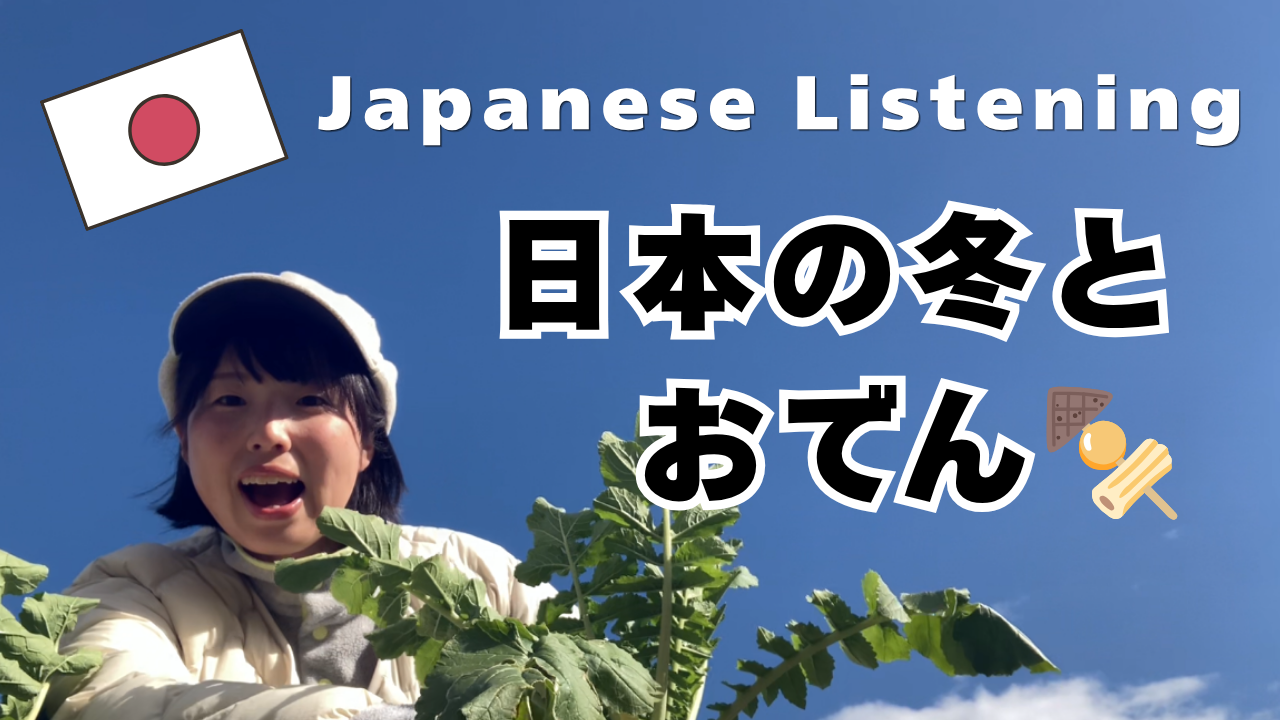
冬のはじまり、おでん。| Japanese PodcastOden: A Taste of Winter in Japan|
What is oden, and why does this familiar Japanese winter dish carry such a comforting feeling? After harvesting daikon from my field before the first snow, I made oden and looked at its ingredients, history, and careful preparation.In this episode, I also reflect on what happens when we stop, rest, and begin warming something again. Read the Japanese transcript with furigana and learn useful vocabulary connected to winter, cooking, and starting again.

What You’ll Learn
Oden and winter in Japan: Learn what oden is, where people eat it, and why different people picture different ingredients when they hear its name.Traditional preparation: Follow words such as 下ごしらえ, 隠し包丁, and 米の研ぎ汁 through the preparation of daikon and eggs.Resting and warming again: See how cooking oden leads to a personal reflection about pausing, returning, and finding a different kind of depth.
Transcript
Winter begins in Hokkaido
1. 北海道に冬が来る
Winter begins in Hokkaido
皆さんこんばんは、Haruです。
English: Good evening, everyone. This is Haru.
もう11月になりましたね。
English: It’s already November.
今年も残すところあと2ヶ月ほどでしょうか。
English: There are only about two months left in this year, I suppose.
日本では、暦の上ではもうすぐ立冬です。
English: In Japan, according to the traditional calendar, Rittō—the beginning of winter—is almost here.
今年は11月7日が立冬だそうです。
English: This year, Rittō falls on November 7.
立冬という言葉、立は立つ、冬は冬、つまり冬が立つ、
English: In the word Rittō, ritsu means ‘to stand,’ and tō means ‘winter.’ In other words, winter stands up—
冬が始まるという意味ですね。
English: it means that winter begins.
でも日本の他の場所にいる人は、
English: But people in other parts of Japan
まだ秋の話をしていることが多いかなと思います。
English: are probably still talking about autumn.
紅葉の話とか、秋の食べ物が美味しいとか、
English: They might be talking about the autumn leaves, or how delicious autumn foods are.
同じ日本でも季節の進む速さは全然違いますね。
English: Even within Japan, the seasons move at completely different speeds.
私が住んでいる北海道では、
English: Here in Hokkaido, where I live,
もう冬が始まっているなと感じます。
English: I feel that winter has already begun.
先週、畑の大根を収穫しました。
English: Last week, I harvested daikon from the field.
本格的に冬が来る前に、畑を閉じる、
English: Before winter arrived in earnest, I closed the field for the season—
畑仕舞いをしたんですよね。
English: I did what we call hatake-jimai.
育てていたものを収穫して、畑を片付けて、
English: It means harvesting what we had grown and tidying up the field,
冬に備える作業ですね。
English: to prepare it for winter.
そしてね、今朝もなんですけど、
English: And, well, it happened again this morning—
もう雪が降っています。
English: it’s already snowing.
気温もね、もう0度になる日も多いし、
English: We’re having many days when the temperature reaches zero degrees,
朝晩だけでもマイナス4度とか、今週はね、
English: and even just in the mornings and evenings it can be minus four. This week,
マイナス7度になる日もあるみたいで、
English: it looks like we may even have a day of minus seven.
もうやばいよね。
English: That’s pretty intense, isn’t it?
ちょっとね、今から心の準備をしているところです。
English: So I’m starting to prepare myself mentally now.
はい、そうやって寒くなってくると、
English: All right, when it gets cold like this,
温かいものを食べたくなりますよね。
English: you start wanting to eat something warm, don’t you?
私が大根を見て、
English: When I looked at the daikon,
最初に思い浮かべたのはおでんでした。
English: the first thing that came to mind was oden.
おでん知っていますか?
English: Do you know oden?
今夜はね、日本人にはとても身近な冬の料理、
English: Tonight, I’d like to talk about oden, a winter dish that is very familiar to Japanese people,
おでんと作りながら、
English: and about something I thought about while making it.
私が考えたことについてお話ししたいと思います。
English: That is what I’d like to share with you.
よかったら最後まで聞いてください。
English: I hope you’ll listen until the end.
Do you know this oden emoji?
2. この絵文字、知っていますか?
Do you know this oden emoji?
まず皆さん、この絵文字を見たことがありますか?
English: First, everyone, have you ever seen this emoji?
この絵文字がまさにこれからお話しするおでんなんです
English: This emoji is exactly the oden I’m going to talk about.
。
えー、これって日本の料理だったの?
English: You may be thinking, ‘Oh, this was a Japanese dish?’
と思った人もいるかもしれませんね。
English: Some of you might have had that reaction.
日本へ旅行に来た人に、
English: Even if you ask someone visiting Japan,
日本の食べ物といえば何ですか?と聞いても、
English: ‘What food comes to mind when you think of Japan?’
おでんという答えは私はね、
English: I personally haven’t often heard
あまり聞いたことがありません。
English: the answer ‘oden.’
でもね、
English: But,
日本人にとっておでんは特別な料理ではないかなと思い
English: I don’t think oden is considered a particularly special dish for Japanese people.
ます。
冬になるとコンビニで気軽に買うことができます。
English: In winter, you can casually buy it at convenience stores.
レジの近くに大きな鍋があって、
English: There is a large pot near the register,
好きなものを一つから選べるんですよね。
English: and you can choose even just one ingredient you like.
家でもあとは居酒屋でも冬になるとよく出てくる料理で
English: It is also a dish that often appears at home and at izakaya in winter.
す。
皆さんはおでんを食べたことがありますか?
English: Have you ever eaten oden?
Oden is not one single ingredient
3. 「おでん」は一つの具ではない
Oden is not one single ingredient
では、おでんとはどんな料理でしょうか?
English: So, what kind of dish is oden?
まずおでんという言葉を聞いて、
English: First, when Japanese people hear the word oden,
日本人が思い浮かべるのは一つの具ではないかなと思い
English: I don’t think they picture just one ingredient.
ます。
大根、卵、あとはこんにゃくとかちくわ、
English: Daikon, eggs, konnyaku, chikuwa,
厚揚げもいいですね。
English: and atsuage is good too.
いろいろな具がだしの中で煮えている、
English: It is the image of many different ingredients simmering in broth—
鍋全体のイメージです。
English: the whole pot together.
昆布やかつおのだしに醤油やみりんなどを加えて、
English: Kombu or bonito broth is seasoned with soy sauce, mirin, and other ingredients,
いろいろな具を一緒に煮る。
English: and many different items are simmered together.
それが基本的なおでんの作り方かなと思います。
English: That is the basic way oden is made.
面白いのは、おでんといえば何?と聞くと、
English: What is interesting is that if you ask, ‘What comes to mind when you think of oden?’
人によって答えが違うことです。
English: the answer differs from person to person.
絶対に大根という人もいるし、
English: Some people will say, ‘Definitely daikon,’
卵が一番好きという人もいます。
English: while others like eggs best.
同じ言葉を聞いても、
English: Even when people hear the same word,
頭の中の鍋は人それぞれなんですね。
English: the pot they picture in their minds is different for everyone.
Skewers, dengaku, and the origin of oden
4. 串と田楽、おでんの始まり
Skewers, dengaku, and the origin of oden
ここでもう一度、さっきの絵文字を見てみましょう。
English: Now, let’s look at that emoji once more.
この絵文字は、串に刺さっていますよね。
English: The ingredients in this emoji are on a skewer, aren’t they?
おでんとこの長細い串の関係は、
English: The relationship between oden and this long, thin skewer
その始まりと深くつながっているそうです。
English: is apparently closely connected to the dish’s origins.
おでんの始まりと言われているのは、
English: What is said to be the origin of oden
豆腐田楽という料理だそうです。
English: is a dish called tofu dengaku.
豆腐を串に刺して焼き、
English: Tofu was placed on skewers and grilled,
味噌をつけて食べるものでした。
English: then eaten with miso.
田楽に丁寧なおをつけて、お田楽、
English: The polite prefix o was added to dengaku, making o-dengaku,
それが短くなって今のおでんになったと言われています
English: and it is said that this was shortened to the word oden we use today.
。
でんがくは、江戸時代、屋台などで手軽に食べられる、
English: In the Edo period, dengaku was something people could easily eat at street stalls,
今でいうファストフードのような存在だったそうです。
English: rather like fast food today.
串に刺してあると、お店の人は渡しやすく、
English: Putting it on a skewer made it easy for the seller to hand over,
食べる人もそのまま持って食べることができます。
English: and the customer could hold it and eat it as it was.
その後、汁の中で具を煮る料理へ変わっていきました。
English: Later, it developed into a dish in which ingredients were simmered in broth.
でも、串に刺して食べる形も残りました。
English: But the style of serving and eating it on skewers also remained.
今でも静岡おでんのように、
English: Even today, as with Shizuoka oden,
いろいろな具を串に刺して、
English: there are kinds of oden in which many different ingredients are placed on skewers
1本ずつ買えるおでんがあります。
English: and sold one skewer at a time.
焼く料理から煮る料理へ、
English: It changed from a grilled dish into a simmered dish,
形が変わっても串はおでんと一緒に残ってきたんですね
English: but even as its form changed, the skewer remained with oden.
。
The small preparations behind oden
5. おでんを支える小さな下ごしらえ
The small preparations behind oden
おでんの作り方はとてもシンプルです。
English: Oden itself is very simple to make.
だしと調味料を入れた鍋で具を煮る、
English: You simmer the ingredients in a pot with broth and seasonings—
それだけなんです。
English: that’s all.
でも、
English: But
煮る前の下ごしらえが具ごとにいろいろあります。
English: each ingredient needs its own preparation before it is simmered.
下ごしらえというのは、
English: Shitagoshirae means
本格的に料理を始める前の小さな準備のことです。
English: the small preparations you make before beginning the main cooking process.
今日の主役、大根で説明しますね。
English: Let me explain using today’s main ingredient, daikon.
大根は、厚い輪切りにします。
English: The daikon is cut into thick rounds.
皮を厚くむいて、裏側に十字の切り込みを入れます。
English: You peel it thickly and make a cross-shaped cut on the underside.
この切り込みは、隠し包丁と言います。
English: This cut is called kakushi-bōchō, a ‘hidden knife cut.’
表からはあまり見えないので、
English: Because it is not very visible from the front,
隠しという言葉がついています。
English: it uses the word kakushi, meaning ‘hidden.’
切り込みを入れると火が通りやすくなって、
English: The cut helps the daikon cook through more easily,
だしの味も中に入りやすくなります。
English: and also helps the flavor of the broth reach the inside.
そして私は今回、大根を米の研ぎ汁で下茹でしました。
English: This time, I parboiled the daikon in rice-washing water.
米の研ぎ汁は、
English: Rice-washing water is
お米を洗った時に出る白くて濁った水のことです。
English: the cloudy white water left after rinsing rice.
いつもは捨ててしまうものですね。
English: It is something we would usually throw away.
でも、その水で先に茹でておくと、
English: But if you boil the daikon in that water first,
大根の苦味や渋味がやわらぐと言われています。
English: it is said to soften the daikon’s bitterness and astringency.
いつも捨てているものを別の料理の準備に使う。
English: You use something normally thrown away to prepare another dish.
これはね、昔からの小さな工夫です。
English: It is a small piece of traditional wisdom.
それから、卵は先に水で茹でて、
English: The eggs are first boiled in water,
茹で卵にして殻をむいておきます。
English: then peeled as hard-boiled eggs.
こんにゃくにも、
English: For konnyaku too,
大根と同じように切り込みを入れたり、
English: you make cuts in it, just as you do with daikon,
下茹でをしたり、一つ一つはね、
English: or parboil it. Each one of these
とても小さな細かい作業なんです。
English: is a very small, detailed task.
ちょっとね、大変だなと思う時もあるんですけど、
English: Sometimes it feels like a bit of work,
おでんというのはシンプルなようで、
English: but although oden looks simple,
その小さな準備の集まりでできている料理なんだなと思
English: I think it is really a dish made from all those small preparations.
います。
Resting, reheating, and flavor
6. 休ませて、温め直す
Resting, reheating, and flavor
そして、
English: And
おでんは長い時間ずっと煮ればいいという料理ではない
English: oden is not a dish that simply gets better the longer you keep it simmering.
んです。
下処理をした具材を弱い火で調味料と一緒に煮た後、
English: After simmering the prepared ingredients gently with the seasonings,
一度火を止めておいておきます。
English: you turn off the heat and let the pot rest.
火を止めた後も余熱で大根は柔らかくなり、
English: Even after the heat is turned off, the residual heat continues to soften the daikon,
味もゆっくりと馴染んでいきます。
English: and the flavors slowly blend together.
料理は冷める時に味が染みるとよく言いますよね。
English: People often say that food absorbs flavor as it cools.
でも、
English: But
冷める瞬間に特別に味が染みやすくなるということでも
English: apparently, it is not that flavor suddenly soaks in more easily at the exact moment food cools.
ないそうです。
一度火を止めることで、
English: By turning off the heat,
煮崩れを防ぎながら余熱でゆっくり柔らかくすることが
English: you can use the residual heat to soften the ingredients slowly without letting them fall apart.
できます。
そして、食べる前にもう一度温めるんです。
English: Then, before eating, you warm it once more.
私はね、
English: Personally,
時間を置いてから温め直したおでんが好きです。
English: I like oden that has rested for a while and then been reheated.
出汁の味が馴染んで、
English: The flavors of the broth blend together,
一度目とは少し違う美味しさを感じます。
English: and it has a slightly different kind of deliciousness from the first time.
皆さんの国にも2日目の方が美味しい料理ってあります
English: Does your country have any dishes that taste better on the second day?
か?
日本では他には、カレーとかもよく言いますね。
English: In Japan, people often say the same thing about curry.
2日目の方が美味しいとか。
English: That it tastes better on the second day.
Things we can warm up again
7. もう一度、火を入れ直すこと
Things we can warm up again
今回私はおでんを作りながら、
English: This time, while I was making oden,
ふとこんなことを考えました。
English: I suddenly found myself thinking about something.
皆さんには今までやめてしまったことってありますか?
English: Is there anything you have stopped doing?
私にはね、やめてしまったことがたくさんあります。
English: There are many things I have stopped doing.
諦めたこととか、手放してしまったこと。
English: Things I gave up on, or let go of.
でもね、これも、もしかしたらおでんと一緒で、
English: But I wondered if those things might be a little like oden—
休んでしまっても、
English: perhaps it is all right to rest,
冷めてしまっててもいいんじゃないかなって少し考えた
English: or even to grow cold.
んです。
いつからでもゆっくり火を入れ直すことができる。
English: You can always begin slowly applying heat again.
そして、温め直したものは、
English: And something that has been warmed again
前とは違う深さを持っているかもしれない。
English: may have a different kind of depth than it had before.
私もね、日本語の仕事からは離れたんですけど、
English: I stepped away from working with the Japanese language,
こうして形を変えて、
English: but now, in a different form,
もう一度世界の人と日本語で繋がることができています
English: I am able to connect once again with people around the world through Japanese.
。
なんかね、おでんを作りながら、
English: While I was making oden,
そんなふうに思いました。
English: that is what came to mind.
ちょっと壮大な話かもしれないんですけど、
English: Maybe this sounds a little grand,
でも、ずっと火を入れ続けなくても、
English: but we do not have to keep the heat on all the time.
途中でやめてしまっても、
English: Even if we stop partway through,
やっぱり無駄なことなんて一つもないんだなと最近思い
English: lately I have been thinking that none of it is ever truly wasted.
ます。
たとえ途中で火を止めてしまっても、
English: Even if we turn off the heat halfway through,
最初にした小さな下ごしらえや、
English: the small preparations we made at the beginning
余熱で大根はどんどん柔らかくなって、
English: and the residual heat keep making the daikon softer,
味もゆっくりと馴染んでいきますよね。
English: while the flavors slowly blend together.
私たちはおでんの大根と一緒なんです。
English: We are just like the daikon in oden.
どうですか?違うかな?
English: What do you think? Maybe not?
ずっと火を入れ続けなくてもいいし、
English: We do not have to keep the heat on all the time.
休んでしまっても、
English: It is all right to rest,
冷めてしまってもいいんじゃないかなって思います。
English: and I think it is all right to grow cold too.
いつからでもゆっくり火を入れ直すことができるし、
English: We can always begin slowly applying heat again,
温め直したものは、
English: and something that has been warmed again
前とは違う深さを持っているかもしれない。
English: may have a different kind of depth than it had before.
なんかね、おでんを作りながら、
English: While I was making oden,
そんな風に思いました。
English: that is what I found myself thinking.
A winter dish close to everyday life
8. 身近な冬の料理
A winter dish close to everyday life
はい、ということで、今夜はおでんの話をしました。
English: All right, tonight I talked about oden.
日本人には身近なのに、世界ではどうでしょうか?
English: It is familiar to Japanese people, but what about elsewhere in the world?
まだあまり知られていないですか?
English: Is it still not very well known?
そして作りながら思った小さなこと。
English: And I shared a small thought that came to me while making it.
皆さんの国では、寒い日にどんな料理を食べますか?
English: What kind of food do you eat on cold days in your country?
大根があったら何を作りたいですか?
English: If you had daikon, what would you like to make?
よかったらコメントで教えてください。
English: Please tell me in the comments if you’d like.
それからね、おでんに興味を持った方は、
English: And if this episode made you interested in oden,
日本のコンビニに行ったら売っているので、
English: you can find it at convenience stores when you visit Japan,
ぜひ食べてみてください。
English: so please give it a try.
それでは今夜はここまで。
English: That is all for tonight.
今日話したこと、トランスクリプトは、
English: A transcript of what I talked about today
概要欄のリンクから公開しているので、
English: is available through the link in the description,
よかったら見てください。
English: so please take a look if you’d like.
今夜も聴いてくれてありがとうございました。
English: Thank you for listening tonight.
それではまた次回お会いしましょう。
English: I’ll see you again in the next episode.
おやすみなさい。
English: Good night.
Vocabulary
Each word includes the original line from the transcript and one extra example. Use “See in transcript” to jump back to the conversation.
立冬the beginning of winter in the traditional calendar
FROM THE TRANSCRIPT
日本では、暦の上ではもうすぐ立冬です。
EXAMPLE
立冬を過ぎると、朝の空気が急に冷たく感じられます。
After the beginning of winter, the morning air suddenly feels colder.
下ごしらえpreliminary preparation before cooking
FROM THE TRANSCRIPT
煮る前の下ごしらえが具ごとにいろいろあります。
EXAMPLE
週末に野菜の下ごしらえをしておくと、平日の料理が楽になります。
Preparing vegetables on the weekend makes weekday cooking easier.
隠し包丁hidden cuts made in an ingredient to help it cook and absorb flavor
FROM THE TRANSCRIPT
この切り込みは、隠し包丁と言います。
EXAMPLE
こんにゃくに隠し包丁を入れると、味が絡みやすくなります。
Scoring konnyaku helps it hold the seasoning more easily.
余熱residual heat
FROM THE TRANSCRIPT
火を止めた後も余熱で大根は柔らかくなり、
EXAMPLE
火を止めたあと、余熱で肉の中までゆっくり火を通します。
After turning off the heat, let the residual heat slowly cook the meat through.
馴染むto blend in; to become well incorporated
FROM THE TRANSCRIPT
味もゆっくりと馴染んでいきます。
EXAMPLE
新しい靴が足に馴染むまで、少し時間がかかりました。
It took a little time for the new shoes to conform to my feet.
Cultural Notes
Oden is an everyday winter food in Japan. It is eaten at home and in izakaya, and it can also be bought one ingredient at a time at convenience stores. The broth and ingredients vary by household and region.
The name oden is connected to dengaku. Dengaku originally referred to foods such as tofu grilled on skewers and served with miso. The polite o-dengaku is commonly said to have shortened to oden as the dish changed over time.
Rice-washing water can be used to parboil daikon. This traditional preparation uses the cloudy water left after washing rice. It is used to soften the sharp or bitter notes of daikon before the vegetable is simmered in seasoned broth.
Haru’s Note
While making oden, I thought that even something we paused or stopped might be warmed up again someday. The time it spent resting may not have been wasted; it may lead to a different kind of depth than before.
おでんを作りながら、休んだり、途中でやめたりしたことも、いつか温め直せるのかもしれないと思いました。止まっていた時間も無駄ではなく、前とは違う深さにつながることがあるのだと思います。


コメント