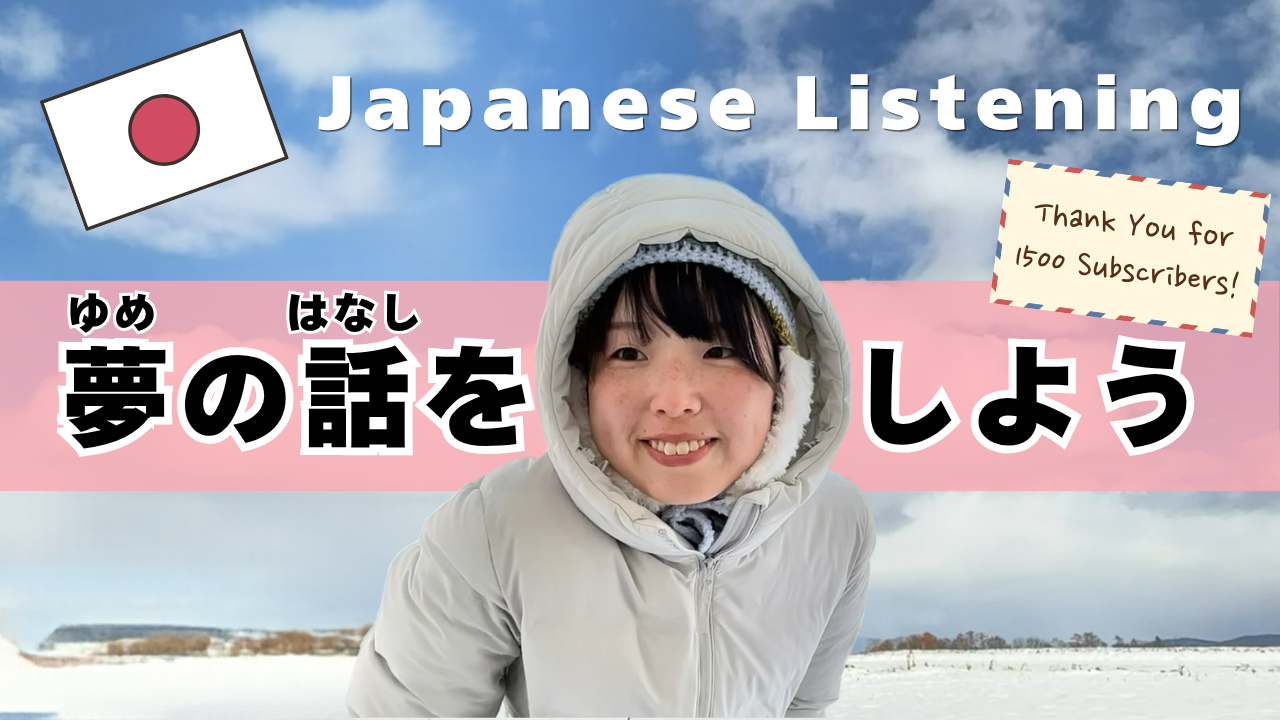
夢について話そう 〜1500人ありがとう〜What Are Your Dreams?
Snow has arrived in Hokkaido, and 1,500 people have found this channel. In this episode, I revisit a childhood wish to exchange letters with someone far away and talk about the many dreams that now keep me awake at night.I imagine touching paper from around the world, making books and a little library, and building a home for Late Night Japanese Chat. Read the Japanese transcript with furigana and English subtitles, and explore five Japanese words for dreams, wishes, goals, hope, and ambition.

What You’ll Learn
Dreams and imagination: Follow how one small idea leads to another, from letters and paper to a library, a home, and meeting listeners around the world.Five related Japanese words: Learn the different feelings behind 夢, 願い, 目標, 希望, and 野望 through personal examples.Putting thoughts into words: Notice expressions for wondering, hoping, trying, and discovering what you want by saying it aloud.
Transcript
Snow has arrived in Hokkaido
1. 雪の世界から
Snow has arrived in Hokkaido
みなさん、こんにちは。Haruです。お元気ですか? 見てください。
English: Hello, everyone. I'm Haru. How are you? Look at this.
もう雪の世界になりました。先週の土曜日かな? 朝起きたら、もう一面真っ白になっていて、私もね、驚きました。
English: The world has turned snowy. I think it was last Saturday. When I woke up, everything was white. I was surprised, too.
え、もう冬来たの?っていう感じで、風もね、強いんですよね。
English: I thought, "Winter already?" And the wind is strong as well.
今ね、午前中の11時頃なんですけど、気温が今1度ですね。寒い。
English: It's around 11 in the morning, and it's 1°C now. It's cold!
今日はね、ちょっとお話ししたいことがあって、夢についてお話ししたいなと思っています。
English: There's something I'd like to talk about today. I'd like to talk about dreams.
よかったら最後まで聞いてくれたら嬉しいです。
English: I'd be happy if you listened to the end.
COJI-COJI's answer
2. コジコジの答え
COJI-COJI's answer
はい、ということで今日は夢についてお話ししたいんですけど、みなさんは小さい頃「将来の夢は何ですか?」と聞かれたことがありますか?
English: So, today I'd like to talk about dreams. When you were little, were you ever asked, "What do you want to be when you grow up?"
私はね、この質問を聞くと、私の大好きな漫画『コジコジ』に出てくる好きな言葉を思い出します。
English: Whenever I hear that question, I remember a line from a manga I love, called COJI-COJI.
コジコジを知らない人もいるかもしれないので、少しだけ説明しますね。
English: Some of you may not know COJI-COJI, so let me explain a little.
みなさんは『ちびまる子ちゃん』を知っていますか?
English: Do you know Chibi Maruko-chan?
日本の小学生のまる子と、家族や友達の日常を描いた漫画です。日本ではとても長く親しまれている作品です。
English: It's a manga about the everyday life of a Japanese schoolgirl, Maruko, her family, and her friends. People in Japan have loved it for a long time.
その『ちびまる子ちゃん』を描いた、さくらももこさんの、もう一つの代表作が『コジコジ』です。
English: Momoko Sakura, who created Chibi Maruko-chan, also created another famous work: COJI-COJI.
ちょっとね、昔の漫画ではあるんですけれども、とても面白いので、よかったらね、みなさんにも見てもらいたいなと思います。
English: It's an older manga, but it's so interesting. I'd love for you to read it, too.
YouTubeでコジコジと調べると、今までのね、アニメも公開されているので、ぜひ見てみてください。
English: If you search for COJI-COJI on YouTube, you can find the anime there, so have a look.
そして主人公のコジコジは、年齢も性別も分からない、不思議な宇宙の生き物なんです。
English: The main character, COJI-COJI, has no known age or gender. COJI-COJI is a mysterious being from space.
メルヘンの国というところで、個性的な仲間たち、友達と暮らしています。
English: COJI-COJI lives in a place called Fairyland with a group of quirky friends.
コジコジはね、とってものんびりしていて、話が通じているのか分からないときもよくあります。
English: COJI-COJI is very easygoing, and sometimes you can't tell if COJI-COJI understands you.
でもね、ときどき、大人が聞いても、はっとするようなことを言うんです。
English: But every now and then, even adults hear COJI-COJI say something that stops them in their tracks.
第1話で、テストでね、悪い点数を取ったコジコジに先生が怒って「将来の夢は?」と聞きます。
English: In the first episode, COJI-COJI gets a bad test score. The teacher gets angry and asks, "What is your dream for the future?"
そしてコジコジは、こう答えるんです。
English: And COJI-COJI answers like this:
「コジコジだよ。コジコジは、生まれた時からずーっと、将来もコジコジはコジコジだよ」
English: "I'm COJI-COJI. I've been COJI-COJI ever since I was born, and I'll still be COJI-COJI in the future."
分かりますか?
English: Do you see what I mean?
私ね、初めてそれを聞いたときに笑ってしまったんですけど、でもなんだか、ほっとする答えだなあと思ったんです。
English: I laughed when I first heard it, but I also found the answer comforting.
夢って言われると、何か立派なものを想像してしまっていたんですけれども、私は私のままでいい。そんなふうにも聞こえるかなと思います。
English: When people talked about dreams, I used to imagine that they had to be something impressive. But it's okay for me to stay who I am. That's how those words sound to me, too.
どこに行っても、何をしても、私は私のまま。
English: Wherever I go and whatever I do, I'm still me.
これはね、とても大切な考え方だと思って、今もね、大事にしている考え方です。
English: I think that's such an important way to see things, and I still hold on to it.
で、そんな、なんか、まあね、それでも夢とかやりたいことっていうのはたくさんありますから、今夜は、まず私が子どもの頃の願い、そして今の私の夢、最後に、まあ、夢と同じような日本語についてお話ししたいと思います。
English: Well, even so, there are so many things I dream of doing. Tonight I'll start with a wish I had as a child, then talk about my dreams now, and finally, some Japanese words that are close to the word "dream."
よかったら最後まで聞いてください。今日も聞いてくれてありがとうございます。
English: I hope you'll stay until the end. Thank you for listening today.
Thank you for 1,500 listeners
3. 1500人、ありがとう
Thank you for 1,500 listeners
あ、それでね、このチャンネルを見つけてくれた方が1500人になりました。
English: Oh, and the number of people who have found this channel has reached 1,500.
みなさん、ありがとうございます。
English: Thank you, everyone.
こんなにね、たくさんの方に聞いてもらえるなんて、もう嬉しい以外の気持ちがありません。
English: I never imagined so many people would listen. I feel nothing but happiness.
1500という数字だけを見ると、もうね、大きすぎて、私にはまだよく分かりません。
English: When I just look at the number 1,500, it's so big that I can hardly grasp it.
でも、コメントとかいただくと、その向こうにはね、本当に一人ひとりの生活があるんだなあと感じます。
English: But when I receive comments, I feel that behind that number, each person has a life of their own.
朝、この番組を聞いている人。仕事や学校へ行く途中で聞いてくれている人。夜、眠る前に聞いている人。
English: Some of you listen in the morning. Some listen on the way to work or school. Others listen at night before bed.
みなさんが住んでいる場所には、それぞれ違う空や、違う音、違う時間があるんですよね。
English: Where you live, you each have a different sky, different sounds, and a different time of day.
その中の少しの時間を、この番組と一緒に過ごしてくれた。それを考えるとね、やっぱりね、とっても不思議だなあと思います。
English: You spend a little of that time with this show. When I think about it, it feels quite wonderful and strange.
そして1500人のみなさんと出会ったら、これから何ができるんだろうと、前よりももっと考えるようになりました。
English: Now that I've met all 1,500 of you, I find myself wondering what we could do together. I think about it more than I used to.
一つ考えると、もう一つ浮かびます。そこからまた次の夢が出てきます。
English: One idea leads to another. Then another dream appears.
今日はね、私の頭の中にある夢を、できるだけたくさん話してみようと思います。
English: Today, I want to share the dreams in my head, as many as I can.
みなさんもよかったら、自分の夢を思い浮かべながら聞いてください。
English: If you'd like, think of your own dreams while you listen.
My childhood wish for a pen pal
4. 子どもの頃の文通
My childhood wish for a pen pal
私がね、小学生の頃の話をします。
English: Let me tell you about when I was in elementary school.
私は、外国に住んでいる人と手紙のやり取りをする文通がしたくて、親にお願いしたことがあります。
English: I wanted to exchange letters with someone living in another country, so I asked my parents to help me find a pen pal.
当時はね、漫画の広告にあったのかな? お金を払って申し込むサービスでした。
English: I think I saw an ad for it in a manga. It was a service you had to pay to join.
でもね、結局、私の文通相手は見つかりませんでした。そのまま文通を始めることはできなかったんです。
English: But in the end, they couldn't find me a pen pal. So I never got to start writing to one.
私は昔から、手紙を書くことや、紙に触れることが好きでした。
English: I've always loved writing letters and touching paper.
遠くの国の誰かが選んだ便箋、その人が書いた文字、その紙が長い時間をかけて自分のところへ届く。
English: Someone far away choosing stationery and writing on it, then that paper traveling all the way to me.
それを想像するだけで、もう本当にわくわくしていたんだと思います。
English: Just imagining that made me so excited.
当時はね、結局かなうことはなかったんですけど、あの頃の私に、今の私が教えてあげたいことがあります。
English: It didn't happen back then, but there's something I'd like to tell my younger self:
「大丈夫だよ。時間はかかったけど、その願いはちょっと違う形でかなったよ」
English: "It's okay. It took time, but your wish came true in a different way."
今、私はこの番組を通して、世界のいろいろな場所にいる人とつながっています。
English: Now, through this show, I'm connected with people in many places around the world.
子どもの頃に想像していた文通とは少し違います。でも、遠くの誰かと言葉のやり取りをしたいという気持ちは、子どもの頃と同じです。
English: It's different from the pen pal I imagined as a child. But I still want to exchange words with someone far away. That feeling has stayed with me since childhood.
夢はね、かなうときに少し変装していることもあるのかもしれませんね。
English: Maybe dreams sometimes change their appearance before they come true.
最初は気づかなくても、あとから振り返って「あ、これがあのときの願いだったんだ」と分かることがあります。
English: You may not notice at first, but when you look back, you might realize, "That was the wish I had back then."
今日ね、夢の話をしようと思って、いろいろと思い出していたんですけど、そのときに、この文通の話を思い出しました。
English: As I thought about talking about dreams today, I began remembering all sorts of things. That's when I remembered wanting a pen pal.
それまではね、なんか忘れていたんですよね。だから、最初は本当に気がつきませんでした。
English: I'd almost forgotten about it. So I didn't notice the connection at first.
でも、やりたかったことって一緒なんだなと思って、嬉しくなりました。
English: But then I realized I still wanted the same thing, and that made me happy.
The dreams I have now
5. 今の私の夢
The dreams I have now
ではね、大人になった今の私の夢は何かというと、本当にたくさんあります。
English: So what do I dream of now that I'm an adult? Honestly, there are so many things.
まずね、この番組をもっと近くで楽しんでもらえる場所を作ってみたいです。
English: First, I'd like to make a place where you can enjoy this show more closely with me.
それはね、いろいろな方法があるかなと思うんですけど、例えばメンバーシップのような場所とか、少人数で集まって、日本語でおしゃべりする時間も作りたいです。
English: There are many ways to do that. Maybe a membership space, or a small group where we can spend time chatting in Japanese.
4人くらいかな。4人くらいで、お茶を飲みながら話せたら楽しそうだなと思います。
English: Perhaps around four people. It would be lovely to sit with four people over tea and talk together.
間違えてももちろん大丈夫で、話すことが見つからない日は、例えば今日食べたものの話だけでもいい。そんな気楽な時間です。
English: Mistakes would be fine, of course. If nobody knows what to say, we could just talk about what we ate that day. I'd like it to be that relaxed.
それから、手紙のクラブも作りたいです。
English: I'd also like to start a letter club.
例えば北海道の季節のポストカードを送ったり、毎月一つ「今月の日本語」を選んだりしたいです。
English: I could send postcards showing Hokkaido's seasons, and choose one "Japanese word of the month" each month.
あとはね、夜にみんなで集まるオンラインのお茶会も楽しそうですよね。
English: An online evening tea gathering would be fun, too.
ときどき生放送をして、その日あった小さなことを話すのもいいですね。
English: We could sometimes do a live stream and talk about the little things that happened that day.
みなさんから届いた質問や手紙を読む、本当の深夜ラジオのような回も作ってみたいです。
English: I'd also love to read the questions and letters you send, in an episode like a real late-night radio show.
ここまではね、少し頑張ればできそうな夢かなと思います。
English: These are dreams I might be able to make happen with a little effort.
でもね、眠る前に考え始めると、ここでは終わらないんですよ。
English: But once I start thinking before bed, I don't stop there.
一つの夢から、次の夢が出てくるんです。頭の中でどんどん話が大きくなって、眠る時間なのに、目が冴えてきてしまいます。
English: One dream leads to the next. The ideas get bigger and bigger in my head, even though it's bedtime, and suddenly I'm wide awake.
Paper from around the world
6. 世界中の紙に触れたい
Paper from around the world
私はね、紙が好きです。世界にはどんな紙があるんだろうと、わくわくします。
English: I love paper. I wonder what kinds of paper exist around the world.
ざらざらした紙。つるつるした紙。とても薄くて、向こう側が透けて見える紙。花や葉っぱが混ざった、手作りの紙。
English: Rough paper. Smooth paper. Paper so thin that you can see through it. Handmade paper with flowers or leaves mixed in.
世界中の紙に、実際に触ってみたいです。
English: I want to touch paper from all over the world.
立派な紙だけではありません。その国の便箋や封筒、古い切符、お菓子の包み紙もいいですね。あとは、小さなお店の紙袋。
English: And not just fancy paper. The country's stationery and envelopes, old tickets, and candy wrappers would be wonderful, too. And paper bags from small shops.
誰かが買い物をしたときにもらったレシートにも、その国の文字や数字、その日の生活が残っています。
English: Even a receipt someone got while shopping holds that country's letters and numbers, and a trace of that day.
紙の色や匂い、厚さ、指で触ったときの感触を、一つずつ確かめてみたいです。
English: I want to notice each paper's color, smell, thickness, and how it feels beneath my fingers.
そしていつか、みなさんの町の紙を一枚ずつ送ってもらって、世界の紙を集めた大きな本を作りたいです。
English: Someday, I hope you'll each send me one piece of paper from your town, so I can make a big book of paper from around the world.
紙の横には「これは私の町のパン屋さんでもらった紙です」とか、その紙を選んだ人の言葉も添えます。
English: Beside each piece, I'd write something like, "I got this paper at the bakery in my town," along with a note from the person who chose it.
ページをめくるたびに、違う国の手触りがする本です。
English: Every page would let you feel a different country.
ああ、なんか自分で話していたら、本当に作りたくなってきました。
English: The more I talk about it, the more I truly want to make it.
世界の紙だけを集めた、小さな図書館も作りたいですね。
English: I'd love a little library devoted entirely to paper from the world.
毎月、違う国の紙が届く箱も楽しそうです。その紙に手紙を書いて、また別の国へ送るんです。
English: A box with paper from a different country each month would be fun. You could write a letter on it and send it to another country.
あとは、紙を作っている工房を訪ねる旅もしたいです。
English: I'd also love to visit workshops where paper is made.
他にはね、日本語の言葉と、北海道や日本の写真を集めた小さな本も作りたいです。
English: And I want to make a little book of Japanese words and photographs from Hokkaido and the rest of Japan.
毎朝一枚だけ選べる「今日の言葉」のカードも作りたいです。
English: I'd like to make "today's word" cards, with one to choose each morning.
世界中から届いた手紙を壁いっぱいに飾って、大きな地図に、聞いてくれている人の町へ印をつけたいです。
English: I'd cover a wall with letters from around the world, and mark your towns on a big map.
あとは、みなさんの町の音も送ってほしいです。
English: I'd love for you to send sounds from your towns, too:
雪を踏む音、バスが来る音、市場が開く音、鳥の声。
English: footsteps in snow, an arriving bus, a market opening, and birdsong.
世界の音を集めて、一つの番組を作ってみたいです。
English: I'd like to make a show from sounds around the world.
私も日本のいろいろな町を旅して、その土地の言葉や生活の音を録りたいです。
English: I want to travel to different towns in Japan, too, recording local words and the sounds of daily life.
そしてね、いつか日本のどこかに、この番組の家を作りたいなと思っています。
English: And someday, somewhere in Japan, I'd like to build a home for this show.
大きなテーブルと本棚があって、世界の紙に手紙を書ける家です。
English: It would have a big table and bookshelves, and a place to write letters on paper from around the world.
庭には野菜と花を植えて、夏は畑で日本語を話して、冬はストーブを囲んで、みんなでお話をします。
English: We'd grow vegetables and flowers, and speak Japanese in the garden in summer. In winter, we'd gather around the stove and talk.
それから小さな録音室も作って、雪の夜に、そこから本当のLate Night Japanese Chatをお届けしたいなと思っています。
English: I'd build a small recording room, too, and on snowy nights, I'd bring you a real Late Night Japanese Chat from that room.
いつか私が、みなさんの町へ会いに行くのも、大きな夢の一つです。
English: Another big dream is to visit your towns and meet you someday.
いろいろな国で「日本語の夜」を開いて、最後は世界中のみなさんと、大きなテーブルを囲みたいです。
English: We could hold "Japanese nights" in different countries, and finally, with all of you from around the world, gather around one big table.
これは夢でしょうか? それとも野望でしょうか?
English: Is that a dream? Or is it an ambition?
How words connect our dreams
7. 言葉にすると、夢が動き始める
How words connect our dreams
こうして話してみると、夢は一つずつ、別々にあるわけではないんですね。
English: Now that I've said all this, I see that my dreams aren't separate little things.
手紙を書きたいと考えたら、世界の紙に触れたくなりました。
English: Wanting to write letters made me want to touch paper from around the world.
紙を集めたいと考えたら、今度は本や図書館を作りたくなりました。
English: Wanting to collect paper made me want to make books and a library.
図書館を想像したら、今度はみなさんと集まれる家がほしくなりました。
English: Imagining a library made me want a house where we could gather.
一つの言葉から、次の景色が出てきます。こうやって連想していくこと自体が、とっても面白いなと思います。
English: One word opens up the next scene. Following those connections is itself so much fun.
もちろん、全部がうまくいくとは思っていません。
English: Of course, I don't think everything will go perfectly.
やってみて失敗するかもしれないし、思うように進まなくて、落ち込む日もあると思います。
English: I might try and fail, or things might not go as I hoped. There will probably be days when I feel down.
でも、やってみなければ分からないですよね。
English: But we can't know until we try, can we?
それに、今日こうして話したことが、何かにつながるかもしれません。
English: And something I say here today might lead to something else.
例えば、この話を聞いた誰かが「あ、その紙なら私の町にあります」と教えてくれるかもしれない。
English: Someone listening might say, "We have that kind of paper in my town."
「私も手紙が好きです」と言ってくれる人がいるかもしれない。
English: Or someone might say, "I love letters, too."
あるいは、私の夢が、誰かの次の一歩を考えるヒントになるかもしれません。
English: Maybe one of my dreams will give someone a clue for their own next step.
頭の中だけにあるとき、夢はまだぼんやりとしています。
English: When a dream stays in your head, it can feel vague.
でも、声に出して言葉にすると「あ、私はこれがしたかったんだ」と、自分で気づくことがあります。
English: But when you say it out loud, you might think, "Oh, this is what I wanted to do." Sometimes you only understand it then.
「いつか何かしたい」が「世界の紙を集めた本を作りたい」に変わる。言葉にすると、少しずつ形が見えてくることもあります。
English: "I want to do something someday" can turn into "I want to make a book of paper from around the world." Putting it into words can slowly give it shape.
私たちはね、言葉を使って、誰かとコミュニケーションを取ることができます。
English: We can use words to communicate with other people.
自分の中にあるものを、全部そのまま見せることはできないかもしれません。
English: We may not be able to show everything that's inside us exactly as it is.
というか、私自身も、私のことを100%理解するということは、不可能なんじゃないかなと思っています。
English: In fact, I don't think I can even understand myself one hundred percent.
それでもね、まずは伝えてみる。声に出してみる。発信してみる。
English: Even so, I can start by telling someone. I can try saying it out loud. I can share it with the world.
そこから誰かとつながったり、次に進むためのヒントが見つかったりするのだなと思います。
English: That might help me connect with someone, or find a clue about what to do next.
Japanese words close to dream
8. 夢に近い日本語
Japanese words close to dream
ここでね、夢の近くにある他の日本語も、少しだけ見てみたいなと思います。
English: Now let's look at a few Japanese words that are close to "dream."
「夢」っていう言葉は、将来こうなったらいいなという、大きなイメージですね。
English: Yume, or "dream," can mean something you hope for in the future: a big picture in your mind.
夜、寝ているときに見るものも、同じ「夢」ですね。
English: It also means the dreams you have while you're asleep.
北海道に家を作りたい。これは今の私にとっては、大きな大きな夢です。
English: I want to build a house in Hokkaido. For me, that's a very big dream right now.
「目標」は、夢より具体的なものですね。例えば、数字や期限を決めて、少しずつ近づいていくものです。
English: Mokuhyō, or "goal," is more specific than a dream. You might set a number or deadline and move toward it bit by bit.
「今月、メンバーシップの内容を考える」と決めたら、それは期限がありますから、目標になるかなと思います。
English: If I decide, "I'll plan the membership this month," that has a deadline, so I'd call it a goal.
「願い」は、心の中で「こうなってほしいな」と思う気持ちですね。
English: Negai, or "wish," is the feeling in your heart that you want something to happen.
子どもの頃の文通は、夢というより、この願いだったのかもしれないですね。
English: Wanting a pen pal as a child may have been a wish more than a dream.
他には「希望」。
English: There's also kibō, or "hope."
希望は、未来にはいいことがあるかもしれないと思える、明るい気持ちですね。
English: It's the feeling that something good might happen in the future.
この番組を聞いて「明日も日本語を続けてみよう」と思ってもらえたら、それは私の希望です。
English: If this show makes you think, "I'll keep studying Japanese tomorrow," that is my hope.
そしてね、「野望」。
English: And then there's yabō, or "ambition."
野望は、とても大きくて強い夢ですね。少し冗談っぽく使うこともあるかなと思います。
English: It's a very big and powerful dream. You can sometimes use it jokingly, too.
世界中で日本語の夜を開く。これはね、私の野望と言ってもいいかもしれませんね。
English: Holding Japanese nights all around the world: maybe I can call that my ambition.
夢がね、言葉になって少しずつ具体的になると、いつか明確な目標に変わることがあります。
English: When you put a dream into words and make it more specific, it may eventually become a clear goal.
でも、全部の夢をすぐに目標にしなくてもいいと思います。
English: But you don't have to turn every dream into a goal right away.
まずは言葉にしてみるだけでも、夢は少しずつ動き始めます。
English: Just putting it into words can start to move it forward.
The power to imagine
9. 想像できること
The power to imagine
はい、今日は、まず私の子どもの頃からの願い、そして今の私の夢、最後に夢に近いいろいろな日本語についてお話ししました。
English: Today I talked about a wish from my childhood, my dreams now, and finally, some Japanese words that are close to "dream."
夢はね、大きくなくてもいいし、途中で形が変わってしまってもいい。もちろん、かなうまで長い時間がかかってもいいと思います。
English: Dreams don't have to be big, and it's fine if they change shape along the way. It's fine if they take a long time to come true, too.
それにね、不安になってしまうときもありますけど、実現できるかどうかを最初から考えなくてもいいですよね。
English: Sometimes we feel anxious, but we don't have to decide right away whether a dream is possible.
夢は自由なもので、計画書ではありません。
English: A dream is free. It isn't a project plan.
お金や時間や方法を考える前に「もしできたら」と、自由に想像していいものです。
English: Before thinking about money, time, or methods, we're free to imagine, "What if I could?"
私たちは、まだ目の前にないものを、頭の中に作ることができるんですよ。
English: We can take something we haven't seen yet and create it in our minds.
まだ会ったことのない人。まだ行ったことのない場所。まだどこにもない家や本まで、心の中なら先に見ることができるんです。
English: A person we haven't met. A place we haven't visited. Even a house or book that doesn't exist yet: we can see it in our minds first.
私はね、それが私たちの、とってもすごいところだなと思います。
English: I think that's one of the truly remarkable things about us.
もちろんね、その想像する力があるからこそ、悩むこともありますよね。
English: Of course, because we can imagine, we can worry, too.
まだ起きていない失敗を考えて不安になったり、「どうせ無理かもしれない」と落ち込んだりします。
English: We imagine failures that haven't happened yet and feel down, thinking, "It probably won't work."
私もね、そういうことはよくありますよ。だから大丈夫です。
English: I feel that way often, too. And that's okay.
でも、悪い未来を想像できるなら、まだ見たことのない楽しい未来も想像できますよね。
English: But if we can imagine a bad future, we can also imagine a happy future we haven't seen.
「できなかったらどうしよう」の隣に「できたら、どんな景色が見られるんだろう」と置いてみることができます。
English: Beside "What if I can't do it?" we can place, "What might I see if I can?"
妄想や想像は、何の役にも立たないものではないと思います。
English: I don't think daydreaming and imagining are useless.
今はまだ存在しないものを作るとき、最初に必要なのは「こんなものがあったらいいなあ」と思い描くことができるからです。
English: When we're going to make something that doesn't exist yet, we first need to think, "Wouldn't it be wonderful if something like this existed?"
私はね、眠る前にそんなことを考える時間が好きです。
English: I love spending time with thoughts like that before bed.
一つ考えると、もう一つ浮かびます。
English: One thought brings another.
紙の本を作りたい。図書館もほしい。みなさんともっともっと交流したい。家も作りたい。みなさんに会いに、世界中のいろいろなところに行きたい。
English: I want to make a book of paper. I want a library, too. I want to connect with all of you even more. I want to build a house. I want to travel all over the world to meet you.
それでね、わくわくして、少し眠れなくなります。
English: Then I get so excited that I can't quite fall asleep.
今日ね、ここで話したからといって「全部、必ず実現します」と約束するわけではありません。
English: Talking about these things today doesn't mean I'm promising that every single one will definitely happen.
でも、話す前よりも、私の中では少しだけ具体的になりました。
English: But they're a little clearer to me now than before I spoke.
すぐに行動できない日があってもいいし、途中で立ち止まってもいいと思います。
English: It's okay to have days when I can't act yet, or to stop for a while along the way.
まず想像できたこと。次に、それを言葉にできたこと。それだけでも、昨日までとは少し違いますよね。
English: First, I was able to imagine it. Next, I was able to put it into words. Even that makes today a little different from yesterday.
子どもの頃の文通の願いが違う形でかなったように、今夜話した夢も、いつか少し変装して現れるかもしれません。
English: Just as my childhood wish for a pen pal came true in another form, the dreams I shared tonight may reappear in a different guise someday.
もしかしたら、今日この話を聞いてくれた誰かの言葉とつながって、私一人では思いつかなかった形になるかもしれません。
English: Maybe they'll connect with the words of someone who listened today, and become something I couldn't have imagined alone.
そしてコジコジみたいに「将来も私は私だよ」と思いながら、私は私のままで、いろいろな夢を見ていたいです。
English: And like COJI-COJI, I want to think, "I'll still be me in the future," and keep dreaming all kinds of dreams just as I am.
夢がかなうかどうかだけではなく、夢を見られることそのものを、大切にしていきたいなと思います。
English: It's not only whether a dream comes true that matters to me. I want to treasure the very fact that I can dream.
みなさんの子どもの頃の夢は何でしたか?
English: What did you dream of as a child?
そして今、どんな夢がありますか?
English: And what are your dreams now?
一つだけではなく、思いつくまま、全部教えてください。
English: Don't stop at one. Tell me everything that comes to mind.
小さな夢でも、大きな野望でも、少し変な夢でも大歓迎です。コメントを読むのを、いつも楽しみにしています。
English: Small dreams, big ambitions, even slightly odd dreams are welcome. I always look forward to reading your comments.
はい、ということで、今日は夢についてのお話をしました。最後まで聞いてくれてありがとうございました。
English: So today, I talked about dreams. Thank you for listening to the end.
今日のトランスクリプトも概要欄のリンクから読めるようにしますので、よかったら見てください。
English: I'll make today's transcript available through the link in the description, so please have a look if you'd like.
今日の話が面白かったら、Goodボタンやチャンネル登録で応援してもらえたら嬉しいです。
English: If you enjoyed today's talk, I'd be happy if you supported me with a like or by subscribing to the channel.
早くメンバーシップとかも始めて、みなさんともっと交流できる場所があったらいいなと思っています。
English: I hope to start something like a membership soon and make a place where I can connect with you even more.
みなさん、いつも聞いてくれてありがとうございます。
English: Thank you, as always, for listening.
それでは今夜はここまで。今日も聞いてくれてありがとうございました。おやすみなさーい。
English: That's all for tonight. Thank you for listening today. Good night!
Vocabulary
Each word includes the original line from the transcript and one extra example. Use “See in transcript” to jump back to the conversation.
夢a dream; something you hope for, or a dream while sleeping
FROM THE TRANSCRIPT
夢は自由なもので、計画書ではありません。
EXAMPLE
いつか小さな本屋を開くのが私の夢です。
My dream is to open a small bookstore someday.
目標a concrete goal or target
FROM THE TRANSCRIPT
「目標」は、夢より具体的なものですね。例えば、数字や期限を決めて、少しずつ近づいていくものです。
EXAMPLE
今月は日本語の本を一冊読むことを目標にしています。
My goal this month is to read one book in Japanese.
願いa wish; something you hope will happen
FROM THE TRANSCRIPT
「願い」は、心の中で「こうなってほしいな」と思う気持ちですね。
EXAMPLE
離れて暮らす友達が元気でいることが、私の願いです。
My wish is for my friend who lives far away to be well.
希望hope; a bright feeling about the future
FROM THE TRANSCRIPT
希望は、未来にはいいことがあるかもしれないと思える、明るい気持ちですね。
EXAMPLE
新しい仕事が決まり、未来に希望が見えてきました。
After finding a new job, I began to feel hopeful about the future.
野望a big ambition, sometimes said playfully
FROM THE TRANSCRIPT
野望は、とても大きくて強い夢ですね。少し冗談っぽく使うこともあるかなと思います。
EXAMPLE
世界中の図書館を訪ねるのが、私の野望です。
My ambition is to visit libraries around the world.
Cultural Notes
COJI-COJI and Chibi Maruko-chan share a creator. I introduce Momoko Sakura's COJI-COJI through Chibi Maruko-chan, another of her works. COJI-COJI's answer to a question about the future reminds me that I can remain myself while having many dreams.
文通 means exchanging letters with a pen pal. As a child, I wanted a pen pal in another country. The letters never began, but I now exchange words with people far away through this show.
野望 can sound playful in conversation. It describes a strong, large ambition. Here I use it with a smile when I imagine holding Japanese nights around the world.
Haru’s Note
Remembering my childhood wish for a pen pal led me to say my dreams aloud. One dream brought another, and putting them into words helped me see their shape a little more clearly. I am grateful to have met all of you through this show.
子どもの頃の文通の願いを思い出し、今の夢を声に出して話してみました。一つの夢から次の夢が生まれ、言葉にすることで少しずつ形が見えてきます。みなさんと出会えたことにも、いつも感謝しています。

コメント