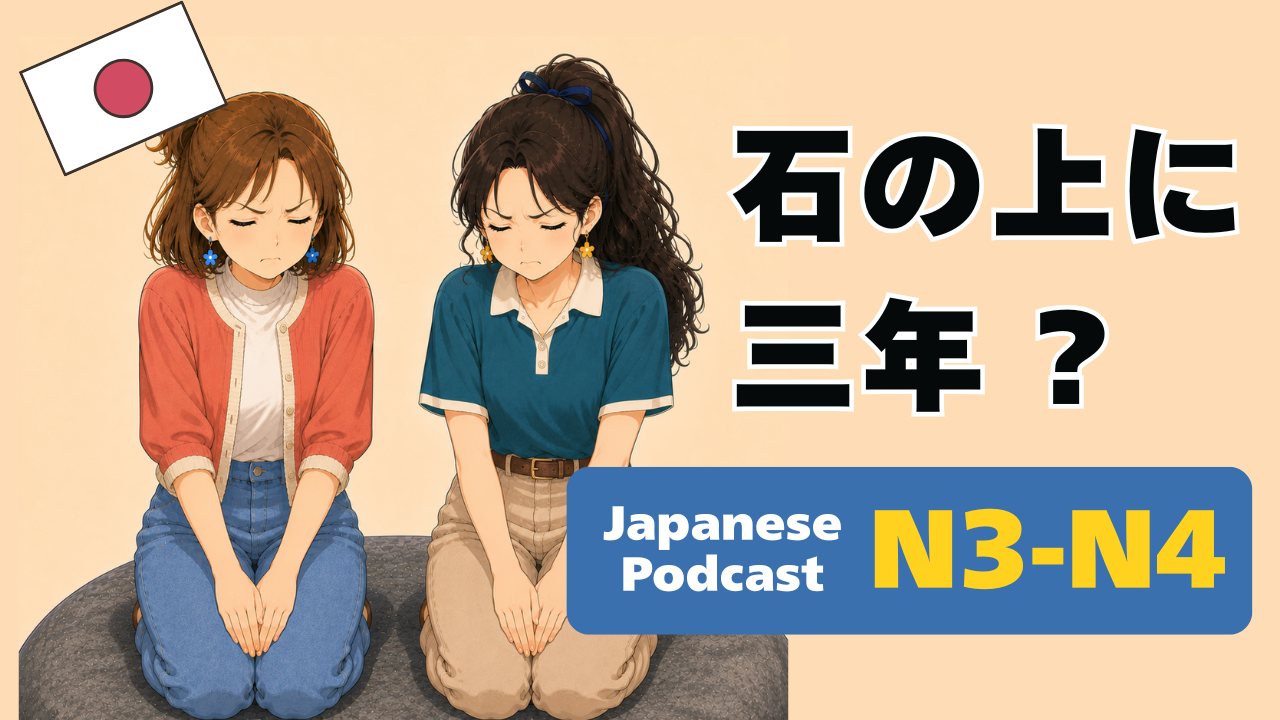
「石の上にも三年」の意味Why Sit on a Stone for Three Years?
What does it really mean to sit on a cold stone for three years? In this episode, Misaki and Nozomi unpack a famous Japanese proverb—and ask when persistence helps and when changing course is the wiser choice.
What You’ll Learn
Follow the conversation in natural Japanese with furigana, then check the English translation directly below each line. Listen for the proverb’s literal image, the symbolic meaning of ‘three years,’ and the difference between perseverance and harmful endurance.
Transcript
Three more years on a stone
1. あと三年、石に座ります
Three more years on a stone
Nozomi ねえミサキ、さっきから何してるの?
English: Hey Misaki, what have you been doing this whole time?
Misaki 石の上に座っています。
English: I am sitting on a stone.
Nozomi 見れば分かるよ。なんで?
English: I can see that. Why?
Misaki あと三年、ここに座ります。
English: I am going to sit here for three more years.
Nozomi 三年!? お尻が大変なことになるよ!
English: Three years!? Your bottom will be in serious trouble!
Misaki 「石の上にも三年」ですから。
English: Because they say, “Three years on a stone.”
Nozomi それ、本当に石に座る話なの?
English: Is that proverb really telling you to sit on a stone?
Misaki 違うと思う。
English: Probably not.
Nozomi じゃあ、早く立って。
English: Then stand up now.
Misaki はい。
English: Okay.
Nozomi でも、このことわざ、日本人なら一度は聞いたことがあるよね。
English: But almost every Japanese person has probably heard this proverb at least once.
Misaki うん。勉強、部活、仕事。何かをやめたいと言うと、どこからか聞こえてくる。
English: Yes. Study, school clubs, work. Whenever you say you want to quit something, the phrase seems to come from somewhere.
Nozomi 「石の上にも三年だよ。もう少し頑張りなさい」。
English: “Three years on a stone. You should keep trying a little longer.”
Misaki 日本人のDNAに刻まれてる気がする。
English: Sometimes it feels like it is written into Japanese DNA.
Nozomi もちろん、本当のDNAではありません。
English: Of course, it is not literally in our DNA.
Misaki でも、それくらい有名なことわざです。
English: But that is how famous this proverb is.
Nozomi そこで今日は、三つのことを話します。
English: So today, we will talk about three things.
Misaki 一つ目。「石の上にも三年」は、どういう意味?
English: First, what does “ishi no ue ni mo sannen” mean?
Nozomi 二つ目。どうして三年なの? 本当に三年必要?
English: Second, why three years? Do you really need exactly three years?
Misaki 三つ目。続けることと、ただ我慢することは同じなの?
English: Third, are continuing and simply enduring the same thing?
Nozomi ということで始まりました、Late Night Japanese Chat。
English: And with that, welcome to Late Night Japanese Chat.
Misaki 私たち、ミサキと、
English: We are Misaki and…
Nozomi ノゾミがお届けします。今日も楽しく話していきましょう。
English: Nozomi. Let’s have another fun conversation today.
Can a cold stone become warm?
2. 冷たい石も、いつか温かくなる?
Can a cold stone become warm?
Misaki まず、一つ目。ことわざを、言葉どおりに見てみよう。
English: First, let’s look at the proverb literally.
Nozomi 「石の上にも三年」。石は、冷たい。
English: “Three years on a stone.” A stone is cold.
Misaki でも、長い間ずっと座っていれば、冷たい石も温かくなる。
English: But if you sit on it for a long time, even a cold stone will become warm.
Nozomi 人間の体温で?
English: From your body heat?
Misaki そういうイメージだね。そこから、「大変でも、辛抱強く続ければ、いつか結果が出る」という意味で使われます。
English: That is the image. It means that even when something is difficult, patiently continuing can eventually bring results.
Nozomi 「辛抱」は、つらいことがあっても、耐えて続けること。
English: “Shinbo” means enduring difficulty and continuing patiently.
Misaki たとえば、新しい仕事を始めたけど、分からないことばかりで自信がない。
English: For example, you start a new job, but everything is unfamiliar and you lack confidence.
Nozomi でも、少しずつ仕事を覚えて、できることが増えていく。
English: But little by little, you learn the job and become able to do more.
Misaki そんなときに、「石の上にも三年。すぐに諦めないで」と言います。
English: In that situation, someone may say, “Three years on a stone. Do not give up right away.”
Nozomi 楽器やスポーツ、日本語の勉強にも使えそう。
English: It can also apply to learning an instrument, playing sports, or studying Japanese.
Misaki 最初は、毎日やっても全然上手になっていない気がする。
English: At first, you may practice every day and still feel that you are not improving at all.
Nozomi でも、三か月前の自分と比べると、少しできるようになっている。
English: But when you compare yourself with three months ago, you notice that you can do a little more.
Misaki すぐには見えない変化を信じて、続ける。そこが、このことわざのいいところだね。
English: You trust the progress that is not immediately visible and keep going. That is the positive side of this proverb.
Does it really mean three years?
3. 「三年」は本当に三年?
Does it really mean three years?
Nozomi では、二つ目。本当に三年続けないといけないの?
English: Now for the second point: do you really have to continue for three years?
Misaki 三年ちょうど、という意味ではありません。
English: It does not mean exactly three years.
Nozomi よかった。今日から千九十五日、数えなくていいんだ。
English: Good. I do not have to count 1,095 days from today.
Misaki うるう年が入ったら、もっと複雑になるよ。
English: It would become even more complicated if there were a leap year.
Nozomi じゃあ、どうして「三」なの? 一年でも、五年でもなくて。
English: Then why “three”? Why not one year or five years?
Misaki 日本語のことわざでは、「三」が一つの区切りや、長い時間を表す数字として使われることがあります。
English: In Japanese proverbs, “three” is sometimes used as a symbolic number for a meaningful period or a long time.
Nozomi つまり、「三年」は、カレンダーの三年より、「すぐに諦めないで、しばらく続けよう」に近い。
English: So “three years” is less about the calendar and closer to “do not give up immediately; keep going for a while.”
Misaki そう。三年たった瞬間に、急に成功するわけでもないしね。
English: Exactly. Success does not suddenly arrive the moment three years have passed.
Nozomi あと十秒。九、八、七……。
English: Ten seconds left. Nine, eight, seven…
Misaki 何を待ってるの?
English: What are you waiting for?
Nozomi 三年続けたから、急に天才になる予定。
English: I have continued for three years, so I am scheduled to become a genius suddenly.
Misaki そのシステムなら、みんな続けるね。
English: If it worked like that, everyone would keep going.
Nozomi 大切なのは、数字より、その時間に何をするかなんだ。
English: What matters is not the number, but what you do during that time.
Misaki うん。同じ場所にいるだけではなくて、試したり、失敗したり、少しずつ学んだりすることだね。
English: Right. It is not only about staying in the same place. It is about trying, failing, and learning little by little.
When do Japanese people say it?
4. 日本人は、いつこの言葉を使う?
When do Japanese people say it?
Nozomi このことわざ、どんな場面でよく聞く?
English: In what situations do people often hear this proverb?
Misaki やっぱり、何かをやめたいときかな。仕事を始めて、まだ半年だけど、うまくいかない。
English: Usually when someone wants to quit something. Perhaps they started a job six months ago, but it is not going well.
Nozomi すると、家族や先輩が言います。
English: Then a family member or senior colleague says it.
Misaki 「石の上にも三年。まだ半年でしょ?」
English: “Three years on a stone. It has only been six months, right?”
Nozomi ああ、聞こえる。日本のどこかから聞こえる。
English: Oh, I can hear it. I can hear it coming from somewhere in Japan.
Misaki さっきのDNAの話?
English: Are we back to the DNA joke?
Nozomi うん。特に、上の世代から言われるイメージがある。
English: Yes. I especially imagine hearing it from an older generation.
Misaki 昔は、同じ会社や同じ仕事を長く続けることが、今より大切に考えられていたからね。
English: In the past, staying with the same company or job for a long time was often valued more than it is today.
Nozomi 会社だけじゃなくて、部活や習い事でも、「一度始めたなら、簡単にやめない」。
English: Not only at work. In school clubs and lessons too, people say, “If you start something, do not quit too easily.”
Misaki その考え方に助けられることもある。始めたばかりのときは、誰でも下手だから。
English: That way of thinking can help us. Everyone is a beginner when they first start.
Nozomi 最初の「できない時期」を越えたら、急に面白くなることもあるよね。
English: Once you get through the early stage of not being able to do it, it may suddenly become enjoyable.
Misaki そう。少し続けたからこそ、見える景色もある。
English: Exactly. Some things only become visible after you have continued for a while.
Nozomi 日本語もそうかも。ひらがなを覚えているときは、まだ会話まで遠く感じる。
English: Japanese may be like that too. When you are still learning hiragana, conversation feels very far away.
Misaki でも、続けると、ある日、ドラマの一言が聞こえる。
English: But if you continue, one day you understand a line in a drama.
Nozomi 「今、分かった!」っていう瞬間、嬉しいよね。
English: The moment you think, “I understood that!” feels wonderful.
Continuing vs. enduring
5. 続けることと、我慢すること
Continuing vs. enduring
Misaki では、三つ目。続けることと、ただ我慢することは同じなのか。
English: Now for the third point: are continuing and simply enduring the same thing?
Nozomi 昔は、かなり同じように使われていた気がする。
English: I feel that people used to treat them as almost the same thing.
Misaki 「つらくても我慢する」「途中でやめない」ことが、強さだと考えられる場面は多かったね。
English: There were many situations where strength meant enduring hardship and not quitting halfway.
Nozomi 今も、続ける力は大切。でも、何があっても三年耐える、という意味ではないよね。
English: The ability to continue is still important. But it does not mean enduring absolutely anything for three years.
Misaki うん。たとえば、練習が難しい。覚えることが多い。すぐに上手にならない。
English: Right. Perhaps practice is difficult, there is a lot to learn, or you do not improve immediately.
Nozomi それは、続けることで変わる可能性がある。
English: Those things may change if you continue.
Misaki でも、体や心が壊れそう。ひどい言葉を毎日言われる。危険な環境にいる。
English: But perhaps your body or mind is close to breaking, you are treated badly every day, or you are in a dangerous environment.
Nozomi それは、「石の上にも三年」で我慢しなくていい。
English: You do not have to endure that because of this proverb.
Misaki 石が冷たいだけなら、少し待ってもいい。でも、石に大きな針が出ていたら?
English: If the stone is only cold, perhaps you can wait a little. But what if the stone has large spikes sticking out of it?
Nozomi すぐ立って! 三年どころか、三秒もだめ!
English: Stand up immediately! Not three years, not even three seconds!
Misaki そういうこと。
English: Exactly.
Nozomi 「つらい」の中にも、成長の途中のつらさと、自分を傷つけるつらさがあるんだね。
English: There are different kinds of difficulty: the difficulty of growing and the kind that harms you.
Misaki その違いを考えることが大切だと思う。
English: I think it is important to consider that difference.
You can change your stone
6. 同じ石に座り続けなくてもいい
You can change your stone
Nozomi でも、途中でやめたら、「逃げた」と思われそうで怖い人もいるよね。
English: Some people may be afraid that others will think they ran away if they quit.
Misaki うん。でも、やめることと、諦めることも、いつも同じではないよ。
English: Yes. But quitting and giving up are not always the same thing either.
Nozomi どう違うの?
English: What is the difference?
Misaki 方法を変えるために、今のやり方をやめることもある。
English: Sometimes you stop your current approach in order to try a different one.
Nozomi 日本語の教科書が難しすぎたら、もっと自分に合う本に変える。
English: If your Japanese textbook is too difficult, you can change to one that suits you better.
Misaki それは、日本語を諦めたわけじゃない。座る石を変えただけ。
English: That does not mean you gave up Japanese. You simply changed the stone you were sitting on.
Nozomi おお、今日の名言が出ました。
English: Oh, there is today’s wise saying.
Misaki 自分で言って、ちょっと恥ずかしい。
English: I am a little embarrassed that I said it myself.
Nozomi 仕事を変えても、別の場所で経験が役に立つかもしれない。
English: Even if you change jobs, your experience may help you somewhere else.
Misaki そう。続けた時間も、やめた経験も、全部が無駄になるわけではないよ。
English: Exactly. The time you continued and the experience of stopping do not all become meaningless.
Nozomi じゃあ、「石の上にも三年」は、命令じゃなくて、ヒントとして聞けばいいのかな。
English: Then perhaps we should hear this proverb as advice, not as an order.
Misaki うん。「もう少し続けたら、見えるものがあるかもしれないよ」という応援の言葉。でも、最後に決めるのは自分。
English: Yes. It can be encouragement meaning, “If you continue a little longer, you may discover something new.” But the final decision is yours.
Nozomi 石に座るのも、立つのも、別の石を探すのも、自分で決めていい。
English: You can decide whether to sit on the stone, stand up, or look for another stone.
Strength to continue or change
7. 続ける強さと、変える強さ
Strength to continue or change
Misaki では、今日の三つのポイントをまとめよう。
English: Let’s summarize today’s three points.
Nozomi 一つ目。「石の上にも三年」は、大変でも根気強く続ければ、いつか結果が出る、ということわざ。
English: First, “ishi no ue ni mo sannen” means that patiently continuing through difficulty can eventually bring results.
Misaki 二つ目。「三年」は、必ず三年という意味ではなく、長い期間を表しています。
English: Second, “three years” does not mean exactly three years. It represents a long period of time.
Nozomi 三つ目。努力を続けることと、自分を傷つけながら我慢することは違う。
English: Third, continuing your effort is different from enduring something that harms you.
Misaki 続ける強さもある。やり方や場所を変える強さもある。
English: There is strength in continuing, and there is also strength in changing your method or environment.
Nozomi 最初は石に三年座る話だったのに、ちょっと深い話になったね。
English: We started with sitting on a stone for three years, but this became a rather deep conversation.
Misaki じゃあ、最後に一つ聞いていい?
English: Then may I ask one final question?
Nozomi なに?
English: What?
Misaki さっきまで私が座ってた石、どこに行った?
English: Where did the stone I was sitting on go?
Nozomi 腰が痛くなりそうだったから、片づけました。
English: I put it away because it looked like it would hurt your back.
Misaki 三年待たずに?
English: Without waiting three years?
Nozomi 健康が一番です。
English: Health comes first.
Misaki その判断は正しい。
English: That was the right decision.
Nozomi みなさんの国にも、「長く続けることが大切」という意味のことわざはありますか?
English: Does your country have a proverb about the importance of continuing for a long time?
Misaki そして、今、みなさんが続けていることは何ですか?
English: And what are you continuing to work on now?
Nozomi 今夜も聞いてくれて、ありがとうございました。
English: Thank you for listening tonight.
Misaki この番組が、あなたの日本語の「居場所」のひとつになれたら嬉しいです。
English: We would love for this show to become one of your “ibasho” — a place you belong — on your Japanese journey.
Nozomi よかったらチャンネル登録して、また帰ってきてね。
English: If you would like, subscribe and come back again.
Misaki また次回、Late Night Japanese Chatでお会いしましょう。おやすみなさい。
English: See you next time on Late Night Japanese Chat. Good night.
Nozomi おやすみなさい。
English: Good night.
Vocabulary
Each word includes the original line from the transcript and one extra example. Use “See in transcript” to jump back to the conversation.
辛抱patient endurance; perseverance
FROM THE TRANSCRIPT
「辛抱」は、つらいことがあっても、耐えて続けること。
EXAMPLE
あと少し辛抱すれば、新しい仕事にも慣れると思います。
If you hang in there a little longer, I think you’ll get used to the new job.
根気強くpersistently; patiently
FROM THE TRANSCRIPT
「石の上にも三年」は、大変でも根気強く続ければ、いつか結果が出る、ということわざ。
EXAMPLE
毎日少しずつ、根気強く日本語を勉強しています。
I study Japanese patiently, little by little, every day.
諦めるto give up
FROM THE TRANSCRIPT
それは、日本語を諦めたわけじゃない。座る石を変えただけ。
EXAMPLE
一回失敗しただけで、諦めないでください。
Don’t give up just because you failed once.
我慢するto endure; to put up with
FROM THE TRANSCRIPT
努力を続けることと、自分を傷つけながら我慢することは違う。
EXAMPLE
暑いけど、あと十分だけ我慢します。
It’s hot, but I’ll put up with it for just ten more minutes.
区切りa break, boundary, or meaningful stopping point
FROM THE TRANSCRIPT
日本語のことわざでは、「三」が一つの区切りや、長い時間を表す数字として使われることがあります。
EXAMPLE
このプロジェクトが終わったら、ひとつの区切りになります。
When this project ends, it will mark a milestone.
Cultural Notes
“Three years” is symbolic. In this proverb, it suggests a meaningful stretch of time rather than an exact 1,095-day deadline.
A proverb can be advice, not an order. The traditional message values patience, while the conversation also gives it a modern boundary: persistence should not require staying in a dangerous or harmful situation.
Haru’s Note
When I hear this proverb, I don’t imagine someone heroically enduring pain. I imagine a cold stone becoming warm little by little. For me, the point is not to count three years, but to notice whether something is slowly changing while I continue.
このことわざを聞くと、苦しさを我慢し続ける人ではなく、冷たい石が少しずつ温かくなる様子を想像します。大切なのは三年を数えることより、続ける中で何かが少しずつ変わっているかを見ることだと思います。


コメント