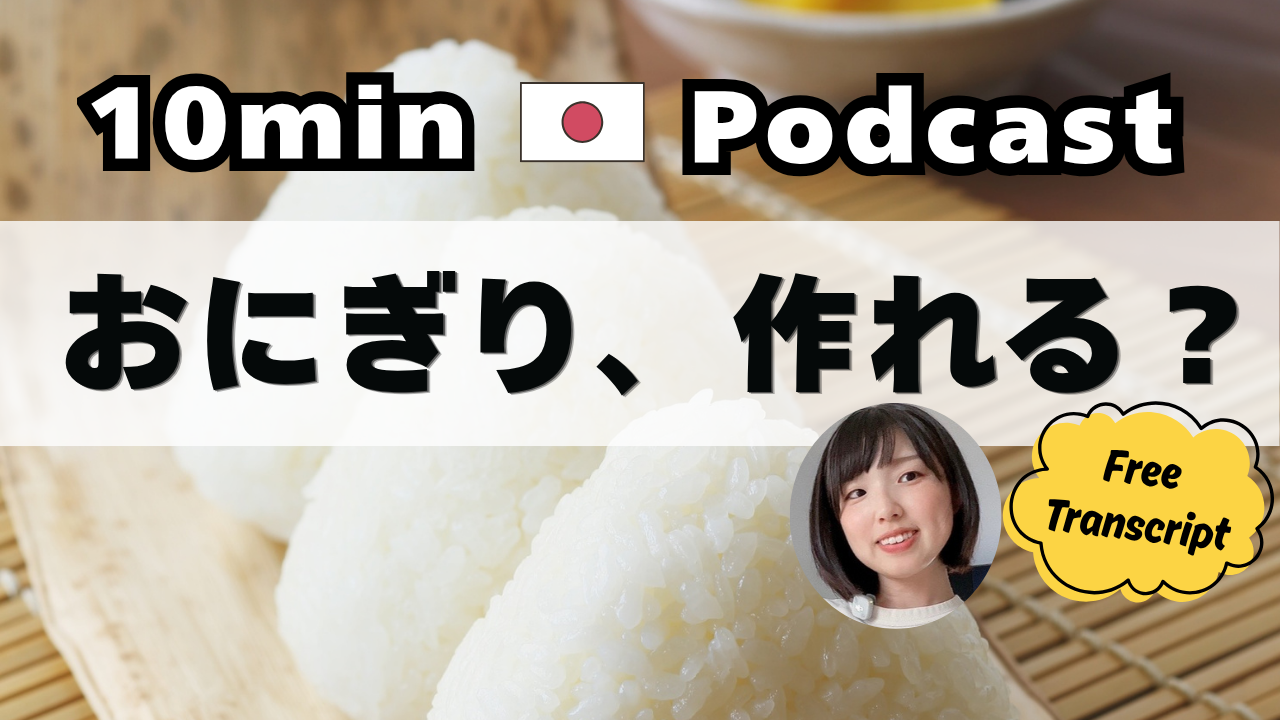
日本人なのにおにぎりが作れないWhy Can't I Make Onigiri?
I am Japanese, so I thought making onigiri would be easy. Then I touched the hot rice, gave up after three seconds, and discovered that shaping a neat triangle was much harder than it looked. In this episode, I turn that small failure into a lesson about onigiri shapes, the words おにぎり and おむすび, professional molds, and the 3D-printed mold I use at home.

- What You’ll Learn
- Transcript
- I am Japanese, but I cannot make onigiri
- Too hot—over in three seconds
- Are my mother's hands heat-resistant?
- Triangles, circles, rice bales—or a mystery shape?
- Are onigiri and omusubi different?
- Do convenience stores and specialists use molds?
- Making onigiri with a 3D-printed mold
- In the end, you do not have to shape it by hand
- Vocabulary
- Cultural Notes
- Haru’s Note
What You’ll Learn
You will learn that onigiri are not limited to triangles: round, flat disk-shaped, and tawaragata rice-bale shapes are also common, and older surveys found some regional tendencies. You will compare the words おにぎり, おむすび, and 握り飯, including the verbs 握る and 結ぶ and the polite or beautifying prefix お/御. You will also see why using plastic wrap, a mold, or a machine is not necessarily cheating, from food-safety advice and convenience-store production to the famous onigiri shop Bongo and my own 3D-printed mold.
Transcript
I am Japanese, but I cannot make onigiri
1. 日本人なのに、おにぎりが作れない
I am Japanese, but I cannot make onigiri
みなさん、こんばんは。Late Night Japanese ChatのHaruです。
English: Good evening, everyone. This is Haru from Late Night Japanese Chat.
えー、突然ですが、みなさん、日本食って作ったことありますか?
English: So, this may be sudden, but have you ever made Japanese food?
天ぷらとか、お寿司とか、親子丼、カツ丼……いろいろありますよね。まあ、そのへんはちょっと難しそうなので、今日は、もっと簡単そうな食べ物の話です。
English: There is tempura, sushi, oyakodon, katsudon…all kinds of things. Those sound a little difficult, so today I want to talk about something that looks much easier.
おにぎりです。
English: Onigiri.
ほら、ご飯を手に取って、中に梅干しとか鮭とか、好きな具を入れて、あとは握るだけじゃないですか。
English: You know, you take some rice, add a filling you like—pickled plum or salmon—and then you just shape it.
だから、日本人なら、おにぎりくらい普通に作れると思うでしょう?
English: So you would expect a Japanese person to be able to make onigiri without any trouble, right?
私も、そう思っていました。
English: I thought so too.
でもね、実際に自分で作ってみたら、思っていたのと全然違いました。
English: But when I actually tried making one myself, it was completely different from what I had imagined.
私、おにぎりが作れません。
English: I cannot make onigiri.
Too hot—over in three seconds
2. 始まって三秒で終了
Too hot—over in three seconds
で、おにぎり作りって、何が一番難しいと思いますか?
English: So, what do you think is the hardest part of making onigiri?
具を真ん中に入れること? きれいな三角にすること?
English: Putting the filling in the center? Making a neat triangle?
私にとっては、違います。
English: Not for me.
私はね、料理の技術より先に、熱さに強い手が必要だと思います。
English: For me, before cooking skill, you need hands that can handle the heat.
だって、炊飯器が「ピー」って鳴って、ふたを開けたら、もう湯気が、ぶわーっと出ているんですよ。
English: The rice cooker beeps, you open the lid, and all this steam comes rushing out.
手を水でぬらして、塩をつけて、炊きたてのご飯をのせます。
English: You wet your hands, add salt, and put freshly cooked rice on them.
そして、その瞬間です。
English: And that is the moment.
「熱い! 熱い! 無理!」
English: “Hot! Hot! I cannot do this!”
はい、終わり。私のおにぎり作りは、始まって三秒で終了しました。
English: And that was it. My attempt to make onigiri ended three seconds after it began.
Are my mother's hands heat-resistant?
3. 母の手は特別製?
Are my mother's hands heat-resistant?
ところがですよ。母は、その同じご飯を普通に握るんです。
English: But here is the strange part. My mother shapes that exact same rice as if it is no problem.
一個、二個、三個。どんどん作ります。
English: One, two, three. She keeps making them.
私は隣で、「待って。それ、熱くないの?」と思っています。
English: I stand beside her thinking, “Wait. Is that not hot?”
いや、同じ人間の手ですよね? 母の手だけ、何か特別な、熱さに強い材料でできているんでしょうか。
English: We both have human hands, right? Are my mother's hands made from some special heat-resistant material?
「料理をしていると慣れるよ」と言われます。
English: People tell me, “You get used to it when you cook often.”
そうかもしれません。でも、私は今も、熱いものは熱いです。
English: That may be true. But even now, hot things are still hot to me.
まあ、ここまで話しておいてなんですが、本当は炊飯器を開けた瞬間のご飯を、無理に素手で触る必要はありません。
English: After saying all that, I should mention that you do not actually have to touch rice with bare hands the instant you open the cooker.
少し冷ましたり、ラップを使ったりすれば大丈夫です。
English: You can let it cool a little or use plastic wrap.
でも、母が平気で握っているのを見ると、なんだか負けた気持ちになります。
English: But when I see my mother shaping it without any trouble, I still feel somehow defeated.
Triangles, circles, rice bales—or a mystery shape?
4. これは何型ですか?
Triangles, circles, rice bales—or a mystery shape?
で、なんとか熱さの問題を乗り越えたとします。次に来るのが、形の問題です。
English: So let us say you somehow overcome the heat. Next comes the problem of the shape.
おにぎりと聞いて、多くの人が思い浮かべるのは三角だと思います。
English: When people hear onigiri, I think many imagine a triangle.
私も三角を作ろうとします。
English: I also try to make a triangle.
右手を山のような形にして、ご飯を少し回して、また握る。
English: I curve my right hand like a mountain, turn the rice a little, and shape it again.
頭の中では、ずっと「三角、三角、三角」って言いながら作るんです。
English: In my head, I keep repeating, “Triangle, triangle, triangle,” while I work.
でも、完成したものを見ると、丸でも三角でもない。
English: But when I look at the finished result, it is neither round nor triangular.
「これは何型ですか?」と聞かれても、私にも分かりません。
English: If someone asked, “What shape is this?” I would not know either.
まあ、言い方を変えれば、新しい形のおにぎりです。たぶん。
English: Well, if we put it another way, it is a new shape of onigiri. Probably.
それで、ちょっと言い訳を探すために調べてみたら、おにぎりって、そもそも三角だけじゃないんですよ。
English: So I looked into it—partly to find an excuse—and learned that onigiri is not only triangular in the first place.
丸いもの、少し平たい円盤型、細長い俵型など、いろいろあります。
English: There are round ones, slightly flat disc-shaped ones, and long rice-bale-shaped ones.
昔の調査では、関西地方に俵型が多いなど、地域による傾向もあったそうです。
English: Older studies found regional tendencies, such as rice-bale shapes being more common in the Kansai area.
今は全国で三角がよく見られて、昔ほど地域差ははっきりしていないようです。
English: Today, triangles are common throughout Japan, and regional differences seem less distinct than before.
お弁当箱に入れやすい俵型もあるし、焼きおにぎりなら平たい形も焼きやすそうですよね。
English: Rice-bale shapes can fit neatly in a lunch box, and a flat shape seems convenient for grilled onigiri.
つまり、私のおにぎりも失敗ではありません。まだ名前のない、新しい形なんです。
English: In other words, my onigiri is not a failure. It is simply a new shape that does not have a name yet.
……そういうことにしておきます。
English: …That is what I have decided to believe.
Are onigiri and omusubi different?
5. 名前も一つじゃない
Are onigiri and omusubi different?
しかも、形だけじゃなくて、名前も一つじゃありません。ここまで私は「おにぎり」と言っていますが、「おむすび」と呼ぶ人もいますよね。
English: And it is not only the shape—the name is not fixed either. I have been saying onigiri, but some people call it omusubi.
おにぎりと、おむすび。何が違うんでしょう?
English: Onigiri and omusubi. What is the difference?
三角がおむすびで、丸がおにぎりなのかな、とか。大きさ? 中の具? いろいろ考えたんですけど。
English: I wondered whether triangles were omusubi and circles were onigiri. Or perhaps it was the size or the filling.
結論から言うと、国語辞典では、基本的に同じ食べ物でした。
English: To give you the answer, Japanese dictionaries treat them as basically the same food.
「おにぎり」は漢字で「御握り」。これは分かりやすいですよね。「握る」から、おにぎりです。
English: Onigiri can be written 御握り. This one is easy to understand: it comes from nigiru, to grip or shape in the hand.
一方、「おむすび」は「御結び」。「結ぶ」という言葉が入っていて、なんとなく、おにぎりより少しやわらかい感じがしませんか?
English: Omusubi, on the other hand, can be written 御結び. It contains musubu, to tie or connect, and somehow sounds a little softer than onigiri, does it not?
あと、どちらの最初にも「お」がありますよね。この「お」は、漢字で書くと「御」です。
English: Also, both words begin with o. This o can be written with the kanji 御.
「お茶」「お酒」「お料理」の「お」と同じで、言葉を丁寧にしたり、きれいに聞こえるようにしたりする接頭語です。
English: It is the same o found in ocha, osake, and oryori—a prefix that can make a word sound more polite or refined.
じゃあ、この「お」を取って、「今日、にぎりを食べました」と言ったら、どうなると思いますか?
English: So what happens if we remove the o and say, “Today I ate nigiri”?
たぶん、「あ、お寿司を食べたんだ」と思われます。おにぎりから「お」を取っただけなのに、急にお寿司になりました。
English: People will probably think, “Oh, you ate sushi.” We only removed the o from onigiri, and suddenly it became sushi.
「お」は丁寧なだけではなく、今では言葉の一部みたいになっているんですね。
English: So today the o is not merely polite; it has become almost inseparable from the word itself.
もっと直接的に「握り飯」という言い方もあります。でも、少し昔っぽくて、力強い感じがします。
English: There is also the more direct word nigirimeshi, but it can sound older and more rugged.
おにぎり、おむすび、握り飯。名前は三つもあるのに、私がうまく作れないことは、どの名前でも同じです。
English: Onigiri, omusubi, and nigirimeshi. It has three whole names, but under any of them, I still cannot make one well.
Do convenience stores and specialists use molds?
6. えっ、プロも型を使うの?
Do convenience stores and specialists use molds?
きれいな三角を作れない私は、ある時、考えました。
English: Since I could not make a neat triangle, one day I had an idea.
手で作れないなら、型を使えばいい。
English: If I cannot make it by hand, I can use a mold.
ただ、最初はね、ちょっとずるをしているような気持ちもありました。
English: At first, though, I felt as if I were cheating a little.
おにぎりなのに、握っていないからです。
English: After all, it is called onigiri, but I was not shaping it by hand.
でも、よく考えたら、コンビニのおにぎりは、工場の機械で同じ大きさや形に作られていますよね。
English: But then I realized that convenience-store onigiri is made by factory machines that produce a consistent size and shape.
お店でも、速く、同じ量で作るために、型や機械を使うところがあります。
English: Some shops also use molds or machines to work quickly and keep each portion consistent.
それだけじゃなくて、東京の有名なおにぎり専門店「ぼんご」も、作る速さを上げるために型を使っているそうなんです。
English: Not only that—the famous Tokyo onigiri shop Bongo also reportedly uses a mold to work faster.
そして、最後に手で軽く形を整えます。強く握るのは、最大でも三回くらい。
English: Then the final shape is adjusted lightly by hand, with no more than about three gentle presses.
だから、ぼんごのおにぎりは「握らないおにぎり」と呼ばれることもあります。
English: That is why Bongo's onigiri is sometimes described as “onigiri that is not squeezed.”
ご飯の間に空気が残るので、ふわっとした食感になるんですね。
English: Air remains between the grains, giving the onigiri a soft, fluffy texture.
それを知った時、「あ、私、ずるをしていたんじゃなかったんだ」と、急に自信が出ました。
English: When I learned that, I suddenly felt confident: “Oh, so I was not cheating after all.”
Making onigiri with a 3D-printed mold
7. 伝統料理を3Dプリンターで
Making onigiri with a 3D-printed mold
では、私が使っている型は、どこで買ったと思いますか?
English: So where do you think I bought the mold I use?
これ、実は買っていません。
English: I did not actually buy it.
3Dプリンターで作りました。
English: I made it with a 3D printer.
日本の昔からある食べ物を、3Dプリンターで作った型で作る。なんか、時代が一気に進みましたよね。
English: I make a traditional Japanese food using a mold made with a 3D printer. It feels as if we suddenly jumped forward in time.
型にラップを敷いて、ご飯を入れて、具を入れて、またご飯を入れます。
English: I line the mold with plastic wrap, add rice, put in the filling, and add more rice.
上から形を整えたら、ちゃんと三角のおにぎりができます。
English: After shaping it from above, I get a proper triangular onigiri.
熱くない。形もきれい。手もご飯だらけにならない。
English: It is not too hot, the shape looks neat, and my hands do not get covered in rice.
しかも、有名店も型を使っている。
English: And even a famous shop uses a mold.
コンビニも機械を使う。ぼんごも型を使う。私も型を使う。ということは、私の作り方も、かなりプロに近いのではないでしょうか。
English: Convenience stores use machines. Bongo uses a mold. I use a mold too. Does that mean my method is actually quite close to a professional one?
……味が同じかどうかは、聞かないでください。
English: …Please do not ask whether the taste is also the same.
In the end, you do not have to shape it by hand
8. 結局、握らなくてもいい
In the end, you do not have to shape it by hand
ということで、今日は、日本人なのに、おにぎりをうまく握れない、という私のちょっと情けない話から始まりました。
English: So today began with my slightly embarrassing story about being Japanese but not being able to shape onigiri well.
ご飯が熱い。三角にならない。手にたくさんつく。
English: The rice is hot. It does not become a triangle. It sticks all over my hands.
とても簡単そうなのに、やってみると意外と難しいです。
English: It looks so simple, but it is surprisingly difficult when you try it.
でも、おにぎりには三角、丸、俵型など、いろいろな形があります。
English: But onigiri comes in many shapes, including triangles, circles, and rice-bale shapes.
手で握ってもいいし、ラップや型を使ってもいい。
English: You can shape it by hand, or use plastic wrap or a mold.
でも結局、自分が作りやすくて、おいしく食べられたら、それでいいのかもしれません。
English: But in the end, perhaps it is enough if you can make it your own way and enjoy eating it.
みなさんは、おにぎりを作ったことがありますか?
English: Have you ever made onigiri?
どんな形になりますか? きれいな三角を作れますか?
English: What shape does yours become? Can you make a neat triangle?
もし私と同じように、三角でも丸でもない、謎の形になっても、大丈夫です。
English: And if yours becomes a mysterious shape that is neither triangular nor round, like mine, that is okay too.
それは失敗ではなくて、まだ名前のない新しい形です。
English: It is not a failure. It is a new shape that does not have a name yet.
ぜひコメントで教えてください。
English: Please tell me in the comments.
それでは、今夜はこのへんで。今夜も聞いてくれて、ありがとうございます。
English: That is all for tonight. Thank you for listening this evening.
今日話したこととトランスクリプトは、サイトで公開します。概要欄のリンクから読んでみてくださいね。
English: What I talked about today and the transcript will be available on the website. You can read it through the link in the description.
よかったらチャンネル登録をして、また聞きに来てください。おやすみなさい。
English: If you like, subscribe and come back to listen again. Good night.
Vocabulary
Each word includes the original line from the transcript and one extra example. Use “See in transcript” to jump back to the conversation.
おにぎりa Japanese rice ball, often shaped by hand or with a mold and sometimes filled
FROM THE TRANSCRIPT
おにぎりです。
EXAMPLE
遠足のお昼に、鮭のおにぎりを持っていきました。
I took a salmon onigiri for lunch on the school trip.
おむすびanother common word for onigiri
FROM THE TRANSCRIPT
しかも、形だけじゃなくて、名前も一つじゃありません。ここまで私は「おにぎり」と言っていますが、「おむすび」と呼ぶ人もいますよね。
EXAMPLE
この店では、小さな丸いおむすびを売っています。
This shop sells small, round omusubi.
握るto grip, hold, or shape something in the hand
FROM THE TRANSCRIPT
ほら、ご飯を手に取って、中に梅干しとか鮭とか、好きな具を入れて、あとは握るだけじゃないですか。
EXAMPLE
緊張して、手の中のペンを強く握っていました。
I was nervous and gripped the pen tightly in my hand.
俵型a short cylindrical shape resembling a traditional rice bale
FROM THE TRANSCRIPT
丸いもの、少し平たい円盤型、細長い俵型など、いろいろあります。
EXAMPLE
卵焼きを俵型に切ると、お弁当箱に入れやすいです。
Cutting the rolled omelet into short rice-bale shapes makes it easy to pack in a lunch box.
型a mold or form used to create a particular shape
FROM THE TRANSCRIPT
「これは何型ですか?」と聞かれても、私にも分かりません。
EXAMPLE
星の型でクッキーの生地を抜きました。
I used a star-shaped cutter to cut the cookie dough.
Cultural Notes
Onigiri do not have to be triangular. Triangles are now widely recognized, but onigiri may also be round, flat, or shaped like a short rice bale called tawaragata. Older surveys found regional tendencies, such as more tawaragata onigiri in parts of western Japan, but present-day shapes are not divided by one simple regional rule.
Onigiri, omusubi, and nigirimeshi usually name the same food. There is no universal modern rule that separates these names by shape, filling, or size. おにぎり is connected with the verb 握る, while おむすび is written with 結ぶ. 握り飯 sounds more direct and somewhat old-fashioned. The prefix お/御 can add politeness or refinement, but in おにぎり it is strongly established as part of the familiar word.
Using a mold is not only a shortcut. Plastic wrap or cooking gloves can make onigiri easier to handle and help reduce direct hand contact. Food factories use forming machines, and some specialist shops use molds or machines to work quickly and keep portions consistent. Bongo, a famous Tokyo onigiri shop, uses a mold and finishes each onigiri with only a few light hand movements so the rice stays airy.
Haru’s Note
I used to think that a Japanese person should naturally know how to make a neat triangular onigiri. My first attempt ended almost immediately because the rice felt too hot, and the shape was impossible to name. Now I use plastic wrap and a mold I made with a 3D printer. It may not be the traditional image I had in mind, but I can finally make an onigiri—and I have learned that there was never only one correct shape or method.
日本人なら、きれいな三角のおにぎりを自然に作れると思っていました。でも、最初に挑戦したときは、ご飯が熱すぎて、ほとんどすぐに終わりました。形にも名前を付けられませんでした。今はラップと、3Dプリンターで作った型を使っています。最初に想像していた伝統的な作り方とは少し違いますが、やっとおにぎりを作れるようになりました。そして、正しい形や作り方は、一つだけではないと分かりました。

コメント