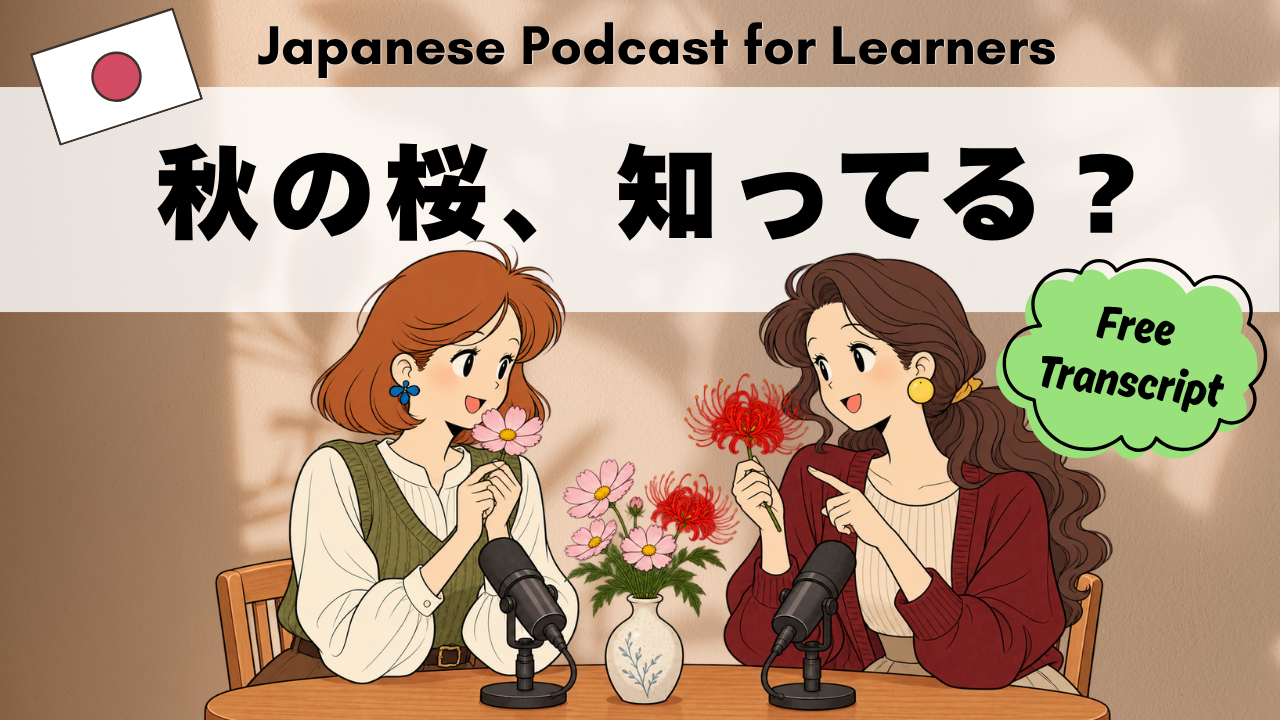
秋桜ってなに?Why Is Cosmos Called “Autumn Cherry Blossom” in Japanese?
Nozomi says she went to see cherry blossoms last week—but it is autumn. Her playful riddle opens a conversation about cosmos, written 秋桜, and the contrasting red spider lily. Misaki and Nozomi explore how songs, seasons, farming, and Buddhist customs shaped the Japanese images of these two flowers.

What You’ll Learn
You will learn why cosmos is called 秋桜, why the original reading あきざくら and the newer reading コスモス both exist, and how Momoe Yamaguchi's 1977 song helped popularize the latter. You will also compare flowering seasons from Hokkaido to Okinawa and discover why red spider lilies are associated with Higan, rice-field ridges, cemeteries, poison, beauty, and unease in Japan.
Transcript
I went to see cherry blossoms last week
1. 先週、桜を見に行ってきたよ
I went to see cherry blossoms last week
Nozomi ミサキ、先週ね、桜を見に行ってきたよ!
English: Misaki, I went to see cherry blossoms last week!
Misaki 桜……? 桜って、あのピンクの花?
English: Cherry blossoms…? You mean those pink flowers?
Nozomi そうだよ〜! 赤もあった! たくさん咲いていて、きれいだったよ〜!
English: Yes! There were red ones too! So many were blooming, and they were beautiful!
Misaki ん……? でも今、秋だよ? ……あ!
English: Hmm…? But it is autumn now. …Oh!
Nozomi お、気づいた?
English: Oh, you figured it out?
Misaki うん。それはコスモスだね!
English: Yes. You mean cosmos flowers!
Nozomi 正解! 漢字で「秋の桜」って書くでしょう?
English: Correct! They are written with the kanji for “autumn cherry blossom,” right?
Misaki なんか、だまされた〜。 でも今はコスモスの季節だね。
English: I feel tricked. But it is cosmos season now.
Nozomi それと、もう一つ。秋になると急に現れる、真っ赤な花もあるよ。
English: And there is one more—a bright red flower that suddenly appears in autumn.
Misaki お、なんだろう? 気になる!
English: Oh, what could it be? Now I am curious!
Nozomi ということで始まりました、Late Night Japanese Chat。
English: And with that, welcome to Late Night Japanese Chat.
Nozomi この番組では、日本語を勉強しているみなさんと、日本の言葉や文化、日常の小さな疑問について話しています。
English: In this podcast, we talk with Japanese learners about Japanese words, culture, and little questions from daily life.
Misaki さっきはだまされたけど、「秋の桜」って聞くと、コスモスにぴったりだね。
English: You tricked me, but “autumn cherry blossom” really does suit the cosmos.
Nozomi 今日は、コスモスと彼岸花。雰囲気の違う二つの秋の花を見ていこう。
English: Today, let us look at cosmos and red spider lilies, two autumn flowers with very different moods.
Misaki 私たち、ミサキと……。
English: We are Misaki and…
Nozomi ノゾミがお届けします。今夜も楽しく話していきましょう。
English: Nozomi, bringing you tonight's episode. Let us enjoy the conversation.
Akizakura was the original reading
2. 「秋桜」は、もともと「あきざくら」
Akizakura was the original reading
Misaki まず、コスモスは漢字で「秋桜」と書くことがあるよね。
English: First, cosmos is sometimes written with the kanji pronounced “akizakura.”
Nozomi でも、その二文字だけ見たら「あきざくら」って読むのが自然じゃない?
English: But if you only saw those two characters, would it not be natural to read them as “akizakura”?
Misaki そう。もともと「秋桜」は、コスモスの別の名前で、「あきざくら」と読んだの。
English: Right. “Akizakura” was originally another Japanese name for the cosmos flower.
Nozomi 秋に咲いて、花の形が桜に似て見えるから?
English: Because it blooms in autumn and its flowers look like cherry blossoms?
Misaki そういう説明がされているよ。細い茎の先で、ピンクや白の花が風に揺れるでしょう。
English: That is how the name is explained. Pink and white flowers sway in the wind at the ends of thin stems.
Nozomi 日本の昔からの花みたいだけど、実は外国から来たんだよね。
English: It feels like an old Japanese flower, but it actually came from another country, right?
Misaki うん。コスモスの原産地はメキシコで、日本には明治時代に入ってきたとされているの。
English: Yes. Cosmos is native to Mexico and is thought to have arrived in Japan during the Meiji period.
Nozomi 海を渡ってきた花に、日本で「秋の桜」という名前がついたんだ。
English: So a flower that crossed the ocean was given the name “autumn cherry blossom” in Japan.
Misaki 季節と、よく知っている花を組み合わせて、新しい花を表したんだね。
English: People described a new flower by combining a season with a flower they already knew well.
One song spread a new reading
3. 一曲の歌が、読み方を広めた
One song spread a new reading
Nozomi じゃあ、いつから「秋桜」を「コスモス」と読むようになったの?
English: Then when did people begin reading those kanji as “cosmos”?
Misaki 大きなきっかけは、1977年に発表された、山口百恵さんの「秋桜」という歌なの。
English: A major turning point was Momoe Yamaguchi's 1977 song titled “Cosmos,” written with those kanji.
Nozomi 山口百恵さんは、昭和を代表する歌手の一人だよね。
English: Momoe Yamaguchi is one of the singers who represents Japan's Showa era.
Misaki うん。作詞と作曲は、さだまさしさん。結婚を前にした娘と、お母さんの気持ちを描いた歌だよ。
English: Yes. It was written and composed by Masashi Sada. The song portrays a daughter before marriage and her mother's feelings.
Nozomi その歌が広く知られて、「秋桜」と書いて「コスモス」と読む形も広まったんだ。
English: As the song became widely known, the reading of those kanji as “cosmos” spread too.
Misaki そう。辞書にも、あとから「秋桜の字を当てる」と載るようになったの。
English: Right. Dictionaries later began noting that these kanji are applied to the word “cosmos.”
Nozomi 一曲の歌が、みんなの漢字の読み方にまで影響したんだね。
English: One song even influenced how people read a pair of kanji.
Misaki 新しい表現が多くの人に使われて、日本語の一部になっていく。そこが面白いよね。
English: A new expression was used by many people and became part of Japanese. That is the fascinating part.
How is cosmos usually written?
4. 普段は、どう書く?
How is cosmos usually written?
Misaki ここで実用的な質問。ノゾミは、コスモスを文字で書くとき、漢字とカタカナのどちらを使う?
English: Here is a practical question. Nozomi, when you write the word cosmos, do you use kanji or katakana?
Nozomi 私はカタカナかな。花屋さんや公園のお知らせでも、カタカナをよく見るよ。
English: I would use katakana. I often see it written that way at flower shops and in park notices too.
Misaki 普段は、カタカナで「コスモス」と書けば、誰にでも分かりやすいね。
English: In everyday writing, using katakana makes the word easy for everyone to understand.
Nozomi 漢字で書くと、少し詩や歌みたいな雰囲気になる気がする。
English: Writing it in kanji feels a little more like poetry or a song.
Misaki 季節の便りや作品の題名で使うと、「秋に咲く桜」という景色まで伝わるからね。
English: In a seasonal message or a title, the kanji can also suggest the scene of cherry blossoms blooming in autumn.
Nozomi 日本語を勉強している人は、最初から漢字で書けなくても大丈夫だね。
English: Japanese learners do not need to be able to write it in kanji from the beginning.
Misaki うん。話すときは「コスモス」。普段書くときもカタカナで大丈夫。漢字は、秋の景色を見せる表現として楽しんでね。
English: Right. Say “cosmos,” and katakana is fine in everyday writing too. Enjoy the kanji as an expression that shows an autumn scene.
Summer in Hokkaido, winter in Okinawa?
5. 北海道では夏、沖縄では冬?
Summer in Hokkaido, winter in Okinawa?
Nozomi コスモスは秋の花だけど、日本中で同じ時期に咲くのかな。
English: Cosmos is an autumn flower, but does it bloom at the same time throughout Japan?
Misaki 同じではないよ。品種や種をまく時期でも変わるから、「ここが日本一早い」と簡単には決められないの。
English: No. The timing also changes with the variety and sowing date, so we cannot simply name one place as the earliest in Japan.
Nozomi でも、地域による違いは見える?
English: But can we still see regional differences?
Misaki たとえば北海道の遠軽町では、八月中旬から九月下旬ごろが見頃とされているよ。
English: For example, in Engaru, Hokkaido, the best viewing period is said to be from mid-August to late September.
Nozomi 北海道では、夏の終わりから秋なんだね。
English: So in Hokkaido, it is from late summer into autumn.
Misaki 福岡県には、十月下旬から十一月初めが見頃になる場所があるの。
English: In Fukuoka, some places reach their best viewing period from late October to early November.
Nozomi 北と南で、二か月くらい違うこともあるんだ。
English: The north and south can differ by about two months.
Misaki もっと驚くのは沖縄。場所によっては、一月から三月にコスモスが咲くよ。
English: Okinawa is even more surprising. In some places, cosmos blooms from January to March.
Nozomi 秋の花なのに、沖縄では冬! 日本が南北に長いことが、花を見るとよく分かるね。
English: An autumn flower blooming in winter in Okinawa! Flowers really show how far Japan stretches from north to south.
Another autumn flower
6. もう一つの秋の花
Another autumn flower
Misaki コスモスと同じころに咲く、もう一つの秋の花といえば、彼岸花だね。
English: Another autumn flower that blooms around the same time as cosmos is the red spider lily.
Nozomi 真っ赤で、細い花びらが外へ広がっている花! 遠くから見ても、すぐ分かるよね。
English: The bright red flower with thin petals spreading outward! You can recognize it even from far away.
Misaki ノゾミは、彼岸花にどんな印象がある?
English: What kind of impression do red spider lilies give you?
Nozomi きれいなんだけど、ちょっと怖いかな。田んぼのあぜ道に、赤い花だけが急に並んでいるでしょう?
English: They are beautiful, but a little frightening. Rows of red flowers suddenly appear along rice-field ridges, right?
Misaki 分かる。私は、お墓の近くで見た記憶もあるから、明るい花という感じはしないかも。
English: I understand. I also remember seeing them near graves, so they do not feel like cheerful flowers to me.
Nozomi でも、赤い花が一面に咲いている写真は、すごくきれい。怖いだけとも言えないんだよね。
English: But photos of whole fields covered in red flowers are stunning. I cannot call them simply frightening.
Misaki じゃあ、花そのものより、色や咲き方、見かける場所が印象を作っているのかな。
English: Then perhaps their color, blooming style, and location shape our impression more than the flower itself.
Nozomi それ、ちょっと調べてみたい!
English: I want to look into that!
Is the flower scary, or is it the place?
7. 怖いのは、花? 場所?
Is the flower scary, or is it the place?
Misaki まず「彼岸花」という名前は、秋のお彼岸のころに咲くことからついたとされているよ。
English: First, the name higanbana is said to come from the flower blooming around the autumn Higan period.
Nozomi お彼岸は、お墓参りをする人が多い時期だよね。名前を聞くだけでも、お墓を思い出す人がいそう。
English: Higan is a time when many people visit graves. Even the name may remind some people of cemeteries.
Misaki 彼岸花は、実際に田んぼのあぜや墓地などでよく見られるの。球根に毒があるから、動物を近づけないために植えられた、という説明もあるよ。
English: Red spider lilies are often found along rice fields and near cemeteries. One explanation says their poisonous bulbs were planted there to keep animals away.
Nozomi 怖い花だから植えたんじゃなくて、田んぼやお墓を守るためだったの?
English: So they were not planted because they were frightening, but to protect fields and graves?
Misaki そういう説があるの。先に暮らしの中で使われて、その場所で何度も見るうちに、少し怖い印象も重なったのかもしれないね。
English: That is one theory. They may first have had a practical use, and then gained a slightly frightening image after being seen in those places again and again.
Nozomi 花は何もしていないのにね。私が、見た場所から勝手に想像していたのかも。
English: The flower did nothing wrong. I may have been imagining things because of where I saw it.
Misaki もちろん、彼岸花を見て全員が怖いと感じるわけではないよ。今は花の名所として楽しむ人も多いからね。
English: Of course, not everyone finds red spider lilies frightening. Many people now enjoy them at famous flower-viewing spots.
The same autumn can look different
8. 同じ秋でも、見え方は違う
The same autumn can look different
Misaki 今日は、コスモスと彼岸花、二つの秋の花を見てきたね。
English: Today, we looked at two autumn flowers: cosmos and red spider lilies.
Nozomi コスモスは「秋の桜」という名前や、歌をきっかけに広まった読み方が面白かった。
English: With cosmos, its name “autumn cherry blossom” and the reading spread by a song were fascinating.
Misaki 彼岸花は、咲く時期や、田んぼ、お墓の近くで見ることが、私たちの印象に重なっていたね。
English: With red spider lilies, their blooming season and the places where we see them—near rice fields and graves—were part of our impression.
Nozomi 最初は「ちょっと怖い」と思っていたけど、理由を知ったら見え方が少し変わったかも。
English: At first I thought they were a little frightening, but learning the background may have changed how I see them.
Misaki 花そのものは変わらなくても、名前や、どこで見たかを知ると、印象が変わることもあるんだね。
English: The flower itself does not change, but its name and where we have seen it can change our impression.
Nozomi 私も今度彼岸花を見たら、「怖い」で終わらずに、どうしてここに咲いているんだろうって考えそう。
English: Next time I see one, I may wonder why it is growing there instead of stopping at “scary.”
Misaki みなさんは、名前や咲いている場所によって、特別な印象を持つ花がありますか?
English: Is there a flower that gives you a special impression because of its name or where it grows?
Nozomi コメントで教えてください。
English: Tell us in the comments.
Nozomi 今日のトランスクリプトは、概要欄のリンクから読めます。聞き取れなかった言葉も、文字で確認してみてね。
English: You can read today's transcript through the link in the description. Use it to check any words you could not catch by listening.
Misaki 今日の話が面白かったら、Goodボタンとチャンネル登録で応援してもらえたら嬉しいです。
English: If you enjoyed today's story, we would be happy if you supported us with the Like button and a subscription.
Nozomi また聞いてくれたら嬉しいです。それでは、おやすみなさい。
English: We would be happy if you listened again. Good night.
Vocabulary
Each word includes the original line from the transcript and one extra example. Use “See in transcript” to jump back to the conversation.
秋桜cosmos; literally ‘autumn cherry blossom’
FROM THE TRANSCRIPT
まず、コスモスは漢字で「秋桜」と書くことがあるよね。
EXAMPLE
秋桜が風に揺れています。
The cosmos flowers are swaying in the wind.
表現expression; way of conveying an idea or image
FROM THE TRANSCRIPT
新しい表現が多くの人に使われて、日本語の一部になっていく。そこが面白いよね。
EXAMPLE
漢字で季節の景色を表す表現があります。
Some expressions use kanji to convey a seasonal scene.
原産地native region; place of origin
FROM THE TRANSCRIPT
うん。コスモスの原産地はメキシコで、日本には明治時代に入ってきたとされているの。
EXAMPLE
この花の原産地はメキシコです。
The native region of this flower is Mexico.
彼岸花red spider lily
FROM THE TRANSCRIPT
今日は、コスモスと彼岸花。雰囲気の違う二つの秋の花を見ていこう。
EXAMPLE
田んぼのあぜ道に彼岸花が咲いています。
Red spider lilies are blooming along the rice-field ridge.
お彼岸the Buddhist observance around the spring or autumn equinox
FROM THE TRANSCRIPT
まず「彼岸花」という名前は、秋のお彼岸のころに咲くことからついたとされているよ。
EXAMPLE
秋のお彼岸に家族でお墓参りをしました。
My family visited the grave during the autumn Higan period.
Cultural Notes
秋桜 has two familiar readings with different histories. 秋桜 was originally read あきざくら as another name for cosmos. The reading コスモス spread widely after Momoe Yamaguchi's 1977 song 秋桜, written and composed by Masashi Sada. It is a striking example of a creative kanji reading becoming familiar through popular culture.
Not everyone in Japan has the same image of red spider lilies. The flower blooms around the autumn Higan period and is often seen along rice-field ridges and near cemeteries. One explanation says its poisonous bulbs were planted to keep animals away. These names and locations may contribute to a frightening impression for some people, while others enjoy large displays at flower-viewing spots.
Haru’s Note
Cosmos and red spider lilies feel completely different to me, even though both represent autumn in Japan. Looking into their names and the places where they bloom made me realize that the image of a flower is created not only by its appearance, but also by songs, seasons, and people's lives.
コスモスと彼岸花は、どちらも日本の秋を代表する花なのに、私にはまったく違う印象があります。名前や咲く場所を調べると、花のイメージは見た目だけでなく、歌や季節、人の暮らしからも作られるのだと感じました。


コメント