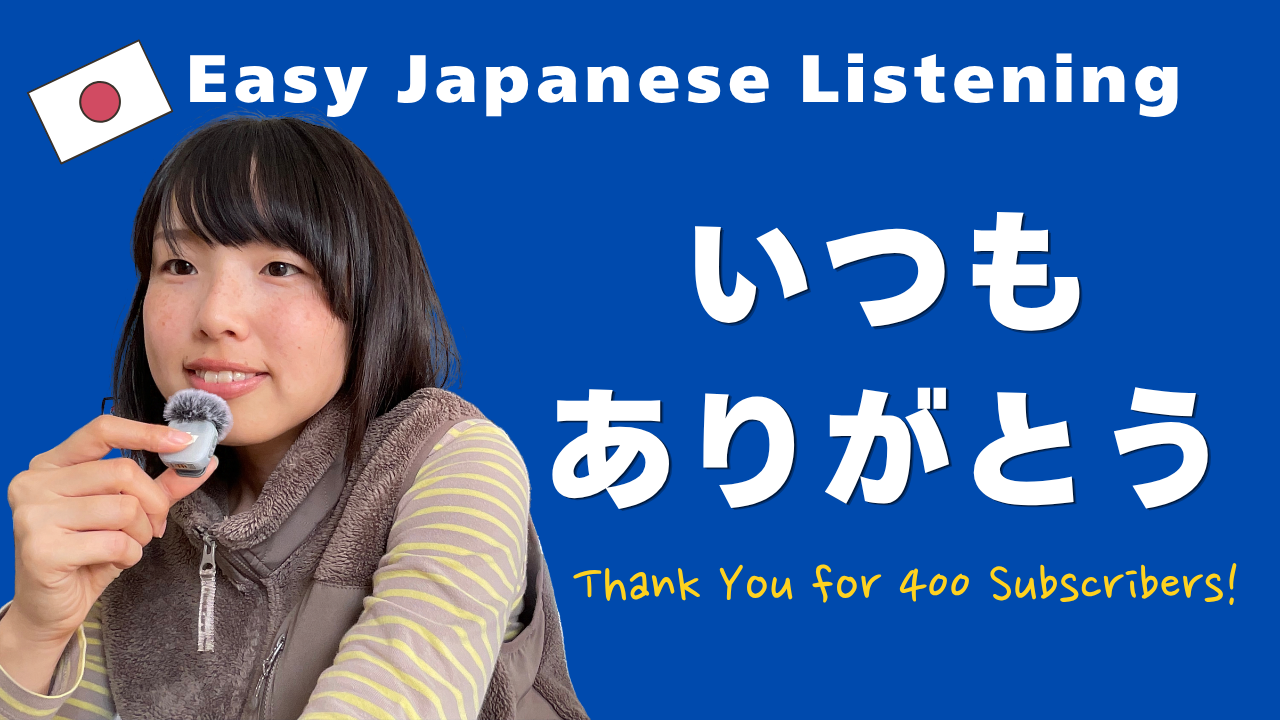
今日は自分の声で話しますThank You for 400 Subscribers!
Late Night Japanese Chat has reached 400 subscribers. Haru speaks in her own voice to thank the listeners and explain why she created the AI-voiced conversations between Misaki and Nozomi—and why she now wants to share more of her own thoughts and daily life too.

What You’ll Learn
You will hear natural Japanese about gratitude, language learning, AI voices, and starting something new. Haru explains why conversation matters for learning aizuchi and plain-form Japanese, how AI helped her create the show she imagined, and why the purpose of LNJC remains the same as she begins speaking in her own voice.
Transcript
Thank you for 400 subscribers
1. 400人ありがとう
Thank you for 400 subscribers
みなさん、こんばんは。Late Night Japanese ChatのHaruです。
English: Good evening, everyone. This is Haru from Late Night Japanese Chat.
えー、今日はまず、みなさんにお礼を言わせてください。
English: So, first, I would like to thank all of you today.
このチャンネルの登録者が400人になりました。本当にありがとうございます。
English: This channel has reached 400 subscribers. Thank you so much.
最初に動画を投稿したときは、400人もの方に見てもらえるとは思っていませんでした。
English: When I uploaded my first video, I never imagined that as many as 400 people would watch my channel.
いつも動画を見てくれる方、コメントをしてくれる方、本当にありがとうございます。
English: Thank you so much to everyone who watches my videos and leaves comments.
400人という数字を見たとき、今日はMisakiとNozomiではなく、私自身の声で、みなさんに気持ちを伝えてみたいと思いました。
English: When I saw the number 400, I wanted to speak to you in my own voice today, instead of through Misaki and Nozomi.
What only conversation can convey
2. 会話でしか伝わらないこと
What only conversation can convey
私はもともと、二人の会話を通して、日本の文化を届けたいと思っていました。
English: From the beginning, I wanted to share Japanese culture through conversations between two people.
以前、日本語学校で働いていたとき、学生のみなさんとよく話していました。
English: When I worked at a Japanese language school, I often talked with the students.
会話をしていると、とても楽しそうにしてくれる人がたくさんいました。
English: Many of them looked like they were having a wonderful time during our conversations.
その経験から、会話でしか伝わらないものがあると思うようになりました。
English: That experience made me feel that some things can only be conveyed through conversation.
例えば、日本語には相づちがあります。「うん」「そうなんだ」「なるほど」など、相手の話を聞きながら、短い言葉を返します。
English: For example, Japanese has aizuchi, short responses such as “un,” “so nanda,” and “naruhodo” that we give while listening.
こういう言葉は、会話を聞くからこそ学べるものだと思います。
English: I think these are things you can learn precisely by listening to conversations.
Why did I want a two-person conversation?
3. どうして二人の会話にしたかった?
Why did I want a two-person conversation?
日本語を勉強すると、「です・ます」の形だけでなく、普通体も習います。
English: When you study Japanese, you learn not only the desu-masu style but also the plain form.
でも、普通体を使った自然なやり取りは、教科書だけでは分かりにくいこともあります。
English: But natural exchanges using the plain form can sometimes be difficult to understand from a textbook alone.
実際の会話の中で聞くほうが、言葉の使い方や、二人の距離が分かりやすいと思いました。
English: I felt that hearing it in a real conversation makes it easier to understand how words are used and how close the speakers are.
だから、どうしても二人の会話で番組を作りたかったんです。
English: That is why I really wanted to create a show built around conversations between two people.
でも、そのためには私のほかに、もう一人、毎回一緒に話す人が必要でした。
English: But to do that, I needed another person who could speak with me every time.
長い間、なかなか形にすることができませんでした。
English: For a long time, I was unable to turn the idea into something real.
AI finally helped me begin
4. AIでやっと始められた
AI finally helped me begin
そのあと、AIで音声を作れることを知りました。
English: Then I learned that AI could create voices.
MisakiとNozomi、二人の声を作って、初めて動画を投稿することができました。
English: I created the voices of Misaki and Nozomi and was finally able to upload my first video.
そのときはね、本当にうれしかったです。
English: At that moment, I was truly happy.
AIのおかげで、ずっと作りたかった会話形式の番組を、やっと始めることができました。
English: Thanks to AI, I was finally able to start the conversation-style show I had wanted to make for so long.
MisakiとNozomiは架空のキャラクターですが、私にとって、とても大切な二人です。
English: Misaki and Nozomi are fictional characters, but they are very important to me.
二人の会話も、これから大切にしていきたいと思っています。
English: I want to continue cherishing their conversations in the future.
There is something special about a human voice
5. 人の声っていい
There is something special about a human voice
それから番組を続ける中で、日本語で配信しているほかのPodcastも、よく聞くようになりました。
English: As I continued the show, I also began listening to other podcasts in Japanese more often.
聞いていると、やっぱり人の声っていいな、とすごく感じます。
English: When I listen to them, I really feel how wonderful a human voice can be.
話のテーマだけではなく、その人がどんなことを考えているのか、どんな人なのかが見えてきます。
English: You learn not only about the topic, but also what the speaker thinks and what kind of person they are.
それに、上手な人のPodcastを聞いていると、話の構成も本当に上手だな、と思います。
English: And when I listen to a good podcast host, I am impressed by how well the story itself is structured.
私は日本語が母語ですが、それでも聞いていて楽しいし、勉強になると感じました。
English: Japanese is my native language, but I still find these podcasts enjoyable and educational.
そして、私も自分の気持ちや日常を話してみたいと思うようになりました。
English: And I began wanting to talk about my own feelings and daily life too.
I want to talk about myself too
6. 私自身のことも話したい
I want to talk about myself too
400人の方がこのチャンネルを見てくれるようになって、私自身も、みなさんともっと直接話してみたいと思うようになりました。
English: Now that 400 people are watching this channel, I have started wanting to speak with you more directly too.
これからは、私自身の声で話す回も増やしていきたいです。
English: From now on, I would like to make more episodes in my own voice.
私が日常で感じたことや考えたことが、みなさんの日本語のリスニング練習になったらうれしいです。
English: I would be happy if my thoughts and experiences from daily life could help you practice listening to Japanese.
それだけでなく、みなさんと気持ちを分け合うことができたら、私も楽しいと思います。
English: Beyond that, I would also enjoy being able to share our feelings with one another.
友達の話を聞くような気持ちで、気楽に聞いてもらえたらうれしいです。
English: I would be happy if you listened casually, as if you were listening to a friend.
I want to begin on Spotify
7. Spotifyを始めたい
I want to begin on Spotify
そして、これからSpotifyでの配信も始めたいと思っています。
English: I am also planning to begin releasing the show on Spotify.
そこにMisakiとNozomiの回も入れるのか、それとも私の声を中心にするのか、まだ迷っています。
English: I am still deciding whether to include Misaki and Nozomi's episodes or focus mainly on my own voice there.
AIの声と自分の声を、同じ番組で届けるのは、少し変わっているかもしれません。
English: Sharing both AI voices and my own voice in the same show may be a little unusual.
でも、どちらかを選んで、もう一方をやめたいわけではありません。
English: But I do not want to choose one and give up the other.
まだ答えは出ていませんが、迷いながら少しずつ進んでいけたらいいなと思っています。
English: I do not have the answer yet, but I hope I can move forward little by little, even while I am still unsure.
どうしたらいいんだろうね。
English: I wonder what I should do.
The purpose has not changed
8. 目的は変わらない
The purpose has not changed
でも、番組の目的は変わりません。
English: But the purpose of the show has not changed.
日本語を学んでいるみなさんに、自然な日本語を届けたいです。
English: I want to share natural Japanese with everyone learning the language.
そして、私が自分の言葉で話すことで、日本で暮らす一人の人が、どんなことを感じ、考えているのかも伝えられたらいいなと思っています。
English: By speaking in my own words, I also hope to share what one person living in Japan feels and thinks.
まだ、どんな形が一番いいのか、答えは出ていません。
English: I still do not know what form will work best.
でも今日は、まず自分の声で話してみたいと思って録音しました。
English: But today, I decided to begin by recording in my own voice.
ということで、結局、何が話したいの? という感じなんですけど、まだ、きれいな答えは出ていません。
English: So, you may be wondering what exactly I wanted to say, but I still do not have a neat answer.
ちょっとまとまりはないですが、今日はみなさんに、今の気持ちを伝えてみたくて録音しました。
English: This may not have been perfectly organized, but today I recorded this because I wanted to share how I feel right now.
みなさんのことが本当に大好きです。いつもありがとうございます。
English: I truly love and appreciate all of you. Thank you, as always.
これからも、よかったら聞きに来てください。
English: I hope you will continue coming back to listen.
それでは、今夜はこのへんで。また次回お会いしましょう。おやすみなさい。
English: That is all for tonight. See you again in the next episode. Good night.
Vocabulary
Each word includes the original line from the transcript and one extra example. Use “See in transcript” to jump back to the conversation.
登録者subscriber
FROM THE TRANSCRIPT
このチャンネルの登録者が400人になりました。本当にありがとうございます。
EXAMPLE
登録者のみなさんに、新しい動画のお知らせをしました。
I told the subscribers about the new video.
相づちshort responses that show you are listening
FROM THE TRANSCRIPT
例えば、日本語には相づちがあります。「うん」「そうなんだ」「なるほど」など、相手の話を聞きながら、短い言葉を返します。
EXAMPLE
相づちがあると、話している人は安心します。
Aizuchi helps the speaker feel that they are being heard.
普通体plain form or plain style in Japanese
FROM THE TRANSCRIPT
日本語を勉強すると、「です・ます」の形だけでなく、普通体も習います。
EXAMPLE
親しい友達とは、普通体で話すことが多いです。
People often use the plain style when speaking with close friends.
架空fictional; imaginary
FROM THE TRANSCRIPT
MisakiとNozomiは架空のキャラクターですが、私にとって、とても大切な二人です。
EXAMPLE
この物語の町は架空ですが、実際の場所を参考にしています。
The town in this story is fictional, but it is based on real places.
母語native language; first language
FROM THE TRANSCRIPT
私は日本語が母語ですが、それでも聞いていて楽しいし、勉強になると感じました。
EXAMPLE
母語が違っても、同じ音楽を楽しめます。
People can enjoy the same music even when their native languages are different.
Cultural Notes
Aizuchi is part of the rhythm of Japanese conversation. Short responses such as うん, そうなんだ, and なるほど show that the listener is following the speaker. Their frequency and timing can be difficult to learn from textbooks alone.
Plain-form conversation also shows relationships. The choice between desu-masu style and plain style can suggest closeness, age, setting, and the relationship between speakers. Listening to conversations helps learners hear these differences in context.
Misaki and Nozomi are fictional characters. Their voices are generated with AI. Haru plans to continue their cultural conversations while also adding episodes recorded in her own voice.
Haru’s Note
AI helped me create the conversation-style Japanese program I had wanted to make for a long time. Reaching 400 subscribers made me want to speak more directly to everyone in my own voice as well. I still do not know the perfect format, but the purpose remains the same: to share natural Japanese with learners.
AIのおかげで、長い間作りたかった会話形式の日本語番組を始めることができました。登録者が400人になり、私自身の声でも、みなさんともっと直接話したいと思うようになりました。まだ一番いい形は分かりませんが、自然な日本語を届けたいという目的は変わりません。


コメント