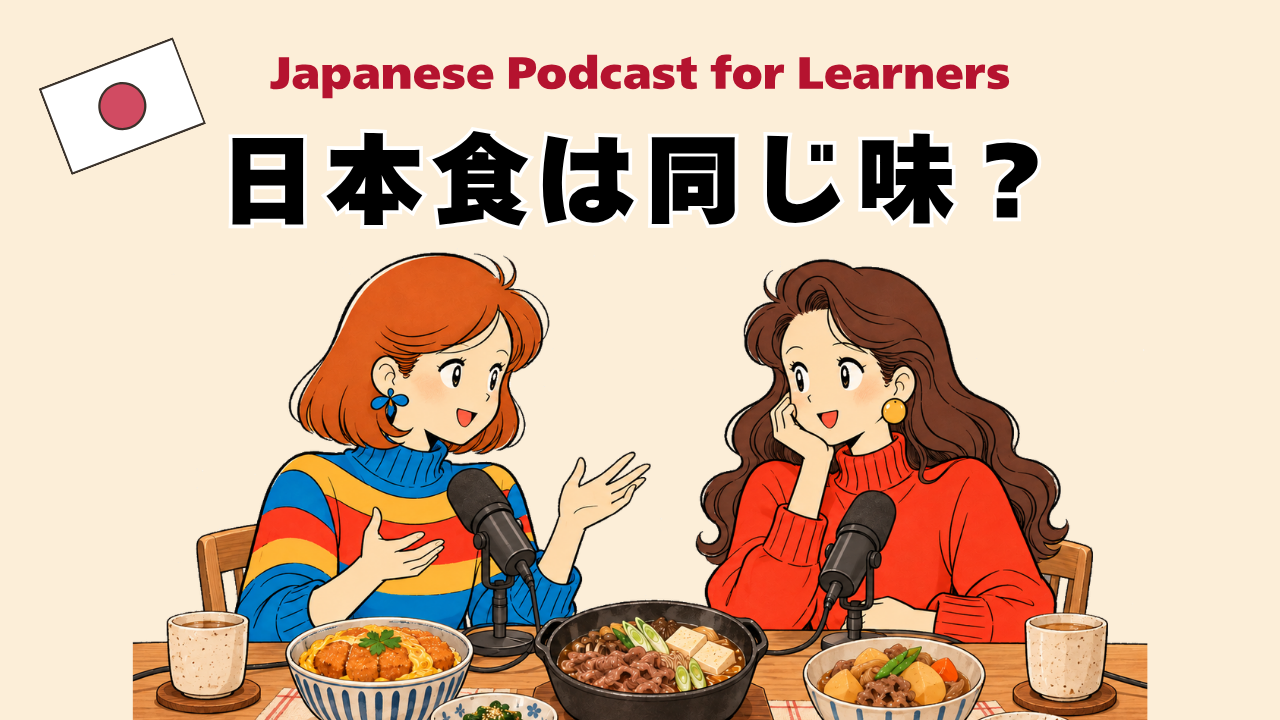
日本食は同じ味?Does Japanese Food Taste the Same?
A friend once told Misaki that Japanese food is often sweet and tastes similar. Misaki and Nozomi explore that idea through everyday taste words, sa-shi-su-se-so, and three familiar dishes: sukiyaki, nikujaga, and katsudon.

What You’ll Learn
You will learn to describe food as sweet, salty, sour, spicy, or bitter, and understand why 甘辛い means sweet and salty in these dishes. You will meet the five seasonings in さしすせそ and learn why the order is guidance rather than a rule for every recipe. Three examples reveal how sugar, soy sauce, and mirin recur in different meals. Finally, Misaki and Nozomi compare two views: ingredients and preparation make dishes different, while similar seasonings can make many of their flavors feel alike.
Transcript
What comes to mind when you hear Japanese food?
1. 日本食と聞くと、何を思い浮かべる?
What comes to mind when you hear Japanese food?
Misaki ノゾミ、日本食と聞くと、何を思い浮かべる?
English: Nozomi, what comes to mind when you hear “Japanese food”?
Nozomi おすし、ラーメン、すき焼きかな。こうして並べると、食べたくなるね。
English: Sushi, ramen, and sukiyaki, maybe. Listing them makes me want to eat them.
Misaki 前に、外国人の友達に「日本食は甘いし、同じ味が多い」って言われたんだ。
English: A friend from another country once told me, “Japanese food is sweet, and a lot of it tastes the same.”
Nozomi ああ、ちょっと分かる気がする。
English: Oh, I think I can see that a little.
Misaki え、分かるの? 今、違う料理を三つも言ったのに。
English: Oh, you can? You just named three different dishes.
Nozomi 全部同じとは思わないよ。でも、料理すると、また砂糖としょうゆ、ってなるでしょう。
English: I do not think they all taste identical. But when you cook, sugar and soy sauce come up again, don’t they?
Misaki そうなんだよね。私も、作ると友達の感想が分かる。違う料理でも、同じ調味料が出てくるんだ。
English: Exactly. I understand my friend’s impression when I cook too. The same seasonings appear in different dishes.
Nozomi じゃあ、その「甘い」とか「同じ味」って、具体的にどんな味なんだろう?
English: Then what exactly do we mean by “sweet” or “the same taste”?
Misaki 今夜は「日本食は同じ味?」をテーマに、味の言葉、調味料、三つの料理を見ていきます。
English: Tonight, our question is “Does Japanese food taste the same?” We will look at taste words, seasonings, and three dishes.
Nozomi まず、味を表す言葉からだね。
English: Let’s start with the words we use to describe taste.
Misaki ということで始まりました、Late Night Japanese Chat。私たち、ミサキと……
English: And with that, welcome to Late Night Japanese Chat. We are Misaki and…
Nozomi ノゾミがお届けします。今夜も楽しく話していきましょう。
English: Nozomi. Let’s enjoy another conversation tonight.
Sweet, salty, and more
2. 甘い、しょっぱい、それから?
Sweet, salty, and more
Misaki さっきの「どんな味?」を、まず言葉にしてみようか。砂糖の味は「甘い」、塩の味は「しょっぱい」だね。
English: Let’s start by putting that question, “What does it taste like?”, into words. Sugar tastes amai, sweet, and salt tastes shoppai, salty.
Nozomi レモンや酢は「酸っぱい」。思い浮かべるだけで、口がきゅっとなる。
English: Lemons and vinegar are suppai, sour. Just thinking about them makes my mouth pucker.
Misaki とうがらしで口が熱くなるような感じは「辛い」。砂糖を入れないコーヒーなら「苦い」だね。
English: The hot sensation from chili is karai, spicy. Coffee without sugar can taste nigai, bitter.
Nozomi 甘い、しょっぱい、酸っぱい、辛い、苦い。食べた時の感じを、いろいろ言えるね。
English: Sweet, salty, sour, spicy, and bitter. That gives us different ways to describe what we experience when eating.
Misaki 今日の料理でもう一つ使うのが「甘辛い」。甘さと、しょうゆなどの塩味が一緒にある味だよ。
English: Another word for today’s dishes is amakarai: sweetness combined with saltiness from something like soy sauce.
Nozomi ここでは、とうがらしの辛さじゃないんだ。「辛い」の意味が、さっきと違うね。
English: Here, it does not mean chili heat. Karai has a different sense from the one we just used.
Misaki そう。「甘辛いお肉」なら、甘くてしょっぱい味を想像すると分かりやすいね。
English: Right. For amakarai meat, it helps to imagine a sweet and salty flavor.
Nozomi その味を作るものを、今度は見てみたいな。台所にあるものだよね。
English: Now I want to look at what creates that taste. Things we keep in the kitchen, right?
The cooking mnemonic sa-shi-su-se-so
3. 料理の「さしすせそ」
The cooking mnemonic sa-shi-su-se-so
Misaki うん。味をつけるものを「調味料」と言うよ。基本の五つを覚える言葉が「さしすせそ」。
English: Yes. Things used to flavor food are called chōmiryō, seasonings. Sa-shi-su-se-so is a way to remember five basic ones.
Nozomi 「さ」は砂糖、「し」は塩、「す」は酢。さっきの、甘い、しょっぱい、酸っぱい、だね。
English: Sa is sugar, shi is salt, and su is vinegar. Those are the sweet, salty, and sour tastes we just mentioned.
Misaki 「せ」はしょうゆ。昔の「せうゆ」という書き方から来ているんだ。最後は味噌の「そ」。
English: Se stands for shōyu, soy sauce, from the older spelling seuyu. Finally, so comes from miso.
Nozomi 味噌だけ最後の音なんだよね。 これ、入れる順番も表しているんでしょう?
English: Miso uses the last sound instead of the first. This also shows an order for adding them, doesn’t it?
Misaki そう。たとえば煮物では、砂糖を塩より先に入れる、という知恵だね。ただ、すべての料理で守る決まりではないよ。
English: Right. One example is adding sugar before salt in simmered dishes. But it is not a rule for every recipe.
Nozomi 最初に調味料を混ぜる作り方もあるもんね。 五つ全部を毎回入れるわけでもないし。
English: Some recipes mix the seasonings first. And you do not use all five every time.
Misaki そうそう。今日の例で何度も出てくるのは、砂糖としょうゆ。それから、さしすせそには入っていない、みりん。
English: Exactly. Today’s examples repeatedly use sugar and soy sauce, plus mirin, which is not in sa-shi-su-se-so.
Nozomi みりんもよく見るよね。この三つが、甘辛い味の仲間なんだ。
English: We see mirin often too. Those three are part of that sweet and savory flavor.
Sugar, soy sauce, and mirin again
4. また砂糖、しょうゆ、みりん
Sugar, soy sauce, and mirin again
Misaki 料理をすると、「今日もこの三つを使うんだ」って思うことがあるんだよね。
English: When I cook, I sometimes think, “I am using these three again today.”
Nozomi 並べただけでは、何を作るか当てられないかも。 お菓子じゃないのに、砂糖も出番が多いね。
English: You might not be able to guess the dish just from seeing them laid out. Sugar appears often, even when we are not making sweets.
Misaki しょうゆに砂糖を加えると、しょっぱさだけではなく、甘さもつく。みりんにも甘さがあるね。
English: Sugar adds sweetness to soy sauce’s saltiness. Mirin adds sweetness too.
Nozomi 本みりんは、料理に使う甘いお酒の一種なんだよね。だから、おかずでも甘く感じるんだ。
English: Hon-mirin is a type of sweet alcoholic seasoning. So even a savory dish can taste sweet.
Misaki そこに料理によって、お酒やだしも加える。だしは、かつおや昆布などから味を取った汁のことだよ。
English: Depending on the dish, sake or dashi may also be added. Dashi is stock made by drawing flavor from ingredients such as bonito or kelp.
Nozomi さしすせそだけで全部できるわけじゃないけど、よく使う組み合わせはあるんだね。
English: Sa-shi-su-se-so does not cover everything, but there are combinations that appear often.
Misaki その組み合わせを、すき焼き、肉じゃが、カツ丼で比べよう。地域や家で違うから、今日は作り方の一例ね。
English: Let’s compare that combination in sukiyaki, nikujaga, and katsudon. Recipes vary by region and household, so these are examples.
Nozomi どの家の味が正解か、は決めないでおこうね。
English: Let’s not decide which household’s flavor is the correct one.
Comparing sukiyaki and nikujaga
5. すき焼きと肉じゃがを比べると
Comparing sukiyaki and nikujaga
Misaki まず、すき焼き。砂糖、しょうゆ、みりん、水を合わせた汁で、牛肉やねぎ、豆腐を煮る作り方があるね。
English: First, sukiyaki. One method simmers beef, green onions, and tofu in a mixture of sugar, soy sauce, mirin, and water.
Nozomi その汁で豆腐にも味がつくんだよね。肉じゃがのじゃがいもも、甘辛くなる。そこは似てるね。
English: That liquid flavors the tofu too. Potatoes in nikujaga also become sweet and savory. There is a similarity.
Misaki 肉じゃがの例では、お肉、じゃがいも、玉ねぎなどを炒めて、だしと調味料を加えて煮るよ。
English: In our nikujaga example, meat, potatoes, onions, and other ingredients are sautéed, then simmered with dashi and seasonings.
Nozomi 調味料は、また砂糖、しょうゆ、みりん?
English: And those seasonings are sugar, soy sauce, and mirin again?
Misaki そう。でも、分量、つまり入れる量は違うし、使う材料も違うね。
English: Yes. But the bunryō, or quantities, differ, and so do the ingredients.
Nozomi 私は、豆腐とじゃがいもなら、食べた感じは全然違うと思うな。やわらかさも違うし。
English: I think tofu and potatoes feel completely different to eat. Even their softness is different.
Misaki そこは分かる。ただ、何で味をつけたかを見ると、かなり近いんだよね。
English: I see that. But when you look at what flavors them, they are quite close.
Nozomi 食べるものは違うけど、味つけは似てる。じゃあ、カツ丼はどうかな。揚げ物だよ?
English: Different foods, but similar seasoning. What about katsudon, then? That has fried meat.
Does katsudon belong to the same family?
6. カツ丼も同じ仲間?
Does katsudon belong to the same family?
Misaki 今日は、卵でとじるカツ丼の例ね。注目するのは、とんかつより、つゆのほう。
English: Today’s example is katsudon cooked with egg. The thing to notice is the sauce rather than the cutlet.
Nozomi ああ、ご飯にもかかる、あのつゆか。 そこに砂糖やしょうゆが入るんだね。
English: Oh, the sauce that goes over the rice too. That is where the sugar and soy sauce come in.
Misaki 水、しょうゆ、みりん、お酒、砂糖でつゆを作って、玉ねぎを煮るの。そこにとんかつと溶いた卵を加える。
English: A sauce is made with water, soy sauce, mirin, sake, and sugar, and onions are simmered in it. Tonkatsu and beaten egg are then added.
Nozomi 火を通したら、ご飯にのせる。なるほど、カツそのものより、つゆの味がつながっているんだ。
English: Once cooked, it goes over rice. I see: it is the sauce’s flavor that connects them more than the cutlet itself.
Misaki そう。すき焼きも、肉じゃがも、カツ丼も、今回の例では砂糖、しょうゆ、みりんが共通だね。
English: Exactly. In our examples, sukiyaki, nikujaga, and katsudon share sugar, soy sauce, and mirin.
Nozomi でも、カツは揚げてあるし、卵もご飯もある。やっぱり、食べると別の料理だよ。
English: But the cutlet is fried, and there are egg and rice too. It still feels like a different dish when you eat it.
Misaki 別の料理なのは、私もそう思うよ。でも、味つけだけならどう?
English: I agree that it is a different dish. But what if we focus only on the seasoning?
Nozomi うーん、そこだけを見ると、同じ仲間ではあるね。どこまでを「味」に入れるか、なのかな。
English: Hmm, if we look only at that, they are in the same family. Maybe it depends on what we include in “taste.”
Different tastes—or the same after all?
7. 別の味? 結局、同じ味?
Different tastes—or the same after all?
Misaki 私は、調味料を並べると「結局、同じ味じゃない?」とも思うんだよね。
English: When I line up the seasonings, I also find myself thinking, “Isn’t it the same flavor after all?”
Nozomi 私は別の味だと思うな。材料も、煮るか揚げるかも違うでしょう。それも一緒に食べているんだから。
English: I think they taste different. The ingredients differ, as does simmering versus frying. We experience all of that together when we eat.
Misaki それはそう。でも、甘さとしょうゆの味が何度も出てくる、という友達の感想も分かるの。
English: That is true. But I understand my friend’s impression that the sweetness and soy sauce flavor keep appearing.
Nozomi じゃあ、今日は肉じゃがの予定だったけど、すき焼きでいいよね、って言われたら? 同じ味でしょう?
English: Then what if someone said, “We planned on nikujaga today, but sukiyaki is fine, right? It tastes the same”?
Misaki それは違う! じゃがいもを食べたい日もあるよ。
English: That is different! Some days you want potatoes.
Nozomi ほら、やっぱり違うんじゃない。 味つけだけで、食べたいものは決まらないよ。
English: See? They are different after all. Seasoning alone does not decide what you want to eat.
Misaki 確かに。でも、違う材料を、似ている味で食べている、とも言えるよね。
English: True. But you could also say we are eating different ingredients with similar flavors.
Nozomi それなら分かる。「同じ味が多い」って、全部同じもの、という意味とは限らないんだね。
English: I can see that. “Many similar flavors” does not necessarily mean that everything is identical.
Cooking helps explain the comment
8. 料理すると、その感想が分かる
Cooking helps explain the comment
Misaki そうなんだよね。全部同じ味ではないけど、料理をすると、そう言われる理由はかなり分かる。
English: Exactly. They do not all taste identical, but cooking makes the reason for that comment quite clear.
Nozomi 私は別の味だと思うけど、砂糖、しょうゆ、みりんが何度も出てきたのは確かだね。
English: I still think they taste different, but sugar, soy sauce, and mirin certainly came up repeatedly.
Misaki 今日は、甘辛いという味の言葉、さしすせその調味料、それから三つの料理で共通点を見てきたね。
English: Today we looked at the taste word amakarai, the sa-shi-su-se-so seasonings, and what three dishes have in common.
Nozomi 次は、「この料理は甘いですね」とか「少ししょっぱいですね」って、自分の感想を言ってみてください。
English: Next time, try describing your own impression: “This dish is sweet,” or “It is a little salty.”
Misaki みなさんは、日本食に似ている味が多いと感じますか。どの料理でそう思ったかも、聞いてみたいです。
English: Do you feel that many Japanese dishes have similar flavors? I would like to hear which dishes gave you that impression.
Nozomi 私たちみたいに意見が分かれても面白いね。 よかったらコメントで教えてください。
English: It is interesting if opinions differ, like ours do. If you like, tell us in the comments.
Misaki それでは、今夜はこのへんで。今夜も聞いてくれてありがとうございます。
English: That is all for tonight. Thank you for listening this evening.
Nozomi 今日話したこととトランスクリプトは、サイトで公開しています。概要欄のリンクから、読んでみてくださいね。
English: What we talked about today and the transcript are available on our website. You can read them through the link in the description.
Misaki よかったらチャンネル登録して、また聞きに来てくださいね。おやすみなさい。
English: If you like, subscribe and come back to listen again. Good night.
Nozomi おやすみなさい。
English: Good night.
Vocabulary
Each word includes the original line from the transcript and one extra example. Use “See in transcript” to jump back to the conversation.
調味料seasoning; an ingredient used to flavor food
FROM THE TRANSCRIPT
そうなんだよね。私も、作ると友達の感想が分かる。違う料理でも、同じ調味料が出てくるんだ。
EXAMPLE
料理を始める前に、調味料を並べました。
I set out the seasonings before I started cooking.
味つけseasoning; the way a dish is flavored
FROM THE TRANSCRIPT
食べるものは違うけど、味つけは似てる。じゃあ、カツ丼はどうかな。揚げ物だよ?
EXAMPLE
このスープの味つけは、塩だけです。
This soup is seasoned only with salt.
甘辛いsweet and savory; sweet and salty in this cooking context
FROM THE TRANSCRIPT
今日の料理でもう一つ使うのが「甘辛い」。甘さと、しょうゆなどの塩味が一緒にある味だよ。
EXAMPLE
甘辛いお肉をご飯にのせました。
I put sweet and savory meat over rice.
分量quantity; the amount of an ingredient
FROM THE TRANSCRIPT
そう。でも、分量、つまり入れる量は違うし、使う材料も違うね。
EXAMPLE
砂糖の分量を少し減らしました。
I reduced the amount of sugar a little.
共通shared; common
FROM THE TRANSCRIPT
そう。すき焼きも、肉じゃがも、カツ丼も、今回の例では砂糖、しょうゆ、みりんが共通だね。
EXAMPLE
この二つの料理には、共通の材料があります。
These two dishes share some ingredients.
Cultural Notes
A shared set of seasonings is not a single fixed recipe. The examples in this episode use sugar, soy sauce, and mirin in different dishes. That overlap helps explain the friend’s impression, while quantities, ingredients, and cooking methods still differ. Recipes also vary between households and regions; the examples do not define all Japanese food.
Sa-shi-su-se-so is both a memory aid and cooking guidance. The five sounds represent sugar, salt, vinegar, soy sauce, and miso. Se comes from the older written form of shōyu, and so comes from the end of miso. The sequence also conveys a traditional order for adding seasonings, but premixed sauces and other methods show why it is not universal.
Amakarai does not necessarily mean chili-hot. In the dishes discussed here, 甘辛い describes sweetness combined with saltiness, especially from soy sauce. The word should be understood in context rather than translated automatically as sweet and spicy. The distinction matters when describing a sauce without suggesting that it contains chili.
Haru’s Note
The three dishes are not identical, but cooking makes the friend’s comment easier to understand. Sugar, soy sauce, and mirin appear repeatedly. Keeping that observation alongside differences in ingredients and preparation leaves room for people to describe the taste in their own way.
三つの料理は同じではありません。でも、料理をすると、友達の感想がよく分かります。砂糖、しょうゆ、みりんが何度も出てきます。材料や作り方の違いも、味つけの共通点も、自分の言葉で話せるといいですね。


コメント