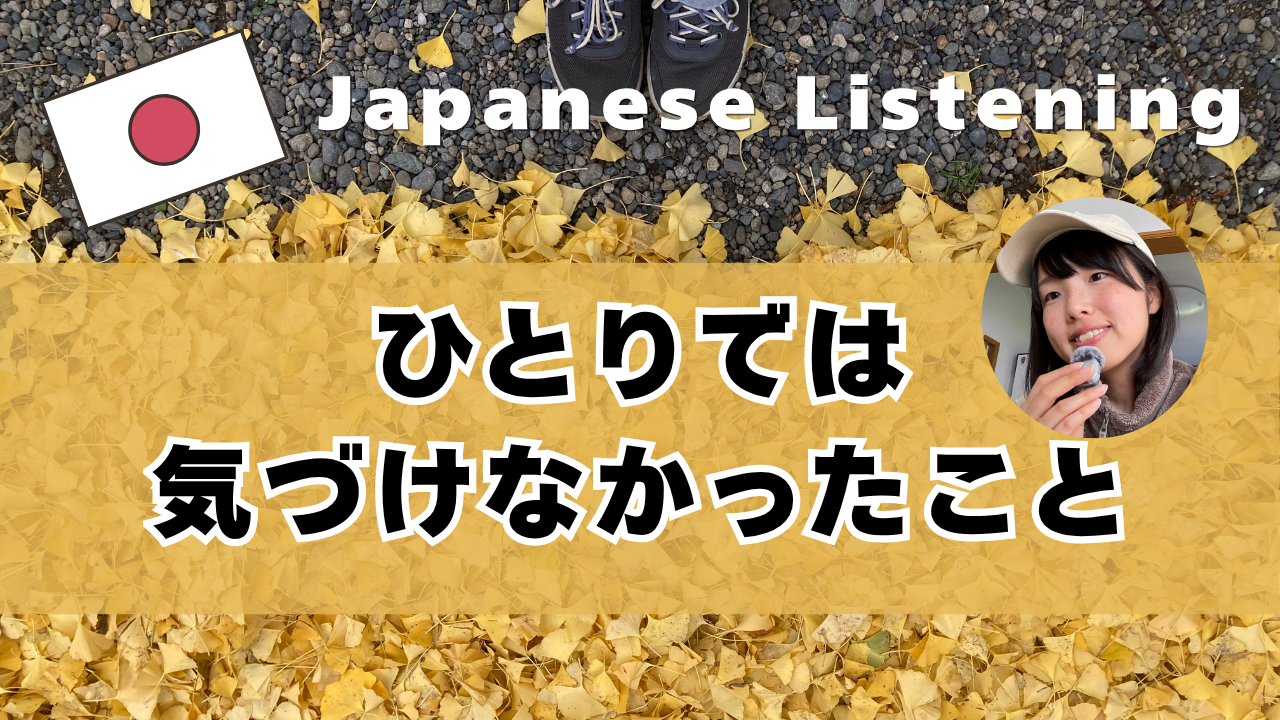
ひとりでは、気づけなかったこと。Things I Couldn’t Have Realized on My Own
What can a conversation help us notice about ourselves? After my previous video reached many new viewers, I felt surprised, grateful, and a little nervous about what to say next. On the first anniversary of Late Night Japanese Chat, I look back at why I started this channel and what your words have helped me realize. I talk about the classroom conversations I loved, the kind of company I hoped to offer on a lonely night, and my wish to speak as a friend living in Japan. Read the Japanese transcript with furigana and English translations below, then explore five useful words for belonging, encouragement, and personal values.

What You’ll Learn
Belonging and connection: Learn how 居場所 can describe emotional belonging, and how 実感 expresses the feeling that something is real to you. Natural personal storytelling: Follow expressions such as それと同時に, 〜わけではありません, and 〜かもしれません as I explain my reasons and reflect on my experience. Encouragement and different perspectives: See how 励み and 価値観 are used in context, with transcript links and additional examples in different everyday situations.
Transcript
Thank you, and one year of this channel
1. お礼と、一周年のご報告
Thank you, and one year of this channel
まぶしい。
English: It’s bright!
みなさん、こんばんは。Late Night Japanese ChatのHaruです。
English: Good evening, everyone. This is Haru from Late Night Japanese Chat.
今日も聞きに来てくれて、ありがとうございます。
English: Thank you for coming to listen today.
まず、みなさんにお礼があります。
English: First, I have something I want to thank you all for.
前回の「自信がなくても、大丈夫。」という動画を見てくださったみなさん。
English: To everyone who watched my previous video, “It’s Okay Not to Feel Confident.”
本当にありがとうございました。
English: Thank you so much.
こんなにたくさんの方に見てもらうのは初めての経験で、正直びっくりしています。
English: This is the first time so many people have watched one of my videos, and honestly, I’m surprised.
そして純粋に、とってもうれしいです。
English: And I’m simply very happy.
もうね、あの、何回言うんだって感じなんですけど、本当にありがとうございます。
English: You’re probably wondering how many times I’m going to say this, but really, thank you so much.
感謝の気持ちでいっぱいです。
English: I’m filled with gratitude.
それで、次は何を話そうかなと、ちょっとね、今日も緊張しているんですけど。
English: So I’ve been wondering what to talk about next, and I’m still a little nervous today.
おとといかな。
English: Was it the day before yesterday?
ちょうどこのチャンネルを始めて、一年が経ちました。
English: It marked exactly one year since I started this channel.
なので今日は、改めてこのチャンネルを始めた理由と、
English: So today, I’d like to revisit why I started this channel,
このチャンネルを始めて、みなさんとの関わりの中で、私自身が気がついたことをお話ししたいなと思います。
English: and talk about the things I’ve realized through connecting with you since I began.
Why I started this channel
2. このチャンネルを始めた理由
Why I started this channel
はい、まず、このチャンネルを始めた理由ですね。
English: All right, first, why I started this channel.
これまでの動画を見てくださった方は、ご存じかもしれません。
English: Those of you who have watched my earlier videos may already know this.
私自身の声でこうして話すようになったのは、本当に最近のことです。
English: It’s only very recently that I started speaking like this in my own voice.
それまでは二人の会話という形で、日本の文化や日本語について紹介する動画を作っていました。
English: Before that, I made videos introducing Japanese culture and language through conversations between two characters.
前回は初めて、私の心にあることというか、自分が考えていることを、こういう形でお話ししました。
English: In the previous video, for the first time, I shared what was on my mind—my own personal thoughts—in this way.
少しずつ動画の形も変わっていますが、そもそも、どうしてこのチャンネルを始めたのでしょうか。
English: The format has been changing little by little. But why did I start this channel in the first place?
日本の文化を紹介したい、日本語についてお話ししたい。
English: I wanted to introduce Japanese culture and talk about the Japanese language.
もちろん、それも大きな理由のひとつです。
English: Of course, that was one of the main reasons.
でも、私にとって、もうひとつ理由がありました。
English: But there was another reason that mattered to me.
それはですね、私自身の居場所のようなものがほしかったからです。
English: It was because I wanted something like a place where I belonged.
誰かとのつながりや、私が今ここにいるという、なんでしょう、実感がほしかったんですよね。
English: I wanted connection with other people and, how can I put it, a real sense that I was here.
見てくださる方に楽しんでもらえるような動画を作りたい。
English: I wanted to make videos that viewers could enjoy.
それと同時に、自分にとっての居場所もほしくて、このチャンネルを始めました。
English: At the same time, I started this channel because I wanted a place for myself too.
一年前は「私なんてダメだな」という気持ち、まさにね、自信がなくて、いっぱいいっぱいになることもたくさんありました。
English: A year ago, I often thought I wasn’t good enough. I really lacked confidence, and there were many times when I felt overwhelmed.
その中で、まず何か自分でやってみようと思って始めたんですよね。
English: In the middle of all that, I decided to try doing something myself, and that’s how I began.
The casual conversations between lessons
3. 授業の合間の雑談
The casual conversations between lessons
では、どうして日本語の番組だったのか?
English: So why did I choose to make a program about Japanese?
それは、以前の仕事で好きだった時間につながっています。
English: That connects to a part of my former job that I loved.
私は以前、日本語を教える仕事をしていました。
English: I used to teach Japanese.
ただですね、働いていた期間というのは短くて、今は日本語の先生をしているわけではありません。
English: However, I only did that job for a short time, and I’m not teaching Japanese now.
その仕事の中で、私が特に好きだったのは、授業の合間のみなさんとの雑談でした。
English: What I especially loved about that job was chatting with everyone between parts of a lesson.
勉強から少し離れて、いろいろな話をする時間です。
English: It was a chance to step away from studying for a moment and talk about all kinds of things.
例えばアニメの話だったり、漫画の話だったり、私が知らないことも学生のみなさんがたくさん話してくれて、私はね、それがめちゃくちゃ楽しかったんですよね。
English: For example, my students would talk about anime, manga, and all sorts of things I didn’t know about. I had so much fun with that.
もちろん、教科書にも大事なことがたくさん書いてあります。
English: Of course, textbooks contain many important things too.
そこから少し話が広がることもありました。
English: Sometimes our conversations would expand beyond them.
「日本ではこういうときに、こんなことを言うんですよ」というと、みなさんが「私の国ではこうだよ」と教えてくれるのが、とてもね、なんか、うれしくて楽しくて、大切な時間でした。
English: When I said, “In Japan, we say this in situations like these,” everyone would tell me, “In my country, it’s like this.” That made me so happy. It was a fun and precious time.
学生のみなさんは、実際どうだったかな?楽しんでくれていたらうれしいんですけどね。
English: I wonder how my students actually felt. I hope they enjoyed it too.
言葉を覚えるだけじゃなくて、その後ろにある文化や考え方に触れること。
English: It wasn’t just about learning words. It was about encountering the culture and thinking behind them.
違いを知って、自分の当たり前を見直すこと。
English: It was about discovering differences and reconsidering what I took for granted.
そういう交流を、仕事を辞めたあとも、自分のできる形で続けてみたかったんです。
English: I wanted to continue that kind of exchange after leaving the job, in a way that I could manage myself.
そして作ったのが、このチャンネルです。
English: And that’s why I created this channel.
Company on a lonely night
4. ひとりの夜に寄り添う番組
Company on a lonely night
私はですね、夜、たまに少しさみしい気持ちになったり、なかなか眠れなかったりすることがあります。
English: Sometimes at night, I feel a little lonely or find it hard to fall asleep.
みなさんは、そういう夜はありますか?
English: Do you have nights like that too?
そんなときにね、友達同士の会話をこっそり聞いて、ふふっと笑って、そのまま眠ってしまうような。
English: On nights like that, you could quietly listen in on a conversation between friends, smile to yourself, and then drift off to sleep.
そんなチャンネルがあったらいいなと思って、このチャンネルを作りました。
English: I thought it would be nice to have a channel like that, so I created this one.
実はですね、夜にだけ開くカフェをやってみたいなと思ったこともあるんです。
English: Actually, I’ve also thought about opening a café that only opens at night.
形は違いますが、このチャンネルにも、それに近い気持ちがあるのかもしれません。
English: The form is different, but perhaps there’s a similar feeling behind this channel.
最初にイメージしていた、友達同士の会話をこっそり聞くような番組。それを形にするために、今までAIを使ってきました。
English: My original idea was a program that felt like quietly listening in on a conversation between friends. I’ve been using AI to bring that idea to life.
生活の中で気になったことや、私がおもしろいなと思ったことを日頃から書き留めて、調べながら毎回動画を作っています。
English: In everyday life, I write down things that catch my attention or that I find interesting, and I research them as I make each video.
The people behind the numbers
5. 数字の向こうのみなさんとのつながり
The people behind the numbers
そうして作った動画を投稿すると、見てくれる人がいる。また聞きに来てくれる人がいる。
English: When I post the videos I make, there are people who watch them and people who come back to listen.
「いいね」を押してくれる人がいる。そのひとつひとつから、画面の向こうに誰かがいることを、とっても身近に感じることができました。
English: There are people who press the like button. Each of those things has helped me feel that there really is someone on the other side of the screen.
自分の作ったものが誰かの時間の一部になっている。そう思えることが、私には本当にうれしかったです。
English: Something I made was becoming a part of someone else’s time. Being able to think that made me truly happy.
この一週間は特に、何度も何度もうれしくて画面を見てしまったんですけどね。
English: Especially this past week, I kept looking at the screen over and over because I was so happy.
でも、もともと感じたかったのは、その向こうにいる人、みなさんとのつながりだったんですよね。
English: But what I originally wanted to feel was a connection with the people behind the screen—with all of you.
自分の時間を使って見てくれる人がいるだけでも、奇跡みたいなことだなと思います。
English: Just having someone spend their time watching feels like a little miracle to me.
そして、自分の、みなさんが気持ちを言葉にして伝えてくれる。本当にすごいことですよね。
English: And then you put your feelings into words and share them with me. That really is something special.
私の話が、その方にどう届いたのか。見てもらえた数だけでは分からないことを、言葉で知ることができました。
English: How had my words reached that person? Their words helped me understand things that a view count alone couldn’t tell me.
この一週間は、本当に強くそれを感じました。
English: This past week, I felt that very strongly.
たくさんの方に急に見つけてもらえたので、夢みたいな気持ちですね。不思議な感覚があります。
English: So many people suddenly found me that it feels like a dream. It’s a strange feeling.
What your comments meant to me
6. コメントを読んで感じたこと
What your comments meant to me
前回の自信の話は、自分自身が忘れないように残しておきたい話でもありました。
English: The previous episode about confidence was also something I wanted to keep as a reminder for myself.
私もね、お話ししたように、いつも自信があるわけではありません。
English: As I said, I don’t feel confident all the time either.
自分にも言い聞かせるような気持ちで話していました。
English: I was speaking partly as a way of reminding myself.
私は誰かの言葉に安心したり、自分を振り返ったりすることがあります。
English: Other people’s words sometimes reassure me or help me reflect on myself.
私の話も、何かのきっかけになればいいなと思っていました。
English: I hoped my words might become a starting point for someone too.
前回の動画のコメントの中に、今、自信がなくて、真っ暗な道を歩いているように感じると、気持ちを伝えてくださった方がいました。
English: In the comments on the previous video, someone shared that they currently lacked confidence and felt as though they were walking along a completely dark road.
そのコメントを読んで、本当に胸がいっぱいになりました。
English: Reading that comment filled me with emotion.
自分の話が、誰かが何かを考えるきっかけになったのかもしれない。
English: Perhaps something I said had given someone a starting point for reflection.
そう感じられたことが、私はね、とってもうれしかったんですよね。
English: Being able to feel that made me so happy.
そして、気持ちを伝えてくださった方の言葉も、私の大きな励みになっていました。
English: And the words of the person who shared their feelings were a great source of encouragement for me too.
もちろん、その方だけではなく、見てくださったみなさん一人ひとりに、とても感謝しています。
English: Of course, I’m deeply grateful not only to that person but to every single one of you who watched.
Discovering myself through connection
7. 関わりの中で気づく、自分のこと
Discovering myself through connection
誰かの役に立つこと、何かのきっかけになることって、大きなことをするだけじゃなくて、自分の今の気持ちを伝えることでもあるのかもしれません。
English: Being helpful to someone or becoming a starting point for something may not always mean doing something big. It can also mean sharing how we feel right now.
ただ、これは反応をもらえないと自分に価値がない、という話ではありません。
English: But this doesn’t mean that we have no worth unless someone responds to us.
前回でもお話ししたように、誰かに認めてもらえたから、初めて自分に価値が生まれるわけではないと思っています。
English: As I said in the previous video, I don’t think our worth begins only when someone recognizes us.
それでも、人との関わりの中で、自分では気づけなかったことを知ったり、自分を少し好きになれたりすることはあるんですよね。
English: Even so, through connecting with others, we can discover things we hadn’t noticed and come to like ourselves a little more.
私がほしかった、ここにいるという実感。その中には、こういう喜びもあったんだなと思いました。
English: That sense of being here that I had wanted—now I think this kind of joy was part of it too.
As a friend living in Japan
8. 日本にいる友達として
As a friend living in Japan
今回みなさんに見つけてもらってから、これから話したいことも少し変化がありました。
English: Since so many of you found me through this video, what I want to talk about next has changed a little too.
日本の文化を紹介するだけではなくて、日本にいる友達として、私自身のことを話すのもおもしろいのかなと思うようになりました。
English: I began to wonder whether, instead of only introducing Japanese culture, it might also be interesting to talk about myself as a friend living in Japan.
それで今、これから何をテーマに話していこうかなと考えています。
English: So now I’m thinking about what topics I might talk about next.
コメントで「先生」と呼んでくださる方もいます。
English: Some people call me “sensei” in the comments.
でも私の中では、先生というと、なんでしょう。
English: But to me, a teacher is—how can I put it?
みなさんの前に立つようなイメージがあるんです。
English: I have this image of someone standing at the front of a group.
私は、みなさんの輪の中に入りたいんですよね。
English: I want to be part of your circle.
何かを教えるだけじゃなくて、一緒にお話ししたいです。
English: I don’t just want to teach something. I want to talk together.
住んでいる国や話す言葉は違っても、私たちは同じ時代を生きているんですよね。
English: Even if we live in different countries and speak different languages, we are living in the same era.
違う価値観に触れることを楽しみたいし、同じように感じることがあったら、それをね、共有していきたいです。
English: I want to enjoy encountering different perspectives, and when we feel the same way about something, I want to share that too.
私が話すことも「日本人はみんなこうです」ではなくて、「私はこんなふうに感じています」という話です。
English: What I say isn’t “This is how all Japanese people are.” It’s “This is how I feel.”
こうして、やってみたいことが変わったり、新しく見つかったりするのも、人との関わりの中で起きることなんですね。
English: The things I want to try can change or come into view through connecting with other people.
自分の言葉がどう届いたのかも、私が次に何を話したいのかも、ひとりでは気づけなかったことでした。
English: How my words reached someone, and what I want to talk about next—these were things I couldn’t have realized on my own.
本当にね、このチャンネルを続けてきてよかったなと、強く感じる一週間でした。
English: This past week has really made me feel glad that I kept this channel going.
みなさんにも、誰かとの会話で自分の気持ちに気づいた経験はありますか?
English: Have you ever discovered how you felt through a conversation with someone?
もしよかったら、教えてください。
English: If you’d like, please tell me about it.
今日のテーマは「ひとりでは、気づけなかったこと。」でした。
English: Today’s topic was “Things I Couldn’t Have Realized on My Own.”
今日のトランスクリプトは、公開後に概要欄から読めるようにする予定です。
English: I plan to make today’s transcript available through the description after publication.
聞き取れなかった言葉の確認にも使ってもらえたらうれしいです。
English: I hope you’ll also use it to check any words you couldn’t catch.
はい、ということで、みなさん本当にこのチャンネルを見つけてくださって、ありがとうございます。
English: All right, with that, thank you all so much for finding this channel.
これからも、日本にいる友達としてお話ししていけたらうれしいです。
English: I hope we can keep talking, with me as your friend in Japan.
それでは、おやすみなさーい。
English: Well then, good night!
Vocabulary
Each word includes the original line from the transcript and one extra example. Use “See in transcript” to jump back to the conversation.
居場所a place to be; a place where one belongs
FROM THE TRANSCRIPT
それはですね、私自身の居場所のようなものがほしかったからです。
EXAMPLE
放課後の図書室は、私にとって安心できる居場所でした。
The library after school was a place where I felt safe and at home.
実感a real or personal sense of something
FROM THE TRANSCRIPT
誰かとのつながりや、私が今ここにいるという、なんでしょう、実感がほしかったんですよね。
EXAMPLE
初めて給料をもらって、働き始めた実感が湧きました。
Receiving my first paycheck made starting work finally feel real.
雑談casual conversation; chatting
FROM THE TRANSCRIPT
その仕事の中で、私が特に好きだったのは、授業の合間のみなさんとの雑談でした。
EXAMPLE
電車を待つ間、同僚と週末の予定について雑談しました。
While waiting for the train, I chatted with a coworker about our weekend plans.
励みencouragement; something that helps one keep going
FROM THE TRANSCRIPT
そして、気持ちを伝えてくださった方の言葉も、私の大きな励みになっていました。
EXAMPLE
毎日の練習で少しずつ上達していることが、続ける励みになっています。
Noticing gradual improvement through daily practice encourages me to keep going.
価値観values; one’s perspective on what matters
FROM THE TRANSCRIPT
違う価値観に触れることを楽しみたいし、同じように感じることがあったら、それをね、共有していきたいです。
EXAMPLE
一緒に暮らしてみて、お金についての価値観が違うと分かりました。
After living together, we realized that we had different values about money.
Cultural Notes
居場所 is not always a physical location. In this episode, I use 居場所 for a feeling of belonging and connection. The channel is an online space, but it can still give me a sense that there is somewhere I belong.
雑談 means casual conversation. 雑談 is conversation without a strictly fixed topic. Here, it refers to the conversations between parts of my Japanese lessons, when students and I shared things we knew and compared our everyday experiences.
先生 and friendship: a personal association. I describe my own image of a teacher standing at the front of a group, and my wish to join the circle as a friend. This is my personal perspective, not a claim that teachers must be superior to students or that everyone in Japan understands the word in the same way.
Haru’s Note
This past week, I felt truly happy that people were watching and sharing how they felt. Your words helped me understand things that numbers alone could not tell me. I want to keep sharing my thoughts as a friend living in Japan and enjoying the different perspectives we bring.
この一週間、動画を見てくださる方や、気持ちを伝えてくださる方がいることを、本当にうれしく感じました。数字だけでは分からないことを、みなさんの言葉から知ることができました。これからも、日本にいる友達として、自分の考えを話し、違う価値観も楽しんでいきたいです。

コメント