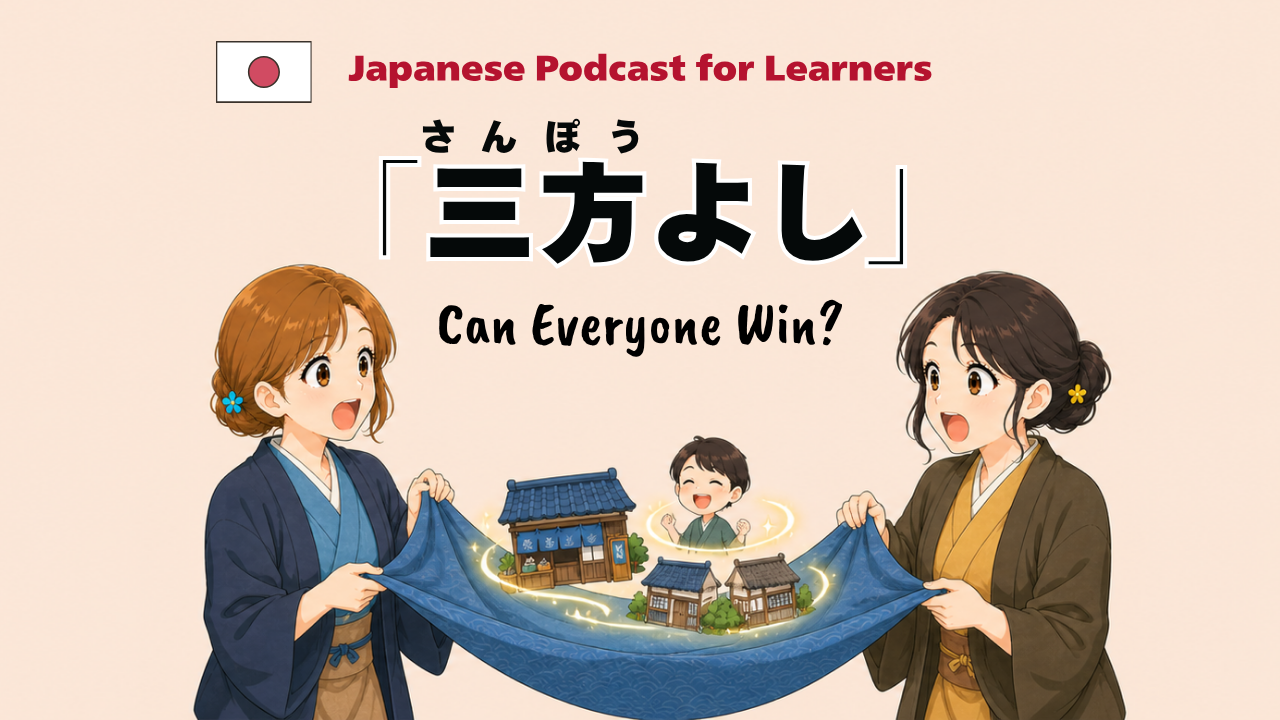
「三方よし」Can Everyone Win?
Can a choice be good for you, good for someone else, and good for the wider community too? Misaki and Nozomi explore 「三方よし」, a business philosophy connected to the Omi merchants, and look at how the idea can also guide everyday choices.
What You’ll Learn
Learn what 三方よし means, how to read it, and why its three sides are traditionally described as 売り手, 買い手, and 世間. You’ll also learn how the phrase is connected to the Omi merchants and how its broader idea can be applied to everyday decisions.
Transcript
Is it only good for you?
1. 自分だけが楽しい?
Is it only good for you?
Misaki ノゾミは、何か新しいことを始める時、「自分にとっていいか」だけを考える?
English: Nozomi, when you start something new, do you only think about whether it is good for you?
Nozomi まずは、自分が楽しいかを考えるかな。始める前から苦しかったら、続かないし。
English: First, I think about whether I will enjoy it. If it feels hard before I even begin, I probably will not continue.
Misaki それは大事だね。じゃあ、そこにあと二つ足したら、全部でいくつ?
English: That is important. Then, if you add two more, how many do you have in total?
Nozomi 三つ。今日は算数の番組だった?
English: Three. Did this become a math podcast today?
Misaki 違います。今日の言葉は「三方よし」。これ、私が一番好きな言葉なんだ〜。
English: No. Today’s phrase is sanpou yoshi. This is my favorite phrase.
Nozomi 一番? それなら、いつもより少し熱くなりそうだね。
English: Your favorite? Then you may get a little more passionate than usual.
Misaki 今日は、三つの「よし」、商いから生まれた考え方、そして日常での使い方を話します。
English: Today, we will talk about the three kinds of good, the idea’s roots in commerce, and how it can guide daily life.
Nozomi 自分だけじゃない「よし」か。何が増えるのか気になる。
English: Good that is not only for yourself. I want to know what the other two are.
Misaki ということで始まりました、Late Night Japanese Chat。
English: And with that, welcome to Late Night Japanese Chat.
Misaki 私たち、ミサキと…
English: We are Misaki and…
Nozomi ノゾミがお届けします。今夜も楽しく話していきましょう。
English: Nozomi. Let’s enjoy another conversation tonight.
Breaking down sanpou yoshi
2. 「三方」と「よし」を分解
Breaking down sanpou yoshi
Misaki まずは「三方よし」を、言葉の形から見てみよう。
English: First, let’s look at the form of the phrase sanpou yoshi.
Nozomi 「三」は三つ。「方」は、方向の「方」だよね。
English: San means three. Hou is the same character used in the word for direction.
Misaki そう。ここでの「方」は、方向より「立場」や「側」に近いです。
English: Right. Here, hou is closer to a position or a side than a direction.
Nozomi 「方」なのに、「三方」では「ぽう」と読むんだね。
English: Even though the character is read hou, in sanpou it becomes pou.
Misaki 前の「ん」とつながって音が変わります。「さんほう」ではなく「さんぽう」と覚えてね。
English: The sound changes after the n. Remember, it is sanpou, not sanhou.
Nozomi 三人という意味じゃなくて、三つの立場なんだ。
English: So it does not mean three people. It means three different sides.
Misaki そして「よし」は、「よい」や「いい」という意味。少し古い形だけど、今でもちゃんと「準備よし!」のように使います。
English: And yoshi means good. It is an older form, but we still use it in expressions like, “Ready—good!”
Nozomi 出発前に「財布よし、スマホよし、お菓子よし!」って確認する感じ?
English: Like checking before leaving: “Wallet, good. Phone, good. Snacks, good!”
Misaki 最後だけ、ずいぶん大事そうだね。
English: The last one sounds especially important to you.
Nozomi つまり「三方よし」は、三つの立場にとって、どれもよいということ。
English: So sanpou yoshi means that something is good for all three sides.
Misaki その通り。次は、その三つが誰なのかを見てみよう。
English: Exactly. Next, let’s see who those three sides are.
Seller, buyer, and society
3. 売り手・買い手・世間
Seller, buyer, and society
Misaki 三つの立場は、「売り手よし、買い手よし、世間よし」です。
English: The three sides are: good for the seller, good for the buyer, and good for society.
Nozomi 売る人と買う人は分かるけど、「世間」は急に広いね。
English: I understand the seller and buyer, but society suddenly sounds very broad.
Misaki 「世間」は、二人の周りにいる人や地域、社会のこと。商売は、自分たちだけの中で終わらないからね。
English: Seken means the people, community, and society around the two sides. Business does not end with only the seller and buyer.
Nozomi お店だけがもうかって、買った人が困るなら「買い手よし」じゃない。
English: If only the shop profits and the buyer has a problem, it is not good for the buyer.
Misaki 買う人だけが安く得をして、お店が続けられないなら「売り手よし」でもありません。
English: If only the buyer gets a very low price and the shop cannot continue, it is not good for the seller either.
Nozomi 誰か一人が我慢して作る「よし」じゃないんだね。
English: So it is not a kind of good built on one person’s sacrifice.
Misaki そう。三方よしは、ただ親切にすることでも、自分の利益を捨てることでもないんだ。
English: Right. Sanpou yoshi is not simply being kind, and it does not mean giving up your own benefit.
Nozomi 商品が便利でも、作る途中で地域を困らせたら「世間よし」とは言いにくいね。
English: Even if a product is useful, it is hard to call it good for society if making it harms the local community.
Nozomi 三人とも、無理に笑顔を作らなくていい。本当に続く形を探すんだ。
English: No one has to force a smile. The goal is to find a form that can truly continue.
The Omi merchants and a later phrase
4. 近江商人と、後から生まれた言葉
The Omi merchants and a later phrase
Misaki この考え方は、今の滋賀県を中心に活動した「近江商人」の商いと結び付いています。
English: This idea is connected to the commerce of Omi merchants, who were based around present-day Shiga Prefecture.
Nozomi 自分の町だけじゃなくて、遠い地域へ行って商売をした人たちだよね。
English: They were merchants who traveled and did business in distant regions, not only in their hometowns.
Misaki うん。知らない土地で商売を続けるには、商品だけではなく信用も必要でした。
English: Yes. To continue doing business in unfamiliar places, they needed not only products but also trust.
Nozomi 一度だけ売って終わりなら、ごまかせるかもしれない。でも、また来たいなら信頼を失えない。
English: If they sold something only once, they might get away with cheating. But if they wanted to return, they could not lose people’s trust.
Misaki そして大事な点があります。「三方よし」という短い決まり文句は、昔の商人がそのまま使っていた言葉ではありません。
English: There is one important point. The short fixed phrase sanpou yoshi was not used in exactly this form by merchants long ago.
Nozomi じゃあ、あとから作られたの?
English: Then was it created later?
Misaki そう。近江商人の考え方を、後の時代に分かりやすくまとめた標語だとされています。
English: Yes. It is considered a later slogan that neatly summarizes the philosophy of the Omi merchants.
Nozomi 長い知恵を、覚えやすい四文字にしたんだね。
English: So a long history of wisdom was packed into four easy-to-remember characters.
One loaf connects to the town
5. パン一つから町までつながる
One loaf connects to the town
Misaki では、地元のパン屋さんで、パンを一つ買う場面を考えてみよう。
English: Now, imagine buying one loaf of bread from a local bakery.
Nozomi パンなら得意。買う準備はできています。
English: Bread is my specialty. I am ready to buy.
Misaki お店は商品が売れて、仕事を続けられる。これが「売り手よし」。
English: The bakery sells its product and can continue its work. That is good for the seller.
Nozomi 私は、おいしいパンを食べられる。これが「買い手よし」。
English: I get to eat delicious bread. That is good for the buyer.
Misaki 地域のお店が続けば、人が働く場所や、町のつながりも残ります。これが「世間よし」につながることがあります。
English: If local shops continue, jobs and community connections can remain. That can lead to good for society.
Nozomi パン一つから、作る人や働く人、町まで線が長く伸びた。
English: One loaf of bread suddenly connects to the maker, the workers, and the whole town.
Misaki ただし、地元で買えば、何でも自動的に三方よしになるわけではありません。
English: However, buying locally does not automatically make everything sanpou yoshi.
Nozomi 作る人が無理をしていないか。買う人が納得できるか。周りにもよいか。全部を見るんだね。
English: We look at whether the maker is overworked, whether the buyer is satisfied, and whether it is good for others too.
Misaki そう考えると、パンを選ぶ目も少し変わりそう。
English: Thinking that way may even change how you choose your bread.
Sanpou yoshi beyond business
6. 商売の外にもある「三方よし」
Sanpou yoshi beyond business
Misaki 三方よしは商いから生まれた言葉だけど、広い考え方として、日常にも落とし込めます。
English: Sanpou yoshi comes from commerce, but as a broader way of thinking, we can apply it to daily life too.
Nozomi 買い物をしない日にも使える?
English: Can we use it even on days when we do not shop?
Misaki もちろん。友達と予定を決める時なら、自分も楽しい、相手も無理をしない、周りにも迷惑をかけない形を探せるよね。
English: Of course. When making plans with a friend, you can find a plan you enjoy, that does not burden your friend, and that does not trouble others.
Nozomi 私だけ行きたい場所を十個送るのは、一方よしかもしれない。
English: Sending ten places that only I want to visit might be ippou yoshi—good for only one side.
Misaki 新しい物を選ぶ時も、自分に便利か、作る人に無理がないか、環境にどんな影響があるかを考えられます。
English: When choosing a new product, we can ask whether it is useful to us, fair to the maker, and how it affects the environment.
Nozomi 三つの立場は、場面によって「自分・相手・周り」と考えてもいいんだ。
English: Depending on the situation, we can think of the three sides as ourselves, the other person, and those around us.
Misaki その「周り」には、地域や環境、未来の人まで入ることがあります。
English: Those around us can include the community, the environment, and even people in the future.
Misaki これは元の意味を広げた使い方です。大切なのは、自分だけを見ないこと。
English: This is a broader application of the original meaning. The important thing is not to look only at yourself.
Nozomi 三方向を見るなら、首も柔らかくしておかないとね。
English: If we are looking in three directions, we should keep our necks flexible too.
Is this podcast sanpou yoshi too?
7. このPodcastも三方よし?
Is this podcast sanpou yoshi too?
Misaki このPodcastも、広い意味では三方よしだと思っています。
English: I think this podcast is also sanpou yoshi in the broader sense.
Nozomi 私たち、知らないうちに近江商人になっていた?
English: Did we become Omi merchants without realizing it?
Misaki 商人ではありません。まず、この番組を作っているHaruは、好きな日本語や日本文化を調べて、みなさんと分け合える。
English: We are not merchants. First, Haru, who creates this show, can explore Japanese language and culture and share them with everyone.
Nozomi 聞く人は、日本語を練習しながら、教科書だけでは見つけにくい文化や考え方に出会える。
English: Listeners can practice Japanese and discover culture and ideas that are hard to find in textbooks alone.
Misaki そして日本語や日本文化が、海を越えて、もっと多くの人につながっていく。これを三つ目の「よし」にできたら嬉しいです。
English: And Japanese language and culture can cross the sea and connect with more people. I would be happy if that could become the third good.
Nozomi 作る人よし、聞く人よし、日本語と文化よし。
English: Good for the creator, good for the listener, and good for Japanese language and culture.
Misaki そういう形を目指して、毎回作っています。
English: That is the kind of relationship we aim for in every episode.
Nozomi じゃあ、話している私たちも入れたら「四方よし」?
English: Then if we include us talking too, is it yonpou yoshi—good for four sides?
Misaki 急に一方増やさないで。
English: Do not suddenly add another side.
Three questions for your choices
8. 選ぶ時の、三つのものさし
Three questions for your choices
Misaki 私は、何かを始める時や選ぶ時に、この考え方を一番大切にしています。
English: When I begin or choose something, this is the idea I value most.
Nozomi 三つ全部が、完璧になる答えを探すの?
English: Do you look for an answer that makes all three sides perfect?
Misaki 完璧じゃなくて大丈夫。自分だけが得をしていないか、誰かが無理をしていないか、長く続けられる形か。この三つを考えるための「ものさし」です。
English: It does not need to be perfect. It is a ruler for asking three things: Am I the only one benefiting? Is anyone being pushed too hard? Can this continue for a long time?
Nozomi 正解を出す道具じゃなくて、立ち止まるための道具なんだね。
English: So it is not a tool that gives one correct answer. It is a tool that helps us pause and think.
Misaki では、今日の三つをまとめます。一つ目、「三方よし」は売り手、買い手、世間によい商いを目指す考え方。
English: Let’s review today’s three points. First, sanpou yoshi aims for commerce that is good for the seller, buyer, and society.
Nozomi 二つ目。近江商人の知恵を、後の時代に覚えやすくまとめた言葉。
English: Second, the phrase was created later to summarize the wisdom of the Omi merchants in an easy-to-remember way.
Misaki 三つ目。商売だけではなく、自分、相手、周りによいかを考える時にも使えます。
English: Third, beyond business, we can use it to think about what is good for ourselves, others, and those around us.
Nozomi これだけ覚えれば完璧。じゃあ今日のおやつも、私よし、ミサキよし、お菓子屋さんよし!
English: Remember those three points and you are all set. Then today’s snack is good for me, good for Misaki, and good for the snack shop!
Misaki それは、自分に都合のいい三方よしだね。
English: That is a convenient version of sanpou yoshi for you.
Nozomi おいしく長く続けられる形を探しています。
English: I am searching for a delicious form that can continue for a long time.
Misaki 今夜も聞いてくれて、ありがとうございました。
English: Thank you for listening tonight.
Misaki この番組が、あなたの日本語の「居場所」の一つになれたら嬉しいです。
English: I hope this show can become one of the places where your Japanese feels at home.
Nozomi よかったらチャンネル登録して、また帰ってきてね。
English: If you would like, subscribe and come back again.
Misaki それでは、また次の夜に。おやすみなさい。
English: Until the next night. Good night.
Nozomi おやすみなさい。
English: Good night.
Vocabulary
Each word includes the original line from the transcript and one extra example. Use “See in transcript” to jump back to the conversation.
三方よしgood for the seller, buyer, and society
FROM THE TRANSCRIPT
違います。今日の言葉は「三方よし」。これ、私が一番好きな言葉なんだ〜。
EXAMPLE
会社も利用者も地域も無理なく続けられるなら、三方よしに近い考え方ですね。
If the company, its users, and the local community can all benefit sustainably, that is close to the idea of sanpou yoshi.
売り手seller; provider
FROM THE TRANSCRIPT
三つの立場は、「売り手よし、買い手よし、世間よし」です。
EXAMPLE
売り手は、商品の良い点だけでなく注意点も説明しました。
The seller explained not only the product’s advantages but also the points to be careful about.
買い手buyer; customer
FROM THE TRANSCRIPT
三つの立場は、「売り手よし、買い手よし、世間よし」です。
EXAMPLE
買い手にとって、値段だけでなく使いやすさも大切です。
For the buyer, ease of use is important as well as price.
世間society; the community around us
FROM THE TRANSCRIPT
「世間」は、二人の周りにいる人や地域、社会のこと。
EXAMPLE
その店は、世間の評価より常連客との信頼関係を大切にしています。
That shop values trust with its regular customers more than its general public reputation.
近江商人merchants from the Omi region
FROM THE TRANSCRIPT
この考え方は、今の滋賀県を中心に活動した「近江商人」の商いと結び付いています。
EXAMPLE
近江商人について調べるために、滋賀県の資料館を訪ねました。
I visited a museum in Shiga Prefecture to learn more about the Omi merchants.
Cultural Notes
三方よし is commonly summarized as “good for the seller, good for the buyer, and good for society.” It is associated with the business philosophy of the Omi merchants, who operated widely beyond their home region.
The phrase itself is a later summary. The fixed expression 三方よし was created later to describe the philosophy associated with the Omi merchants; it should not be understood as a slogan they all used in exactly that form in earlier centuries.
The broader everyday use in this episode is an interpretation, not the historical definition. Thinking in terms of “myself, the other person, and those around us” is a modern way to extend the original idea beyond commerce.
Haru’s Note
三方よし is one of my favorite ideas because it does not ask one side to disappear for the sake of the others. It asks whether a choice can work for you, for another person, and for the wider world around you—and whether that balance can last.
「三方よし」は、誰かひとりが我慢するための考え方ではありません。自分にも、相手にも、周りにも、できるだけ無理のない形を探す。すぐに正解が出なくても、何かを選ぶときの「ものさし」になるところが好きです。


コメント