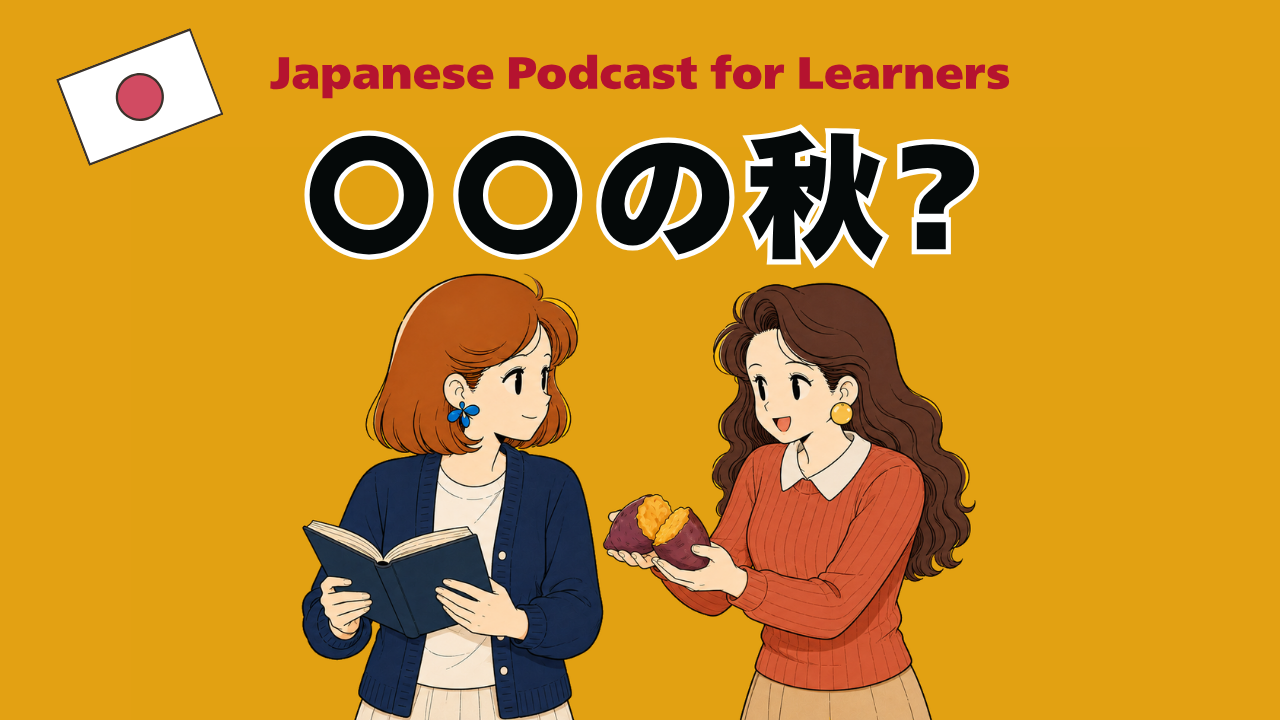
「〇〇の秋」Why Does Japan Say “Maru Maru no Aki”?
Why does autumn in Japan seem to come with an activity already attached? Misaki and Nozomi unpack the flexible pattern 「〇〇の秋」 through appetite, books, sports, and art, then trace how cooler days, longer evenings, harvest foods, and yearly repetition make these phrases feel so familiar.

What You’ll Learn
Learn how the pattern 〇〇の秋 works, why expressions such as 食欲の秋 and 読書の秋 are connected with the season, and how 秋の夜長 helps explain some of the ways people enjoy autumn in Japan.
Transcript
What comes to mind in autumn?
1. 秋といえば?
What comes to mind in autumn?
Misaki ねえ、ノゾミ……秋だねえ。
English: Hey, Nozomi… it really feels like autumn.
Nozomi だね、秋だね。 なんか、しみじみしてるね。
English: It does. You sound strangely sentimental.
Misaki 秋といえば……?
English: So, when you think of autumn…?
Nozomi 食欲の秋!
English: Autumn appetite!
Misaki 早い! やっぱりノゾミはそうだと思った。
English: That was fast! I knew you would say that.
Nozomi なによー。ミサキは?
English: Hey! What about you, Misaki?
Misaki 私は、読書の秋かな。
English: For me, maybe autumn for reading.
Nozomi 「食欲の秋」とか「読書の秋」とか、日本って「〇〇の秋」が多いよね。
English: Japan has many “autumn for ___” expressions, does it not?
Misaki スポーツの秋、芸術の秋もあるね。
English: There is also autumn for sports and autumn for the arts.
Nozomi 秋だけ忙しすぎない? 食べて、本を読んで、運動して、芸術も?
English: Is autumn not too busy? Eat, read, exercise, and enjoy art too?
Misaki 全部一日でしなくていいよ。
English: You do not have to do everything in one day.
Misaki 今夜は、まず「〇〇の秋」がどんな言葉なのか。次に、なぜ秋といろいろな活動が結びついたのか。最後に、この言葉から見える日本の秋の楽しみ方について話します。
English: Tonight, we will first look at what “autumn for ___” means, then why autumn became connected with so many activities, and finally what these expressions show us about enjoying autumn in Japan.
Nozomi 食欲の秋は、ちゃんと入ってる?
English: Autumn appetite is definitely included, right?
Misaki 入ってます。
English: It is.
Misaki ということで始まりました、Late Night Japanese Chat。私たち、ミサキと……
English: And with that, welcome to Late Night Japanese Chat. We are Misaki and…
Nozomi ノゾミがお届けします。今夜も楽しく話していきましょう。
English: Nozomi. Let’s enjoy another conversation tonight.
What kind of expression is ‘〇〇 no aki’?
2. 「〇〇の秋」ってどんな言葉?
What kind of expression is ‘〇〇 no aki’?
Nozomi そもそも「〇〇の秋」って、どういう言葉?
English: To begin with, what kind of expression is “autumn for ___”?
Misaki 秋に向いていることや、秋に楽しみたいことを表す言い方だね。
English: It describes something suited to autumn or something people want to enjoy during the season.
Nozomi 一番よく聞くのは、食欲、読書、スポーツ、芸術かな。
English: The ones we hear most are probably appetite, reading, sports, and the arts.
Misaki うん。この四つは、毎年秋になると、お店やテレビ、学校でもよく聞くよね。
English: Yes. Every autumn, we hear these four in shops, on television, and at school.
Nozomi でも、日本人が秋に必ず全部する、という意味ではないよね?
English: But it does not mean every Japanese person must do all of them in autumn, right?
Misaki もちろん。秋の過ごし方を楽しく表す、合言葉みたいなものだと思えば分かりやすいよ。
English: Of course not. It is easier to understand them as little catchphrases for enjoying the season.
Nozomi 合言葉なら、私はもう完璧に覚えました。食欲の秋!
English: If it is a catchphrase, I have already memorized mine perfectly: autumn appetite!
Misaki それは最初から知ってたよ。
English: You knew that one from the beginning.
Why autumn?
3. どうして秋なの?
Why autumn?
Nozomi でも、どうして春や夏じゃなくて、秋なの?
English: But why autumn instead of spring or summer?
Misaki 理由は一つじゃないけど、まず、夏の暑さが落ち着いて、過ごしやすくなることが大きいと思う。
English: There is no single reason, but one important factor is that the summer heat eases and the weather becomes more comfortable.
Nozomi 暑い時は、外に出るだけで疲れるもんね。
English: When it is hot, simply going outside can be tiring.
Misaki 涼しくなると、外で体を動かしやすいし、家でも落ち着いて過ごしやすい。
English: When it gets cooler, it is easier to be active outside and relax comfortably at home.
Nozomi 外ではスポーツ、家では読書や映画。どちらにも合うんだ。
English: Sports outside, reading or films at home. Autumn suits both.
Misaki それに、秋は収穫の季節でもあるよね。
English: Autumn is also a harvest season.
Nozomi そこで食欲の秋が登場するわけですね。
English: And that is where autumn appetite enters the story.
Misaki お待たせしました。
English: Thank you for waiting.
Feeling autumn through food
4. 食べ物から感じる秋
Feeling autumn through food
Misaki 秋になると、新米、さつまいも、栗、きのこ、梨、柿などが店に並ぶよね。
English: In autumn, newly harvested rice, sweet potatoes, chestnuts, mushrooms, pears, and persimmons appear in shops.
Nozomi ちょっと待って。今の、買い物リストにしていい?
English: Wait. Can I use that as my shopping list?
Misaki あとでね。 日本では、季節の食べ物から秋を感じる機会が多いと思う。
English: Later. In Japan, there are many opportunities to feel autumn through seasonal foods.
Nozomi コンビニやカフェも、栗やさつまいもの商品が急に増えるよね。
English: Convenience stores and cafés suddenly offer many chestnut and sweet-potato products too.
Misaki そうそう。「秋限定」と書いてあると、つい気になっちゃう。
English: Exactly. When something says “autumn limited edition,” it is hard not to notice.
Nozomi 向こうから呼ばれてる気がするんだよ。「ノゾミ、今しか食べられないよ」って。
English: I feel as if it is calling me: “Nozomi, you can only eat me now.”
Misaki 商品は名前を知らないと思うよ。
English: I do not think the product knows your name.
Nozomi でも、食べ物の色や香りで、「秋が来たな」って感じることはあるよね。
English: But colors and aromas of food really can make us feel that autumn has arrived.
Misaki うん。それが「食欲の秋」を身近にしているんだと思う。
English: Yes. I think that makes “autumn appetite” feel especially familiar.
Two sides of autumn: day and night
5. 昼と夜、二つの秋
Two sides of autumn: day and night
Nozomi 食べ物以外の三つは、どうつながるの?
English: How do the other three connect with autumn?
Misaki 秋の昼と夜を考えると分かりやすいよ。
English: It is easier to understand if we think about autumn days and nights.
Nozomi 昼と夜?
English: Days and nights?
Misaki 涼しい昼は、散歩やスポーツをしやすい。日が暮れたあとの夜は、本を読んだり、映画や音楽を楽しんだりできる。
English: Cool days are comfortable for walking and sports. After sunset, evenings are good for books, films, and music.
Nozomi スポーツ、読書、芸術が、同じ季節に入る理由が見えてきた。
English: Now I can see why sports, reading, and art all belong to the same season.
Misaki 秋は日が暮れるのが早くなって、夜を長く感じるよね。「秋の夜長」という言葉もあります。
English: In autumn, the sun sets earlier and evenings feel longer. Japanese also has the expression aki no yonaga, “the long nights of autumn.”
Nozomi 秋の夜長に本を読む。なんか素敵。
English: Reading during the long autumn nights. That sounds lovely.
Misaki ノゾミも読む?
English: Do you read too?
Nozomi 三ページぐらいで寝ます。
English: I fall asleep after about three pages.
Misaki 夜長を、ほとんど睡眠に使ってる。
English: You are using almost the entire long night for sleeping.
Heard in many places every year
6. 毎年、いろいろな場所で聞く
Heard in many places every year
Nozomi 過ごしやすいのは分かったけど、どうして言葉としてこんなに定着したんだろう?
English: I understand why autumn is comfortable, but why did these expressions become so familiar?
Misaki 毎年、いろいろな場所で繰り返し聞くからじゃないかな。
English: Perhaps because we hear them repeated in many places every year.
Nozomi 食欲の秋は、スーパーやレストラン。
English: Autumn appetite appears in supermarkets and restaurants.
Misaki 読書の秋は、本屋さんや図書館。
English: Autumn for reading appears in bookshops and libraries.
Nozomi スポーツの秋は、学校の運動会や地域のイベント。
English: Autumn for sports appears at school sports days and community events.
Misaki 芸術の秋は、展覧会や文化祭などで聞くね。
English: We hear autumn for the arts around exhibitions and school cultural festivals.
Nozomi 子どもの頃から毎年聞いていたら、「秋といえばこれ」って自然に覚えるね。
English: If we hear them every year from childhood, we naturally learn to connect these things with autumn.
Misaki そう。何か一つの出来事から、四つが一度に生まれたわけではないんだよ。
English: Exactly. The four expressions did not all arise at once from a single event.
Nozomi それぞれ違う理由があって、毎年使われるうちに、秋のイメージになったんだ。
English: Each has a different background, and repeated use made them part of autumn’s image.
Do people in Japan enjoy seasons through words?
7. 日本人は季節を言葉で楽しむ?
Do people in Japan enjoy seasons through words?
Misaki 私は、「〇〇の秋」って、季節を楽しむ日本らしい言葉だと思う。
English: I think “autumn for ___” is a very Japanese way of enjoying the season through language.
Nozomi どういうこと?
English: What do you mean?
Misaki 日本では、春は桜、夏は花火、秋は紅葉や食べ物、冬は雪みたいに、季節の変化を暮らしの中でよく話題にするよね。
English: In Japan, seasonal changes often become part of daily conversation: cherry blossoms in spring, fireworks in summer, autumn leaves and food in autumn, and snow in winter.
Nozomi 天気だけじゃなくて、何を見るか、食べるか、どう過ごすかまで季節と結びついてる。
English: It is not only weather. What we see, eat, and do all become connected with the seasons.
Misaki うん。「〇〇の秋」も、秋に何を楽しむかを短く表した言葉なんだと思う。
English: Right. “Autumn for ___” briefly expresses what we want to enjoy during autumn.
Nozomi でも、「秋だから本を読まなきゃ」とか、「運動しなきゃ」という決まりではない。
English: But it is not a rule saying we must read or exercise because it is autumn.
Misaki そう。何かをしなければいけない言葉じゃなくて、秋を少し楽しむための言葉なんだよ。
English: Exactly. It is not about obligation. It is a way to enjoy autumn a little more.
Nozomi じゃあ私は、堂々と食欲の秋を楽しみます。
English: Then I will proudly enjoy autumn appetite.
Misaki そこだけは最初から全然ぶれてないね。
English: That is the one thing that has not changed at all.
Which autumn is yours this year?
8. 今年はどの秋?
Which autumn is yours this year?
Misaki 今日は、なぜ日本では「〇〇の秋」と言うのかを考えました。
English: Today, we explored why Japan has expressions such as “autumn for ___.”
Nozomi 秋は、暑さが落ち着いて、外でも家でも過ごしやすい。
English: Autumn is cooler and comfortable both outdoors and at home.
Misaki 食欲の秋には収穫や季節の食べ物、読書や芸術には秋の長い夜、スポーツには涼しい昼という、それぞれ違う背景がありました。
English: Autumn appetite connects with harvest and seasonal foods, reading and art with long autumn evenings, and sports with cool days.
Nozomi そして、お店や学校などで毎年聞くから、日本の秋のイメージとして定着した。
English: And because people hear these expressions every year in shops and schools, they became familiar images of autumn in Japan.
Misaki 「〇〇の秋」は、何かをしなければいけない言葉ではなく、季節を楽しむ言葉なんだね。
English: “Autumn for ___” is not about what we must do. It is language for enjoying the season.
Nozomi ミサキは、結局どの秋にする?
English: Misaki, which autumn will you choose in the end?
Misaki 読書かな。でも、散歩や映画も楽しみたい。
English: Probably reading. But I also want to enjoy walks and films.
Nozomi 一つに決めなくていいんだもんね。私も、食欲と……食欲。
English: We do not need to choose only one. Mine will be appetite and… appetite.
Misaki 同じのを二回言った。
English: You said the same one twice.
Nozomi 大事なので。 みなさんは、どの秋が一番近いですか?
English: Because it is important. Which kind of autumn feels closest to you?
Misaki 今夜も最後まで聞いてくれて、ありがとうございました。
English: Thank you for listening all the way to the end tonight.
Nozomi じゃあ私は、秋限定のお菓子を探しに行ってきます。
English: Then I am going to look for some autumn limited-edition sweets.
Misaki まだ終わってないよ。
English: We have not finished yet.
Nozomi あ、そうだった。それでは、また次の夜に。おやすみなさい。
English: Oh, right. Then we will see you on the next night. Good night.
Misaki おやすみなさい。お菓子は収録のあとね。
English: Good night. The sweets can wait until after the recording.
Vocabulary
Each word includes the original line from the transcript and one extra example. Use “See in transcript” to jump back to the conversation.
食欲appetite
FROM THE TRANSCRIPT
食欲の秋!
EXAMPLE
風邪が治って、やっと食欲が戻りました。
My appetite finally returned after I recovered from my cold.
収穫harvest; to harvest
FROM THE TRANSCRIPT
それに、秋は収穫の季節でもあるよね。
EXAMPLE
祖父の畑で、週末にトマトを収穫しました。
We harvested tomatoes in my grandfather’s garden over the weekend.
夜長a long autumn night
FROM THE TRANSCRIPT
秋は日が暮れるのが早くなって、夜を長く感じるよね。「秋の夜長」という言葉もあります。
EXAMPLE
秋の夜長に、昔の写真を整理しました。
During a long autumn evening, I sorted through old photographs.
定着するto become established; to take root
FROM THE TRANSCRIPT
過ごしやすいのは分かったけど、どうして言葉としてこんなに定着したんだろう?
EXAMPLE
この呼び方は、若い人の間で少しずつ定着しました。
This name gradually became established among young people.
季節限定seasonal limited edition; available for a limited season
FROM THE TRANSCRIPT
そうそう。「秋限定」と書いてあると、つい気になっちゃう。
EXAMPLE
季節限定の切手を、海外の友達への手紙に使いました。
I used a seasonal limited-edition stamp on a letter to a friend overseas.
Cultural Notes
‘〇〇 no aki’ is an invitation, not an obligation. The pattern describes something associated with or enjoyable in autumn. It does not mean that everyone in Japan reads, exercises, appreciates art, or eats more during the season.
These expressions share a season, not one single origin. Harvest foods help explain shokuyoku no aki, cooler days fit outdoor activity, and longer evenings are often connected with reading and the arts. The expressions did not all arise at once from one event.
Repetition helps seasonal language feel familiar. Shops, schools, libraries, media, and community events use these expressions in different settings each year. Hearing them repeatedly helps strengthen their association with autumn, although experiences differ by region and individual.
Haru’s Note
Each season gives us a small reason to notice our lives again. I like ‘〇〇 no aki’ because it lets the same season belong to different people: one person may cook, another may read, and another may simply rest. You do not have to choose the ‘correct’ autumn. The phrase can be a gentle way to name what you want to enjoy now.
季節が変わると、いつもの暮らしを少し見直すきっかけができます。私が「〇〇の秋」を好きなのは、同じ秋でも、人によって楽しみ方が違っていいと思えるからです。料理をする人も、本を読む人も、ゆっくり休む人もいます。正しい秋を選ぶ必要はありません。今楽しみたいことに名前を付ける、そんな言葉なのかもしれません。

コメント