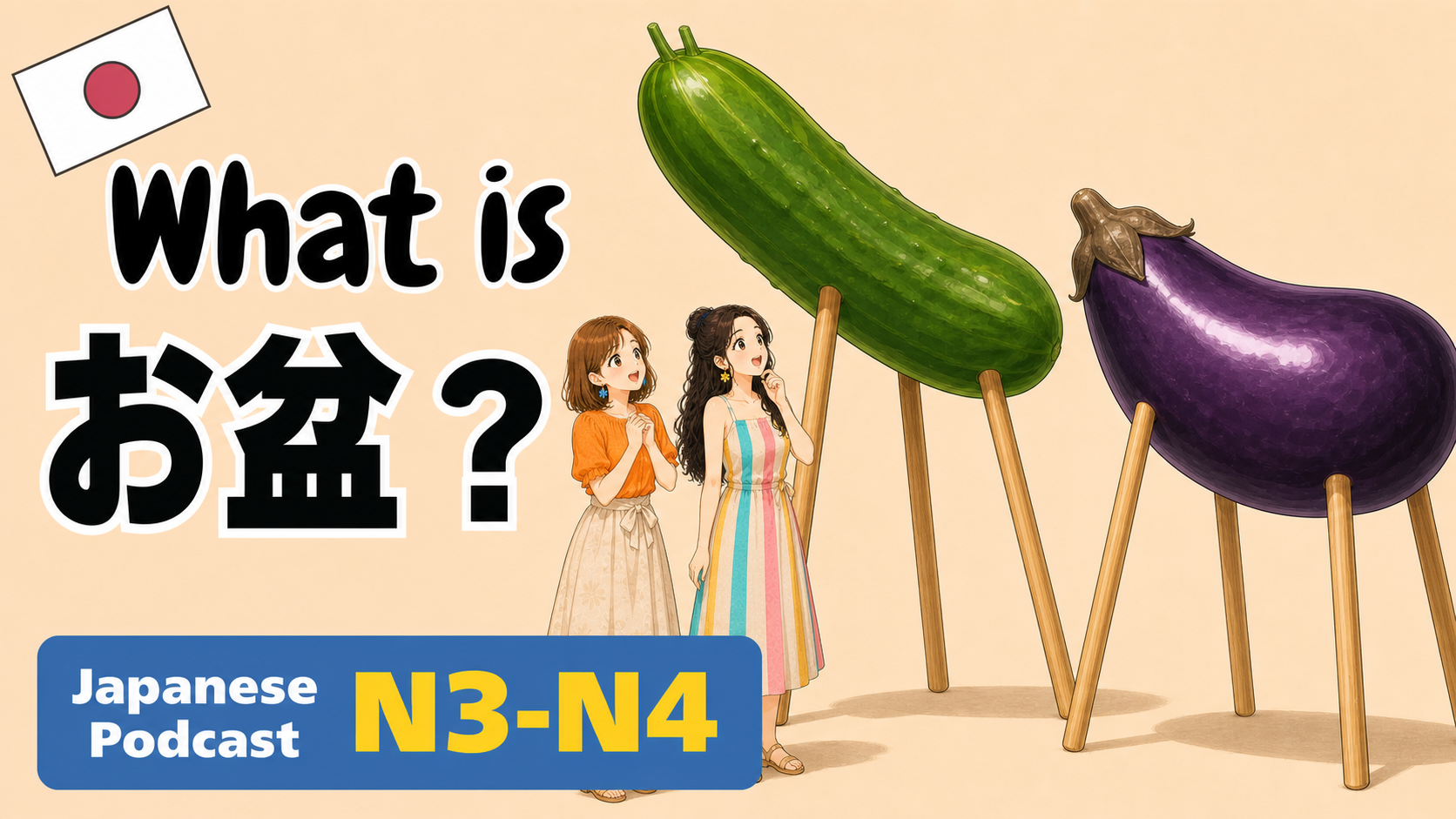
お盆は誰が帰ってくる日?Why Do Ancestors Come Home?
What is Obon, when does it happen, and does everyone in Japan get an “Obon vacation”? In this episode, Misaki and Nozomi explore how families may welcome ancestors home, visit graves, return to their hometowns, and send loved ones off again.
What You’ll Learn
Learn what Obon is and when it is observed, what “Obon vacation” really means, and how families may spend the season. You’ll also meet useful words such as 帰省, 迎え火, and 送り火, plus the warm meaning behind the cucumber horse and eggplant cow.
Transcript
What is Obon?
1. そもそも、お盆って何?
What is Obon?
Nozomi ねえミサキ。そもそも、お盆って何?
English: Hey Misaki. What exactly is Obon?
Misaki 日本の夏にある、家族の行事だよ。
English: It is a family tradition held during summer in Japan.
Nozomi 夏祭りみたいなもの?
English: Is it like a summer festival?
Misaki 少し違うね。お盆には亡くなった家族や先祖が、家へ帰ってくると考えます。
English: It is a little different. During Obon, people believe deceased family members and ancestors return home.
Nozomi 「先祖」は、おじいさんやおばあさんより前の家族も入る?
English: Does “ancestors” include family members from before our grandparents too?
Misaki そう。今の自分につながる、昔の家族のことだね。
English: Yes. It means family members from the past who are connected to who we are today.
Nozomi 亡くなった人が帰る、と聞くと少し怖そう。
English: Hearing that deceased people return sounds a little scary.
Misaki 怖い話ではないよ。「おかえり」と迎えて、家族で思い出すための時間なんだ。
English: It is not a scary story. It is a time to welcome them home and remember them as a family.
Nozomi 幽霊の話じゃなくて、家族の話なんだね。
English: So it is not a ghost story. It is a family story.
Misaki うん。今日は三つのことを話します。お盆はいつなのか。お盆休みとは何か。そして、家族は何をするのか。
English: Right. Today, we will talk about three things: when Obon is, what Obon vacation means, and what families do.
Misaki ということで始まりました、Late Night Japanese Chat。
English: And with that, welcome to Late Night Japanese Chat.
Misaki 私たち、ミサキと…
English: We are Misaki and…
Nozomi ノゾミがお届けします。今夜も、ゆっくり話していきましょう。
English: Nozomi. Let’s take our time and talk together tonight.
When is Obon?
2. お盆は、いつ頃?
When is Obon?
Nozomi お盆は、毎年いつ頃なの?
English: Around when is Obon held each year?
Misaki 多くの地域では、八月の真ん中頃だよ。
English: In many regions, it is around the middle of August.
Nozomi 八月の夏休みと重なるんだね。
English: So it overlaps with summer vacation in August.
Misaki そう。でも、東京など七月にお盆を行う地域もあります。
English: Yes. But some regions, including parts of Tokyo, observe Obon in July.
Nozomi 日本中で同じ日じゃないの?
English: It is not on the same date throughout Japan?
Misaki うん。地域によって時期が違います。家によって過ごし方も違うよ。
English: Right. The timing differs by region, and the way people spend it differs by family.
Nozomi じゃあ、日本で「お盆はいつ?」と聞いたら、答えが一つじゃないんだ。
English: So if I ask, “When is Obon?” in Japan, there is not just one answer.
Misaki そうだね。ニュースで「お盆の帰省が始まりました」と聞くのは、八月が多いです。
English: That is right. However, news reports about people returning home for Obon are often heard in August.
Nozomi 駅や空港が混んでいる映像を見る時期だね。
English: That is when we see footage of crowded stations and airports.
Misaki 車が長く並ぶ「渋滞」も、お盆のニュースでよく聞く言葉です。
English: “Jutai,” meaning a long traffic jam, is another word often heard in Obon news.
Nozomi お盆は夏の行事。でも、日にちは地域で違う。まずはそれで大丈夫だね。
English: Obon is a summer tradition, but its dates differ by region. That is enough to remember for now.
What is Obon vacation?
3. お盆休みって何?
What is Obon vacation?
Nozomi もう一つ聞きたい。「お盆休み」って何?
English: I have another question. What is “Obon vacation”?
Misaki お盆の頃に、会社や店が何日か休みになることだよ。
English: It means that some companies and shops close for several days around Obon.
Nozomi 国が決めた祝日なの?
English: Is it a national holiday decided by the government?
Misaki いい質問だね。お盆休みは、国の祝日ではありません。
English: Good question. Obon vacation is not a national holiday.
Nozomi じゃあ、全員が休みになるわけじゃない?
English: So not everyone gets time off?
Misaki そう。会社が休みを決める場合もあるし、普通に働く人もいます。
English: Exactly. Some companies decide to close, while other people work as usual.
Nozomi 病院やホテル、電車で働く人もいるもんね。
English: People still work at hospitals, hotels, and on trains.
Misaki うん。ここで言葉を分けてみよう。「お盆休み」は、「お盆」と「休み」を合わせた言葉です。
English: Right. Let’s break down the word. “Obon-yasumi” combines “Obon” and “yasumi,” meaning a break.
Nozomi 名前は簡単だけど、休めるかどうかは仕事による。
English: The name is simple, but whether you get a break depends on your job.
Misaki その通り。「日本はお盆だから全部お休み」と思わないほうがいいね。
English: Exactly. It is better not to assume that everything in Japan closes during Obon.
Nozomi お店へ行くときは、営業日を確認すると安心だね。
English: It is a good idea to check opening days before visiting a shop.
What do people do?
4. お盆には何をする?
What do people do?
Nozomi では、お盆には実際に何をするの?
English: So what do people actually do during Obon?
Misaki よく聞くのは、お墓参りだね。家族のお墓へ行きます。
English: One common activity is visiting family graves.
Nozomi お墓で、何をするの?
English: What do people do there?
Misaki 周りを掃除したり、花を置いたりします。そして、手を合わせます。
English: They may clean the area, place flowers, and put their hands together in prayer.
Nozomi 「来ましたよ」と、亡くなった家族に会いに行く感じなんだね。
English: It is like visiting deceased family members and saying, “We are here.”
Misaki うん。家では、花や食べ物を供えることもあります。
English: Yes. At home, some families also offer flowers or food.
Nozomi 亡くなった人が好きだったものを置く家もある?
English: Do some families offer something the deceased person liked?
Misaki あります。「甘いものが好きだったね」と話しながら、お菓子を用意することもあるよ。
English: Yes. A family may prepare sweets while saying, “They loved sweet things.”
Nozomi そのあと、生きている家族も一緒に食べそう。
English: The living family members might eat them together afterward.
Misaki それも自然だね。家族で食事をしたり、亡くなった人の話をしたりする。それもお盆の過ごし方です。
English: That is natural too. Families may eat together and talk about those who have died. That is also a way to spend Obon.
Nozomi 特別な儀式だけじゃなくて、掃除や食事も入るんだね。
English: So Obon includes not only special rituals, but also cleaning and sharing a meal.
Misaki そう。ただし、何をするかは地域や家で違います。
English: Exactly. But what people do differs by region and family.
Why return home?
5. なぜ実家に帰るの?
Why return home?
Nozomi お盆になると、どうして多くの人が実家へ帰るの?
English: Why do many people return to their family homes during Obon?
Misaki 家族で集まりやすいからだね。お墓が、ふるさとの近くにある人も多いです。
English: It is a convenient time for family gatherings. Many people also have family graves near their hometowns.
Nozomi 「実家」は自分が育った家や、親が住んでいる家のことだね。
English: “Jikka” means the home where you grew up or where your parents live.
Misaki そう。実家やふるさとへ帰ることを、「帰省」と言います。
English: Right. Returning to your family home or hometown is called “kisei.”
Nozomi いつも別々に暮らしている家族が、同じ家に集まるんだ。
English: Family members who usually live apart gather in one home.
Misaki 一緒に食事をします。子どもの成長を見せたり、昔の話をしたりします。
English: They eat together, show how the children have grown, and share old stories.
Nozomi 久しぶりに会うと、「大きくなったね」が何回も聞こえそう。
English: When relatives meet after a long time, you probably hear, “You have grown so much,” again and again.
Misaki 子どもから見ると、毎年言われる言葉かもしれないね。
English: For a child, that may be something they hear every year.
Nozomi でも、全員が実家へ帰るわけではないよね。
English: But not everyone returns to their family home.
Misaki もちろん。仕事や距離の問題もあります。帰る家がない人もいる。電話だけする人もいます。
English: Of course. Work and distance can make it difficult. Some people no longer have a family home, and some only make a phone call.
Nozomi 帰省は大切な習慣だけど、必ずしなければならないルールではないんだね。
English: Returning home is an important custom, but it is not a rule everyone must follow.
Welcome and send off
6. 迎えて、また送る
Welcome and send off
Misaki お盆では、亡くなった家族を「迎える」と言います。
English: During Obon, people say they “welcome” deceased family members.
Nozomi 目には見えないけど、「おかえり」と言うんだね。
English: They cannot be seen, but families say, “Welcome home.”
Misaki そう。地域によっては、家へ来る道が分かるように「迎え火」をたきます。
English: Yes. In some regions, families light a welcoming fire to show the way home.
Nozomi 暗い道に、小さな目印を置く感じ。
English: It is like placing a small sign on a dark road.
Misaki そして、お盆の終わりには「送り火」をたく地域もあります。
English: Then, at the end of Obon, some regions light a sending fire.
Nozomi 今度は、「気をつけて帰ってね」という火?
English: This time, does the fire mean, “Travel safely home”?
Misaki そう考えると分かりやすいね。
English: That is an easy way to understand it.
Nozomi 迎えたのに、また送るのは少し寂しいな。
English: It feels a little sad to send them off after welcoming them home.
Misaki 「さようなら」ではなくて、「また来年」に近いのかもしれないね。
English: It may be closer to “See you next year” than “Goodbye.”
Nozomi お盆の始まりは「帰ってくる」。終わりは「帰っていく」。
English: At the start of Obon, they “come home.” At the end, they “go home.”
Misaki ここが今日のミニ解説。「〜てくる」は、こちらへ近づく動き。「〜ていく」は、こちらから離れる動きです。
English: Here is today’s mini lesson. “Te kuru” describes movement toward us, while “te iku” describes movement away from us.
Nozomi 迎える。過ごす。そして送る。この三つで、お盆の流れが見えるね。
English: Welcome, spend time together, and send off. Those three actions show the flow of Obon.
Cucumber horse and eggplant cow
7. キュウリの馬とナスの牛
Cucumber horse and eggplant cow
Nozomi お盆の基本は分かった。でも、キュウリに足がついている写真は何?
English: I understand the basics now. But what are those photos of cucumbers with legs?
Misaki 最後に、その小さな謎も話そう。
English: Let’s finish with that little mystery.
Nozomi キュウリに短い棒を四本つけて、馬の形にするんだよね。
English: People put four short sticks into a cucumber to make the shape of a horse, right?
Misaki うん。「精霊馬」と呼ばれます。作らない地域や家もあるよ。
English: Yes. It is called a shoryo-uma, or spirit horse. Some regions and families do not make one.
Nozomi どうしてキュウリが馬なの?
English: Why is the cucumber a horse?
Misaki 足の速い馬に乗って、早く家へ帰ってきてほしい。そんな思いを表すと言われています。
English: It is said to express the wish that ancestors ride a fast horse and return home quickly.
Nozomi じゃあ、ナスに足をつけたものは?
English: Then what is the eggplant with legs?
Misaki そちらは牛です。帰りは、ゆっくり歩く牛に乗ってほしい。そう言われます。
English: That one is a cow. It is said to represent the wish that they ride a slow cow on the way back.
Nozomi 来るときは急いで。帰るときは、ゆっくり。
English: Hurry on the way here. Take your time on the way back.
Misaki 「早く会いたい」「少しでも長くいてほしい」という、家族の気持ちだね。
English: It expresses a family’s feelings: “We want to see you soon,” and, “We want you to stay a little longer.”
Nozomi 見た目は少し面白いけど、意味を知ると温かい飾りだね。
English: It looks a little funny, but once you know the meaning, it feels warm.
Three Obon basics
8. お盆の三つの基本
Three Obon basics
Misaki では、今日の三つのポイントをまとめよう。
English: Let’s summarize today’s three points.
Nozomi 一つ目。お盆は、亡くなった家族や先祖が家へ帰る夏の行事。
English: First, Obon is a summer tradition when people believe deceased family members and ancestors return home.
Misaki 二つ目。お盆休みは、会社などの休み。でも祝日ではなく、全員が休むわけではありません。
English: Second, Obon vacation means some companies close around Obon. But it is not a national holiday, and not everyone gets time off.
Nozomi 三つ目。お墓参りや食事をします。亡くなった人を迎え、最後に送ります。
English: Third, families may visit graves and eat together, welcoming those who died and eventually sending them off again.
Nozomi 「迎える。一緒に過ごす。そして送る」。まず、この三つを覚えればいいね。
English: “Welcome, spend time together, and send off.” Those are the first three things to remember.
Misaki そして、生きている人も実家へ帰る。お盆は、家族が「帰る場所」を考える時間なんだね。
English: And living people return to their family homes too. Obon is a time for families to think about a place to return to.
Nozomi みなさんの国には、亡くなった家族を思い出す日がありますか?
English: Does your country have a day for remembering family members who have died?
Nozomi 今夜も聞いてくれて、ありがとうございました。
English: Thank you for listening tonight.
Misaki この番組が、あなたの日本語の「居場所」の一つになれたら嬉しいです。
English: We would love for this show to become one of your “ibasho” — a place you belong — on your Japanese journey.
Nozomi よかったらチャンネル登録して、また帰ってきてね。
English: If you would like, subscribe and come back again.
Nozomi おやすみなさい。
English: Good night.
Vocabulary
Each word includes the original line from the transcript and one extra example. Use “See in transcript” to jump back to the conversation.
お盆Obon — a summer tradition for welcoming deceased family members and ancestors
FROM THE TRANSCRIPT
ねえミサキ。そもそも、お盆って何?
EXAMPLE
お盆の時期は、新幹線の切符が取りにくくなることがあります。
During Obon, it can be harder to get Shinkansen tickets.
お盆休みObon vacation — time off around Obon
FROM THE TRANSCRIPT
もう一つ聞きたい。「お盆休み」って何?
EXAMPLE
今年のお盆休みは、家でのんびり過ごすつもりです。
I’m planning to relax at home during this year’s Obon break.
お墓参りvisiting a family grave
FROM THE TRANSCRIPT
よく聞くのは、お墓参りだね。家族のお墓へ行きます。
EXAMPLE
久しぶりに祖母と一緒にお墓参りへ行きました。
I went to visit the family grave with my grandmother for the first time in a while.
帰省returning to one’s hometown or family home
FROM THE TRANSCRIPT
実家やふるさとへ帰ることを、「帰省」と言います。
EXAMPLE
年末は、飛行機で北海道の実家に帰省します。
At the end of the year, I’ll fly back to my family home in Hokkaido.
迎え火/送り火welcoming fire / sending fire
FROM THE TRANSCRIPT
地域によっては、家へ来る道が分かるように「迎え火」をたきます。
EXAMPLE
夕方、近所の家の前で迎え火を見かけました。
In the evening, I noticed a welcoming fire in front of a house in the neighborhood.
Cultural Notes
Obon does not happen on exactly the same dates everywhere in Japan. Many regions observe it around the middle of August, while some areas, including parts of Tokyo, observe it in July. Customs also vary by region and family.
“Obon vacation” is not a national holiday. Some companies and shops close for several days around Obon, while many people continue working as usual.
Welcoming and sending customs are not universal. Some families light 迎え火 and 送り火, and some make a cucumber horse and eggplant cow. These customs can express the wish for ancestors to return quickly and leave slowly, but not every household practices them.
Haru’s Note
One thing I like about the language of Obon is the movement in it: people come home, families welcome them, spend time together, and then send them off. It makes the tradition feel less like a distant ceremony and more like a family visit.
お盆の言葉には、「帰ってくる」「迎える」「一緒に過ごす」「送る」という動きがあります。遠い儀式というより、家族が帰ってくる時間のように感じられるところが、すてきだと思います。

コメント