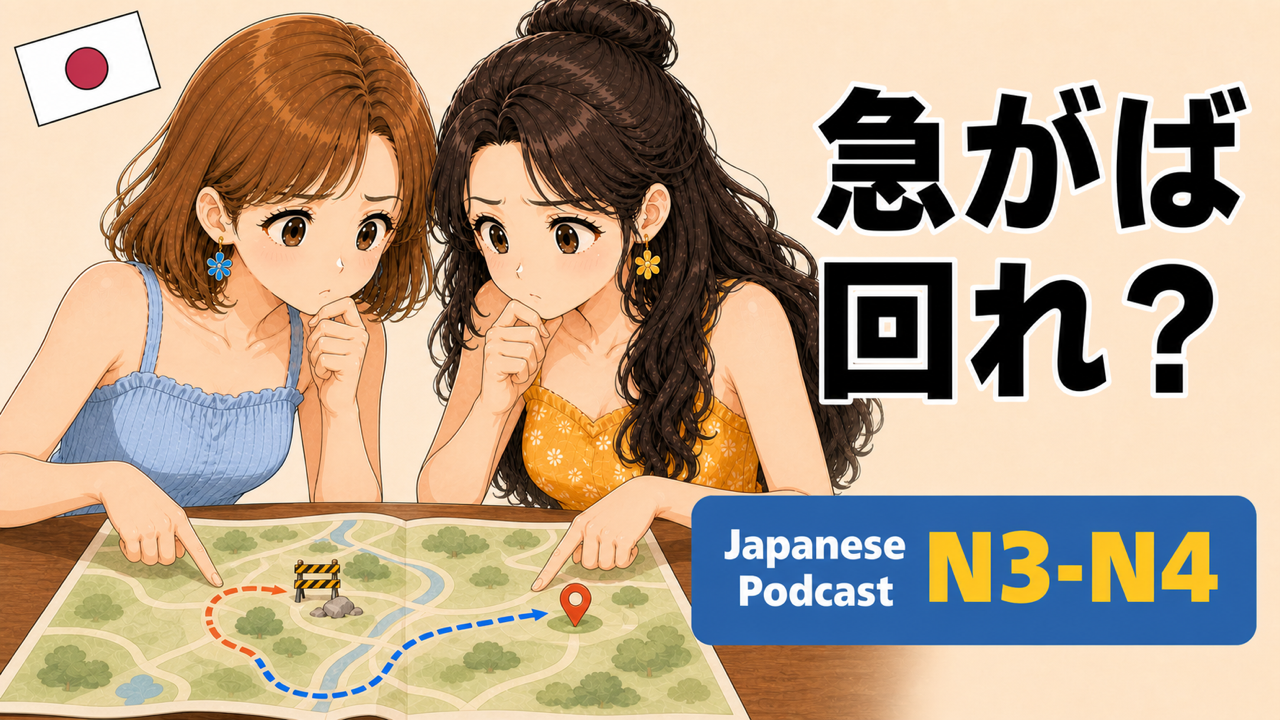
急がば回れWhy Take the Long Way?
Why does a Japanese proverb tell you to take the long way when you are in a hurry? Misaki and Nozomi connect an old route near Lake Biwa with modern shortcuts, skipped instructions, and one simple habit: check the most important thing once before you move.
What You’ll Learn
Learn what 急がば回れ means and where the proverb is said to come from, why a route that looks shorter may actually take longer, and how the older form 急がば connects to the modern phrase 急ぐなら. The episode also shows how one quick check can prevent a much bigger do-over.
Transcript
A shortcut made me late
1. 近道したら二十分遅れた
A shortcut made me late
Nozomi ミサキ、急いで近道したら、二十分遅れた。
English: Misaki, I took a shortcut because I was in a hurry, and I ended up twenty minutes late.
Misaki 近道なのに、遅くなったの?
English: It was a shortcut, but it made you later?
Nozomi 駅の地図を見たら、細い道があったの。「こっちのほうが早い」と思って入った。
English: I saw a narrow road on the station map and thought, “This way must be faster,” so I took it.
Misaki それで、どこに出たの?
English: And where did it take you?
Nozomi 駅の反対側。しかも工事中で、同じ場所まで戻った。
English: The opposite side of the station. There was construction too, so I had to go back to where I started.
Misaki それは、「急がば回れ」だね。
English: That is a perfect case of “isogaba maware.”
Nozomi 急いでるのに、回るの? もっと遅くならない?
English: Go around when I am in a hurry? Would that not make me even later?
Misaki そう聞こえるよね。でもこのことわざは「急ぐ時ほど、確実な方法を選ぼう」という意味です。
English: It sounds that way. But this proverb means that when you are in a hurry, you should choose the more reliable method.
Nozomi 近く見える道が、本当に早いとは限らないんだ。
English: A road that looks shorter is not always truly faster.
Misaki 今日は三つ話します。ことわざの意味と始まり。日常で使える場面。そして、慎重すぎることとの違いです。
English: Today, we will cover three things: the proverb’s meaning and origin, situations where it applies in daily life, and how it differs from being overly cautious.
Nozomi 私の二十分を、みなさんの役に立てよう。
English: Let’s make my lost twenty minutes useful for everyone.
Misaki ということで始まりました、Late Night Japanese Chat。
English: And with that, welcome to Late Night Japanese Chat.
Misaki 私たち、ミサキと…
English: We are Misaki and…
Nozomi ノゾミがお届けします。今夜も楽しく話していきましょう。
English: Nozomi. Let’s enjoy another conversation tonight.
Why take the long way?
2. 急ぐのにどうして回る?
Why take the long way?
Nozomi まず、「急がば回れ」を言葉どおりに見てみよう。
English: First, let’s look at “isogaba maware” literally.
Misaki 「急がば」は、「もし急ぐなら」という意味です。
English: “Isogaba” means “if you are in a hurry.”
Misaki 今日の単語分解です。「急ぐ」は、早くしようとすること。「回る」は、まっすぐ行かずに別の道を通ることです。
English: Here is today’s word breakdown. “Isogu” means to hurry. “Mawaru” means to take another route instead of going straight.
Nozomi 「回れ」は、近道ではなく遠回りしなさい?
English: Does “maware” mean to take the long way instead of a shortcut?
Misaki そう。でもいつも長い道を選べという命令ではないよ。
English: Yes. But it is not an order to always choose the longer road.
Nozomi じゃあ、何を「回る」の?
English: Then what are we supposed to go around?
Misaki 危ない近道や、失敗しやすい方法を避けるんだ。少し時間がかかっても、確実な道を選びます。
English: You avoid risky shortcuts and methods that are likely to fail. Even if it takes a little longer, you choose the reliable path.
Nozomi 最初の五分を節約して、あとで二十分失った私みたいに?
English: Like me saving five minutes at first and losing twenty minutes later?
Misaki とても分かりやすい例です。
English: You are a very clear example.
Nozomi 褒められてないのに、教材としては優秀なんだね。
English: I am not being praised, but I am excellent teaching material.
Misaki 大切なのは道の長さより、最後まで問題なく進めるかどうか。
English: What matters is not the road’s length, but whether you can reach the end without problems.
Nozomi 急ぐ時ほど、目の前の「早そう」に飛びつかない。これが最初のポイントだね。
English: When you are in a hurry, do not jump at the first thing that merely looks fast. That is our first point.
Looks fast vs. truly fast
3. 早そうな道と本当に早い道
Looks fast vs. truly fast
Misaki このことわざは、滋賀県の琵琶湖に関係があると言われています。
English: This proverb is said to be connected to Lake Biwa in Shiga Prefecture.
Nozomi 本当に道を選ぶ話だったの?
English: Was it literally a story about choosing a route?
Misaki うん。昔、湖を船で渡る近道がありました。歩いて橋を渡る道より、短く見えたんだ。
English: Yes. Long ago, there was a shortcut by boat across the lake. It looked shorter than walking around to cross a bridge.
Nozomi それなら、船のほうが早そう。
English: Then the boat sounds faster.
Misaki でも、湖では風が強くなることがあります。船が進めなければ、かえって時間がかかる。
English: But the wind on the lake could become strong. If the boat could not move, the trip would take even longer.
Nozomi 近いけど、天気に左右される道なんだね。
English: So it was shorter but depended on the weather.
Misaki 一方、瀬田の唐橋を通る道は遠回りです。でも、歩けば前へ進める。
English: The route across Seta no Karahashi bridge was longer. But on foot, you could keep moving forward.
Nozomi 早そうな船と、最後まで進みやすい橋。どちらが本当に早いかは、距離だけでは決められない。
English: A boat that looks fast and a bridge that lets you keep moving. Distance alone does not decide which is truly faster.
Misaki そこから「急ぐなら、遠くても確実な道を行こう」という考えが生まれたとされています。
English: That is said to be how the idea arose: when in a hurry, take the longer but more reliable route.
Nozomi 私の細い道にも、強い風みたいな工事が待ってた。
English: My narrow road had construction waiting like a strong wind.
Misaki 時代が変わっても、「早そう」と「本当に早い」は違うんだね。
English: Even as times change, “looks fast” and “is truly fast” remain different.
Skipping the instructions
4. 説明書を飛ばして全部やり直し
Skipping the instructions
Nozomi 道のほかにも、「急がば回れ」を使える?
English: Can we use “isogaba maware” for things other than roads?
Misaki もちろん。たとえば、家具を組み立てる時。早く完成させたくて、説明書を読まない。
English: Of course. For example, when assembling furniture, you may want to finish quickly and skip the instructions.
Nozomi 部品を見て「たぶん、こうでしょ」と始める。
English: You look at the parts and start by saying, “It probably goes like this.”
Misaki ところが最後に、板が一枚残ります。
English: But at the end, one board is left over.
Nozomi 予備の板かな?
English: Maybe it is a spare board?
Misaki 予備ではありません。最初に入れる板です。
English: It is not a spare. It is the board you were supposed to put in first.
Nozomi つまり、全部外して最初から?
English: So we have to take everything apart and start over?
Misaki はい。説明書を二分読めば終わったのに、一時間やり直します。
English: Yes. Two minutes of reading would have saved an hour of rebuilding.
Nozomi 近道どころか、同じ道を二回歩いてる。
English: That is not a shortcut. You are walking the same path twice.
Misaki 料理でも、仕事でも同じです。最初の確認を飛ばすと、あとで全部直すことがある。
English: It is the same with cooking or work. If you skip the first check, you may have to fix everything later.
Nozomi 急いでいる時ほど、「二度手間」が待ってるんだね。
English: When we are in a hurry, “doing it twice” is waiting for us.
Misaki 「二度手間」は、同じような作業を二回すること。避けたい遠回りです。
English: “Nidodema” means doing similar work twice. That is the kind of detour we want to avoid.
The “ba” in isogaba
5. 「急がば」の「ば」
The “ba” in isogaba
Nozomi 「急がば」の「ば」、今の会話ではあまり聞かないよね。
English: We do not hear the “ba” in “isogaba” very often in modern conversation, do we?
Misaki そうだね。これは昔の日本語の形です。今なら、「急ぐなら」や「急いでいるなら」に近いよ。
English: Right. This is an older Japanese form. Today, it is close to saying “isogu nara” or “isoide iru nara.”
Nozomi じゃあ、友達に「駅へ急がば」って言ったら?
English: Then what if I say to a friend, “Eki e isogaba”?
Misaki 意味は想像できるけど、昔話みたいに聞こえるかも。
English: They could probably guess the meaning, but it might sound like an old tale.
Nozomi 電車に乗りたくば、急がば回れ。
English: If you wish to board the train, hurry by going around.
Misaki 急に、お城から来た人みたい。
English: Suddenly, you sound like someone from a castle.
Nozomi 普通の会話なら「急ぐなら、こっちの道が安全だよ」でいいんだね。
English: In normal conversation, I can simply say, “If you are in a hurry, this route is safer.”
Misaki そう。「急がば回れ」は、ことわざ全体で一つの決まった形として覚えよう。
English: Exactly. Learn “isogaba maware” as one fixed proverb.
Nozomi ここが今日のミニ解説だね。古い「急がば」は、今の「急ぐなら」。
English: That is today’s mini lesson. The old “isogaba” is today’s “isogu nara.”
Misaki うん。意味が分かれば、タイトルや会話で見つけた時にも困らないね。
English: Yes. Once you know the meaning, you will recognize it in titles and conversations.
Nozomi ただし、駅で使うのは「急ぐなら」にします。
English: But at the station, I will use “isogu nara.”
Make one quick check
6. 急ぐ時ほど確認を一つ
Make one quick check
Misaki では、日常でどう使うか。コツは、確認を一つだけすることです。
English: Now, how can we use this idea in daily life? The trick is to make just one check.
Nozomi 一つだけでいいの? 十個くらい確認しなくて大丈夫?
English: Only one? Are we sure we do not need about ten checks?
Misaki 十個確認したら、今度は出発できないよ。
English: If you check ten things, you may never leave.
Nozomi それは困る。何を一つ見ればいい?
English: That would be a problem. What single thing should I check?
Misaki いちばん間違えると困るもの。駅なら、地図で出口を一回見る。
English: Check the thing that would cause the biggest problem if wrong. At a station, look at the exit on the map once.
Nozomi 電車なら、行き先を一回見る。
English: For a train, check the destination once.
Misaki メールなら、送る相手を一回見る。
English: For an email, check the recipient once.
Nozomi 家具なら、説明書の最初を一回見る。
English: For furniture, read the beginning of the instructions once.
Misaki そう。それだけで、大きなやり直しを減らせます。
English: Exactly. That alone can reduce major do-overs.
Nozomi 「急いでいるから確認しない」ではなく、「急いでいるから一回確認する」。
English: Not, “I will skip checking because I am in a hurry,” but, “I will check once because I am in a hurry.”
Misaki その一文は、そのまま使えるね。
English: That is a sentence listeners can use exactly as it is.
Nozomi 確認の一分が、やり直しの一時間を防ぐかもしれない。
English: One minute of checking may prevent an hour of redoing.
Caution is not freezing
7. 慎重すぎて動かないこととは違う
Caution is not freezing
Nozomi でも「急がば回れ」を守りすぎたら、何も始められなくならない?
English: But if we follow “isogaba maware” too strictly, might we never start anything?
Misaki そこは大事だね。このことわざは、「完璧になるまで動くな」という意味ではありません。
English: That is important. This proverb does not mean, “Do not move until everything is perfect.”
Nozomi 地図を一時間見てから、駅を出るのは?
English: What about studying the map for an hour before leaving the station?
Misaki 電車に間に合いません。
English: You will miss the train.
Nozomi 確実だけど、目的は失敗してる。
English: It is reliable, but it defeats the purpose.
Misaki 必要な確認をしたら、動く。「急がば回れ」は、そのためのことわざです。
English: Once you have made the necessary check, move. That is what this proverb is for.
Nozomi 慎重は、失敗を減らすため。動かない理由にするためじゃない。
English: Caution is for reducing mistakes, not for creating a reason not to act.
Misaki そう。安全な道を選んだら、その道を歩き始めよう。
English: Exactly. Once you choose the safe route, start walking.
Nozomi 私は地図を一回見る。でも、駅員さん三人には聞かない。
English: I will check the map once, but I will not ask three station workers.
Misaki 一人に聞いて答えが分かったら、もう出発して大丈夫。
English: If one person gives you a clear answer, you can go.
Nozomi 「一回確認して進む」。これなら、急ぐ時にも使えそう。
English: “Check once and move.” That sounds useful even when I am in a hurry.
The fastest route avoids redoing
8. いちばん早いのはやり直さない道
The fastest route avoids redoing
Misaki では、今日の三つのポイントをまとめよう。
English: Let’s summarize today’s three points.
Nozomi 一つ目。「急がば回れ」は、急ぐ時ほど確実な方法を選ぶことわざ。
English: First, “isogaba maware” means choosing a reliable method when you are in a hurry.
Misaki 二つ目。近く見える道が、本当に早いとは限りません。説明書を飛ばすと、全部やり直すこともある。
English: Second, a route that looks shorter is not always faster. If you skip the instructions, you may have to start over.
Nozomi 三つ目。慎重すぎて動かないのではなく、いちばん大事なことを一回確認して進む。
English: Third, do not become so cautious that you never move. Check the most important thing once, then go.
Misaki いちばん早いのは、いつも短い道ではありません。やり直さなくていい道です。
English: The fastest route is not always the shortest. It is the route you do not have to redo.
Nozomi 次は地図を一回だけ見る。
English: Next time, I will look at the map just once.
Misaki 駅を一周はしなくていい。
English: You do not need to walk all the way around the station.
Nozomi あれは遠回りじゃなくて、迷子だからね。
English: That was not a wise detour. I was simply lost.
Misaki 今夜も聞いてくれて、ありがとうございました。
English: Thank you for listening tonight.
Misaki この番組が、あなたの日本語の「居場所」の一つになれたら嬉しいです。
English: We would love for this show to become one of your “ibasho” — a place you belong — on your Japanese journey.
Nozomi よかったらチャンネル登録して、また帰ってきてね。
English: If you would like, subscribe and come back again.
Misaki また次回、Late Night Japanese Chatでお会いしましょう。おやすみなさい。
English: See you next time on Late Night Japanese Chat. Good night.
Nozomi おやすみなさい。
English: Good night.
Vocabulary
Each word includes the original line from the transcript and one extra example. Use “See in transcript” to jump back to the conversation.
急がば回れmore haste, less speed; when in a hurry, choose the reliable way
FROM THE TRANSCRIPT
それは、「急がば回れ」だね。
EXAMPLE
申込書を急いで出す前に、名前と日付だけ確認しよう。急がば回れだよ。
Before submitting the form in a rush, let’s at least check the name and date. More haste, less speed.
近道shortcut
FROM THE TRANSCRIPT
ミサキ、急いで近道したら、二十分遅れた。
EXAMPLE
この公園を通ると、駅までの近道になります。
Going through this park is a shortcut to the station.
遠回りdetour; the long way around
FROM THE TRANSCRIPT
一方、瀬田の唐橋を通る道は遠回りです。
EXAMPLE
工事で道が閉まっていたので、少し遠回りして帰りました。
The road was closed for construction, so I took a small detour home.
確実reliable; certain; dependable
FROM THE TRANSCRIPT
でもこのことわざは「急ぐ時ほど、確実な方法を選ぼう」という意味です。
EXAMPLE
明日までに届けたいなら、少し高くても確実な配送方法を選びます。
If I need it to arrive by tomorrow, I’ll choose the more reliable delivery option even if it costs a little more.
二度手間having to do the same work twice; duplicated effort
FROM THE TRANSCRIPT
急いでいる時ほど、「二度手間」が待ってるんだね。
EXAMPLE
住所を間違えると二度手間になるから、送る前に確認してね。
If the address is wrong, you’ll have to do the work twice, so check it before sending.
Cultural Notes
急がば回れ is often explained through a route near Lake Biwa. The traditional background contrasts a shorter boat route with a longer land route via Seta no Karahashi. The point is not that longer is always better, but that a safer, more dependable route can get you there sooner when the shortcut is risky.
急がば is an older grammatical form. In modern conversation, 急ぐなら or 急いでいるなら is more natural. The older form is best learned as part of the fixed proverb rather than copied freely into everyday sentences.
The proverb is not an argument for endless caution. In this episode, the useful balance is simple: make the check that matters most, then move. The goal is to avoid preventable rework, not to wait until everything feels perfect.
Haru’s Note
I like that this proverb is not really praising the long way itself. It is asking a more practical question: which route is most likely to get you to the end without having to start over?
急いでいると、目の前の「早そう」に飛びつきたくなります。でも、一回だけ大事なことを確認してから進む。そんな小さな遠回りなら、むしろいちばん早い道になるのかもしれません。


コメント